.png)

Nike Running Shoes Explained: History, Technology And The Best Models
Updated: Jul 25
Nike is one of the biggest names in sport and one of the most recognisable brands in the world. While its influence extends across football, basketball, tennis and fashion, running has always been at the heart of the company's story. From humble beginnings selling shoes from the back of a car to producing some of the fastest marathon shoes ever made, Nike has played a major role in shaping modern running footwear.
Today, Nike offers running shoes for almost every type of runner. Whether you're looking for a comfortable daily trainer, a supportive shoe for long runs, a trail shoe or a carbon-plated racing shoe, there's likely to be a Nike model designed for the job.

The History Of Nike Running Shoes
Nike's story began in 1964 when athlete Phil Knight and his University of Oregon coach Bill Bowerman founded a company called Blue Ribbon Sports. Their original business involved importing running shoes from the Japanese manufacturer Onitsuka Tiger, now known as ASICS, and selling them to athletes across the United States.
Bowerman wasn't content with simply selling shoes. He believed running footwear could be lighter, faster and more comfortable, and he spent countless hours experimenting with new designs. His famous waffle sole was reportedly inspired by his wife's waffle iron, creating a tread pattern that offered excellent grip while keeping weight to a minimum. That simple innovation became one of the defining moments in running shoe history.
In 1971, Blue Ribbon Sports became Nike, taking its name from the Greek goddess of victory. The now-famous Swoosh logo was created by graphic design student Carolyn Davidson, who was paid just $35 for the design. Few could have imagined it would become one of the most recognisable logos in the world.
Throughout the 1970s and 1980s, Nike continued to develop new cushioning technologies before becoming a global sporting powerhouse. While endorsements from athletes such as Michael Jordan transformed the company commercially, running remained central to its product development.
Innovation Has Always Been A Priority
Nike has consistently pushed the boundaries of running shoe technology. Its philosophy has always been to make shoes that help runners become faster, more efficient and more comfortable over every distance.
One of its most important developments was Nike Air, which introduced pressurised air units into the midsole to improve cushioning. Although Air technology became famous across many sports, it also played a significant role in Nike's running shoes for many years.
More recently, Nike has focused on advanced foam technologies. ReactX foam provides soft cushioning with improved durability, while ZoomX remains the company's premium performance foam. ZoomX is exceptionally lightweight and highly responsive, returning a large proportion of the energy generated with every stride.
Many of Nike's faster shoes also feature Air Zoom units combined with carbon fibre plates. These technologies work together to improve running efficiency, making them particularly popular with runners chasing personal bests.
The Shoe That Changed Marathon Running
Few running shoes have generated as much attention as the Nike Vaporfly. When it was introduced, it fundamentally changed the conversation around marathon racing.
The combination of ZoomX foam and a full-length carbon fibre plate delivered levels of energy return that many runners had never experienced before. Elite marathon times began falling, world records tumbled and recreational runners also discovered they could maintain faster paces with less fatigue.
The technology proved so effective that nearly every major running shoe manufacturer developed its own carbon-plated racing shoe. Today, super shoes have become the standard at the elite end of marathon running, and competition between brands continues to drive rapid innovation.
Nike remains one of the leading manufacturers in this category, although rivals such as Adidas, ASICS, Saucony, HOKA, Puma and New Balance have significantly narrowed the gap.
What Are Nike Running Shoes Known For?
Nike has built its reputation around innovation and performance. Many runners associate the brand with lightweight shoes, highly responsive cushioning and race-day technology developed alongside some of the world's fastest athletes.
The company also offers one of the broadest running ranges available. Daily trainers, stability shoes, trail shoes and racing shoes all sit within the Nike line-up, making it easy for runners to stay with the same brand throughout their training.
Nike's designs also appeal beyond running. Many of its shoes have become lifestyle products, helping the company maintain enormous global popularity even among people who don't run regularly.
Nike's Most Popular Running Shoes
The Nike Pegasus remains one of the most successful running shoes ever produced. Now well into its fourth decade, it continues to be a reliable daily trainer suitable for everything from easy runs to longer training sessions.
The Nike Vomero is designed for runners who prioritise cushioning and comfort. With a softer ride than the Pegasus, it's particularly popular for recovery runs and high-mileage training.
The Nike Structure provides additional support for runners who overpronate or simply prefer a little more stability during longer runs.
The Nike Invincible is built around maximum cushioning, using a generous amount of ZoomX foam to create a soft, highly protective ride that many runners enjoy for easy and recovery miles.
For racing, the Nike Vaporfly continues to be one of the most popular marathon shoes on the market, while the Alphafly represents the company's flagship model for runners chasing the fastest possible times.
Away from the roads, the Nike Pegasus Trail has become a favourite among runners who regularly move between tarmac, gravel paths and light trails.
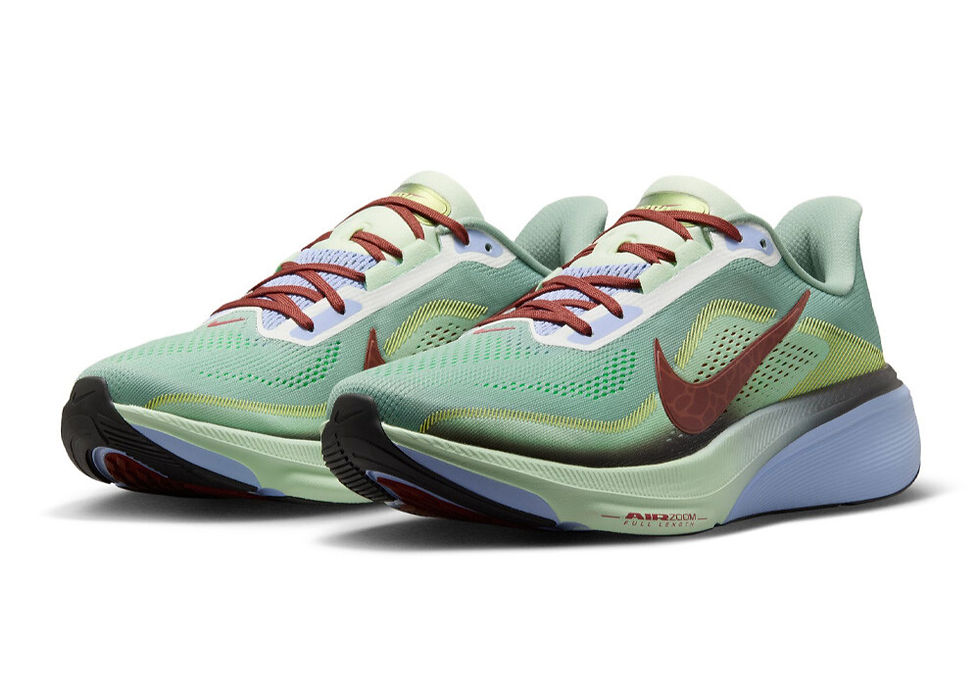
Are Nike Running Shoes Expensive?
Nike offers running shoes across a wide range of price points, although its premium models sit towards the top end of the market. Carbon-plated racing shoes such as the Vaporfly and Alphafly represent a significant investment, but they are designed specifically for performance rather than everyday training.
More affordable models such as the Pegasus provide excellent value for runners looking for a dependable daily training shoe, and previous versions are often available at discounted prices once newer models are released.
As with every running shoe, choosing the model that suits your running style and goals is far more important than simply buying the most expensive option.
Should You Buy Nike Running Shoes?
Nike produces excellent running shoes, but no single brand is perfect for every runner. The shape of the shoe, the level of cushioning, the amount of support and the overall fit all vary between manufacturers.
The best way to decide whether Nike is right for you is to try several models and compare them with shoes from other leading brands. A specialist running shop can assess your requirements and help you find the shoe that feels most comfortable, regardless of the logo on the side.
It's also worth remembering that the shoe worn by elite athletes isn't necessarily the best choice for recreational runners. Daily comfort, injury prevention and suitability for your own running style should always come before marketing or brand reputation.
What's Next For Nike?
Nike remains one of the world's largest sportswear companies and continues to invest heavily in research and development. Improvements to foams, plate technology, upper materials and manufacturing methods ensure that new models continue to evolve every year.
The company also places increasing emphasis on sustainability, using more recycled materials across its product range while working to reduce its environmental impact.
Competition within the running shoe market has never been stronger, but Nike continues to be one of the brands setting the pace. Whether you're taking your first steps into running or chasing a marathon personal best, its range is likely to remain among the most influential in the sport for many years to come.
Final Thoughts
Nike has helped shape modern running more than almost any other manufacturer. From the original waffle sole to today's carbon-plated super shoes, the company has consistently challenged ideas about what running footwear can achieve.
While the competition has become much stronger in recent years, Nike continues to produce some of the best running shoes available. The key is choosing the model that suits your running goals rather than simply buying the most popular shoe. Get that decision right and you'll have a reliable training partner for many miles ahead.


Comments