.png)

Compression Running Gear: Does It Really Work For Runners?
Compression running gear has become one of the fastest-growing areas of the running market. Whether you're lining up at a local parkrun, taking part in a marathon or simply heading out for an easy training run, you're almost guaranteed to see runners wearing compression socks, calf sleeves, leggings or tops. What was once seen as specialist equipment for elite athletes has become part of many runners' everyday kit, but plenty of people still wonder whether it actually makes a difference.
The simple answer is yes, but perhaps not in the way many people expect. Compression garments are unlikely to transform your race times overnight or suddenly make running feel effortless. Their biggest strengths lie in supporting your muscles, improving recovery and helping you feel fresher between training sessions. For runners who train consistently, those benefits can be every bit as valuable as finding a lighter pair of running shoes or following a better training plan.
What Is Compression Running Gear?
At first glance, compression clothing looks very similar to standard running tights or close-fitting base layers. The difference lies in the construction of the fabric. Compression garments are manufactured using specially engineered materials that apply carefully controlled pressure to different areas of the body. Rather than simply fitting tightly, they provide graduated compression, meaning the pressure is greatest furthest away from the heart before gradually reducing further up the limb.
This graduated pressure helps encourage blood to return more efficiently towards the heart while also supporting the muscles during exercise. By reducing unnecessary muscle movement and vibration, compression garments aim to minimise some of the physical stress that running places on the body. Although the effect is subtle, over the course of thousands of strides during a long run it can make a noticeable difference to how your legs feel.
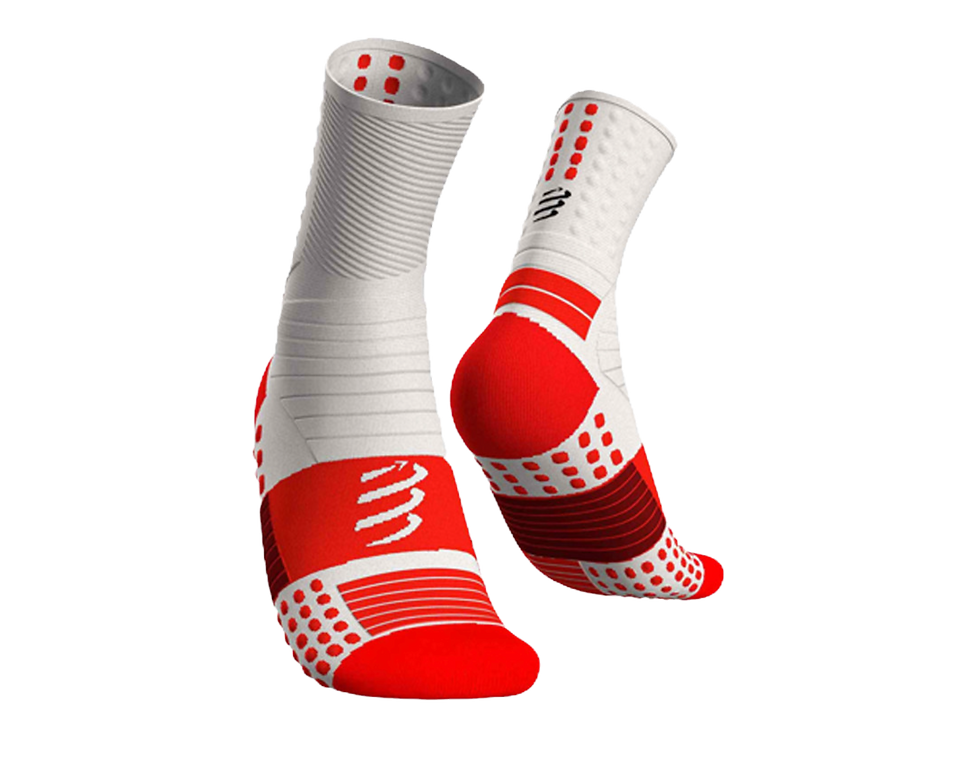
There are now compression products available for almost every part of the body. Socks remain one of the most popular choices, but runners can also choose calf sleeves, shorts, leggings, arm sleeves and long-sleeved tops. Each works on the same principle, with the main difference being which muscles they are designed to support.
How Does Compression Work?
Every time your foot strikes the ground while running, your muscles absorb impact forces before helping propel you into your next stride. Even with excellent running form, this repeated impact causes a small amount of muscle vibration, often referred to as muscle oscillation. Over the course of a long run those tiny movements contribute to fatigue and the microscopic muscle damage that naturally occurs during exercise.
Compression garments work by gently supporting the muscles and limiting some of that unnecessary movement. At the same time, the pressure created by the fabric encourages venous blood flow, helping blood travel back towards the heart more efficiently. Better circulation may improve the delivery of oxygen to working muscles while also helping remove waste products produced during exercise.
For compression clothing to work effectively, the fit is extremely important. The garment should feel noticeably tighter than ordinary running clothing, but it should never feel painful or restrict movement. If you experience numbness, tingling or discomfort, the garment is almost certainly too tight and should not be worn until the sizing has been checked.
What Are The Benefits Of Compression Running Gear?
The popularity of compression clothing has led to a significant amount of scientific research over the last decade. While individual studies vary, the overall picture is fairly consistent. Compression garments appear to offer their greatest benefits in recovery and muscle support, while any improvements in running performance tend to be relatively modest.
That doesn't mean they aren't worthwhile. For many runners, recovering more quickly between sessions is far more valuable than gaining a few seconds during a race, particularly when training for longer distances.
Improved Recovery
Recovery is where compression garments appear to make the biggest difference. Every training run causes tiny amounts of muscle damage, and while this is a normal part of becoming fitter, it also leads to inflammation and soreness as the body repairs itself. Compression clothing may help reduce this inflammation by improving circulation and encouraging the removal of waste products from the muscles after exercise.
Many runners choose to wear compression socks or tights for several hours after completing a marathon, half marathon or particularly demanding training session. While they won't completely eliminate muscle soreness, they may reduce its severity and help you feel ready for your next run a little sooner. Over the course of a busy training block, those small improvements in recovery can make it easier to maintain consistency without feeling permanently fatigued.
Reduced Muscle Soreness
Anyone who has completed a long run or challenging interval session will probably be familiar with delayed onset muscle soreness, often referred to as DOMS. The stiffness and discomfort that appears a day or two after hard exercise is a natural part of the recovery process, but it can sometimes make everyday activities almost as challenging as the run itself. Compression garments may help reduce both the severity and duration of DOMS by supporting the muscles during exercise and encouraging better circulation afterwards. Many runners find their legs simply feel less heavy after demanding sessions, allowing them to move more comfortably during the following couple of days.
Better Muscle Support
One of the benefits that runners often notice immediately is the feeling of additional muscle support. Compression clothing wraps firmly around the muscles, reducing excessive movement throughout each stride and creating a reassuring feeling of stability during longer runs. Although compression garments cannot prevent injuries on their own, reducing muscle oscillation may help limit the tiny muscle tears that contribute to fatigue and soreness. Runners who have previously experienced calf problems or recurring muscle tightness often appreciate the extra support, particularly during marathon training when weekly mileage begins to increase.
Small Performance Benefits
One of the biggest misconceptions surrounding compression gear is that it will dramatically improve your running performance. The evidence doesn't really support that claim. Most studies suggest that any improvements in speed or endurance are likely to be relatively small and may not even be noticeable for recreational runners. However, small improvements should not be dismissed entirely. If your muscles remain fresher for longer and you recover more effectively between training sessions, the cumulative effect over several months of consistent training may be far greater than any immediate performance gain during a single run.
Improved Temperature Regulation
Modern compression garments are made using highly technical fabrics that perform well across a wide range of weather conditions. During warmer months they help draw moisture away from the skin, allowing sweat to evaporate more efficiently and helping you stay cooler throughout your run. In colder weather they provide an additional insulating layer without feeling bulky, making them a popular choice for winter marathon training. Because many compression garments fit closely against the body, they also reduce the amount of damp fabric moving around during exercise. This can improve comfort during longer runs and reduce the risk of chafing in areas that are prone to friction.
Who Should Wear Compression Running Gear?
One of the biggest myths surrounding compression clothing is that it's only useful for experienced runners chasing fast marathon times. In reality, runners of every ability can potentially benefit from wearing compression garments, although the reasons may differ depending on their experience and training goals.
Beginners may appreciate the extra support and comfort as their bodies adapt to running, while more experienced athletes often use compression clothing to maximise recovery during demanding training blocks. Runners who spend much of the working day sitting at a desk may also notice that compression socks help reduce feelings of heavy legs before an evening run.
If you are recovering from an injury or have any underlying circulatory condition, it's always sensible to seek advice from your GP or physiotherapist before using compression garments, particularly if medical-grade products are being recommended.

Which Compression Products Should You Choose?
The sheer variety of compression products available can make choosing your first item slightly confusing. Fortunately, most runners don't need an entire wardrobe of compression clothing to experience the benefits.
Compression socks remain the most popular starting point because they provide support to the calves and lower legs, areas that absorb considerable stress while running. Calf sleeves offer similar support while allowing runners to continue wearing their favourite running socks. Compression tights and leggings provide support across multiple muscle groups, making them particularly popular with marathon runners, while compression shorts focus more on the hips, glutes and upper legs.
If you've never worn compression gear before, starting with a quality pair of compression socks is often the simplest and most cost-effective option. They allow you to experience the feeling of compression without making a major investment, and many runners quickly discover whether the extra support suits them.
Is Compression Running Gear Worth The Extra Cost?
There is no denying that compression clothing usually costs more than standard running apparel. The specialist fabrics, carefully engineered construction and premium manufacturing processes all contribute to the higher price, and quality garments are designed to maintain their compression properties over many months of regular use.
Whether that extra expense is worthwhile depends entirely on what you expect from the product. If you're buying compression gear purely because you believe it will make you dramatically faster, you're likely to be disappointed. If, however, you're looking for improved comfort, better muscle support and the possibility of recovering more quickly between training sessions, the investment can be much easier to justify.
Like running shoes, cheaper alternatives are available, but quality often pays for itself in durability and long-term performance. A well-made compression garment that maintains its support over hundreds of miles is usually better value than replacing cheaper products that lose their effectiveness after only a few months.
Final Thoughts
Compression running gear has earned its place in the running world because it offers genuine benefits, particularly when it comes to recovery and muscle support. Although the improvements in performance are generally modest, many runners find that feeling fresher after training and experiencing less muscle soreness makes a noticeable difference to the consistency of their running.
Ultimately, compression clothing should be viewed as another useful tool rather than a shortcut to better performances. It won't replace sensible training, proper nutrition or adequate recovery, but it can complement all three. If you're running regularly, training for longer distances or simply looking for ways to make your recovery a little easier, compression gear is certainly worth considering and may prove to be one of the more useful additions to your running kit.


Comments