.png)

Dublin Marathon 2026: Course, Entry, Expo And Race Guide
- 2 days ago
- 8 min read
One of the biggest challenges when you are in Dublin for the marathon might be keeping out of the pubs in the days leading up to the race. This is a city famous for its nightlife, with Guinness never particularly difficult to find, but there will be plenty of time for that once you have crossed the finish line.
The Irish Life Dublin Marathon has developed into one of Europe's major city marathons, with demand for places now considerably exceeding the number available. The 2026 race takes place on Sunday 25 October and will be the 45th running of an event that began in 1980.
With a course that takes runners from the city centre into Phoenix Park and through a succession of Dublin neighbourhoods before returning for a noisy finish, this is a marathon with plenty of character. It is not completely flat and there are some quieter sections, but excellent local support and a strong race day atmosphere make Dublin a marathon well worth experiencing.

Dublin
Dublin is the capital and largest city of the Republic of Ireland and has enough history, culture and nightlife to make a marathon weekend here about considerably more than the race itself. The city centre is relatively compact, making many of the main attractions easy to reach on foot, although runners may want to limit the sightseeing the day before the marathon.
Temple Bar is one of the best known parts of the city, with its cobbled streets, pubs, restaurants and live music attracting visitors throughout the year. It is somewhere many marathon runners will probably want to explore, although Sunday evening with a medal around your neck might be a better time than Saturday night.
The Guinness Storehouse at St James's Gate tells the story of Ireland's most famous stout and has become one of the country's most popular visitor attractions. The experience finishes at the Gravity Bar, with panoramic views across Dublin and, naturally, a pint of Guinness.
Trinity College is another of the city's major attractions and is home to the Book of Kells, one of Ireland's most important cultural treasures. Dublin Castle, Christ Church Cathedral and St Patrick's Cathedral provide plenty more options for anyone wanting to explore the city's history, although spending an entire day sightseeing immediately before running 26.2 miles is probably best avoided.
History Of The Dublin Marathon
The first Dublin Marathon was held in 1980 following efforts to establish a major mass participation marathon in the Irish capital. There were 2,100 entries and 1,420 finishers, with Ireland's Dick Hooper winning the men's race in 2:16:14 and Carey May taking the women's title in 2:42:11.
Participation grew rapidly during the running boom of the 1980s before declining and subsequently beginning another sustained period of growth. The marathon was traditionally staged on the October Bank Holiday Monday before moving to Sunday in 2016, helping establish the race weekend format runners experience today.
The physical race was not held in 2020 or 2021 because of the pandemic, and the 2026 event will be the 45th running of the Dublin Marathon. Demand has now reached unprecedented levels, with more than 47,000 applications received for the 2026 ballot.
Dublin Marathon 2026 Key Information
The Irish Life Dublin Marathon 2026 takes place on Sunday 25 October and has an overall capacity of approximately 22,500 runners. The event covers the traditional marathon distance of 26.2 miles or 42.195 kilometres.
The race starts on Leeson Street Lower and finishes on Mount Street Upper. The main runner waves are scheduled for 8:45am, 9:05am, 9:25am and 9:45am, with pacers spread across the different waves to cover a range of target finishing times.
Dublin Marathon Expo And Race Number Collection
All successful runners must collect their race number and race pack in person at the Irish Life Dublin Marathon Expo on the Friday or Saturday before the race. The Expo is held at the RDS on Merrion Road and includes running and fitness exhibitors alongside the number collection operation.
At the time of writing, detailed opening times for the 2026 Expo have not yet been confirmed on the official event website. Runners should therefore check their final race information before travelling rather than relying on the opening hours from a previous edition.
Race number collection is an important part of the event's safety procedures, with runners' identities verified and final start numbers confirmed. Do not leave Dublin Marathon weekend planning until race morning because there is no normal race morning number collection.
Race Morning
The marathon starts on Leeson Street Lower, close to St Stephen's Green, with runners divided between four main waves. The scheduled starts are 8:45am, 9:05am, 9:25am and 9:45am, with runners allocated according to their expected finishing times.
There is one unusual detail that international visitors in particular should remember. Ireland's clocks go back by one hour during the night before the 2026 marathon as Irish Summer Time ends, so make sure phones, watches and alarms have adjusted correctly before heading to the start.
The event supports runners completing the marathon in up to seven hours, with tail walkers provided for participants towards the back of the field. As with any large city marathon, allow plenty of time to reach the appropriate start area, use the toilets and complete any baggage arrangements before your wave is called.
The Dublin Marathon Course
The Dublin Marathon is a single lap course starting on Leeson Street Lower and finishing on Mount Street Upper. It is not completely flat, with a series of climbs and rolling sections that make sensible early pacing particularly important.
From the start, runners head alongside St Stephen's Green before passing through streets including Cuffe Street, Kevin Street and Patrick Street. The course then continues through the historic centre, crossing the River Liffey over O'Donovan Rossa Bridge at around two miles before heading through Stoneybatter towards Phoenix Park.
Runners enter Phoenix Park during the early miles of the race and spend a substantial section of the course inside and around the park. The route follows roads including North Road, Chesterfield Avenue and Tower Road before heading towards Castleknock and then turning back towards the park.
The course eventually leaves this part of Dublin through Chapelizod and crosses the River Liffey again at Chapelizod Bridge. From there runners continue through Inchicore and towards Dolphin's Barn before heading into the southern and western residential areas of the city.
The middle section includes Crumlin, Walkinstown and Kimmage before runners reach Templeogue and Terenure. These neighbourhoods are an important part of the Dublin Marathon experience, with local residents providing much of the support away from the better known city centre landmarks.
From Terenure the route continues through Orwell Road, Dartry and Milltown before reaching Clonskeagh. Runners then tackle the later miles around University College Dublin, Stillorgan Road and Nutley Lane before turning onto Merrion Road.
By this stage the marathon is heading back towards central Dublin. The final miles take runners along Northumberland Road and Warrington Place before the finish on Mount Street Upper, where the increasing crowds provide a welcome lift at the end of 26.2 miles.
Water is provided regularly around the course, with sports drink and energy gels also available at selected stations. Runners should check the final 2026 course information for the exact locations and products and should practise their race nutrition during training rather than relying on something unfamiliar on marathon day.
Is The Dublin Marathon A Fast Course?
Dublin can produce fast times, but it should not be mistaken for one of Europe's completely flat marathon courses. There are several changes in elevation and the cumulative effect of the rolling terrain can become noticeable during the second half.
The best approach is to avoid becoming carried away during the opening miles and to run according to effort as well as pace when the road begins to climb. Runners who conserve some energy for the final section back towards central Dublin are likely to enjoy the closing miles considerably more.
What Makes The Dublin Marathon Special?
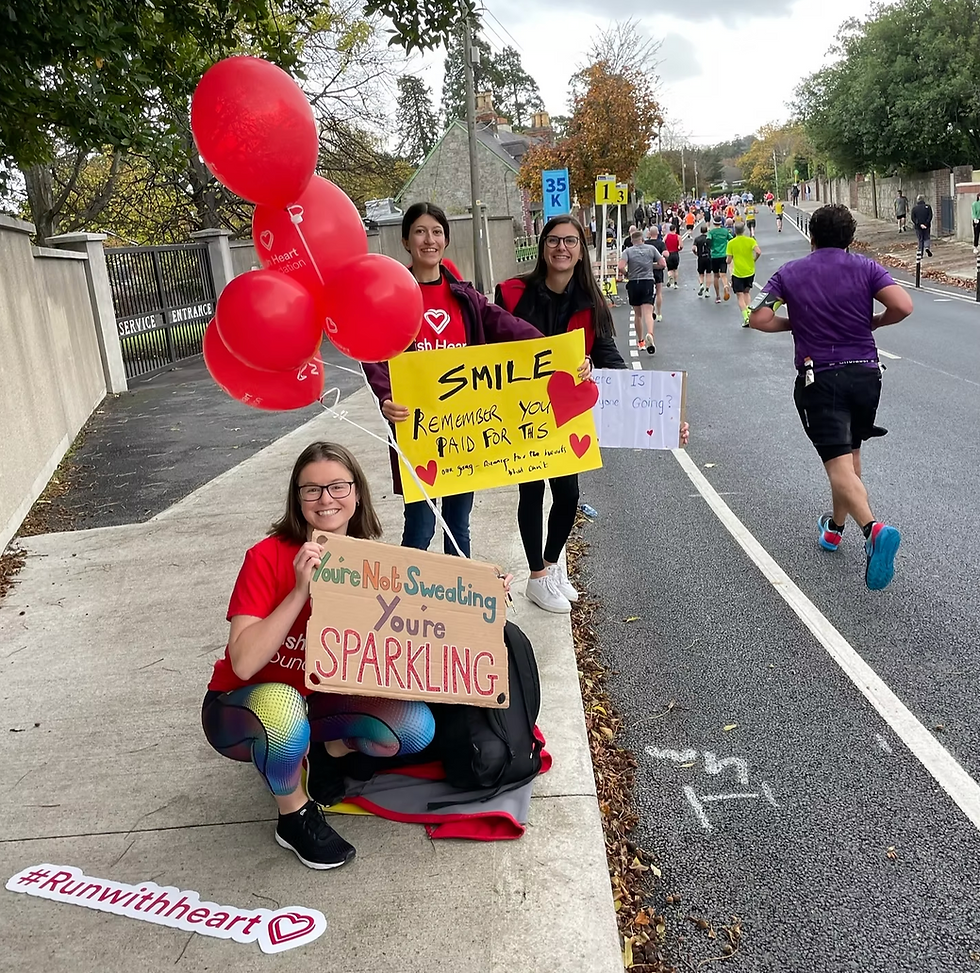
Dublin combines the atmosphere of a major international marathon with a character that is very different from the enormous World Marathon Majors. A field of around 22,500 is large enough to create a significant event but small enough that the course does not feel overwhelmingly crowded throughout.
Phoenix Park provides one of the race's most distinctive settings, but the residential neighbourhoods are just as important to the experience. The crowds can be thinner in some sections, but local support elsewhere is excellent and becomes particularly strong as runners return towards the finish.
Running The Dublin Marathon For Charity
Charity fundraising is now a major part of the Dublin Marathon. The organisers say runners raise more than €9 million for good causes each year, while the official charity programme works with charities from Ireland and internationally.
Applying through the Official Charity Programme provides another way of securing a Dublin Marathon place. Runners choose a participating charity and submit an application, and successful applicants receive a guaranteed race entry in return for committing to the minimum fundraising target set by that charity.
The number of places and fundraising requirements vary between charities, and a charity application itself does not guarantee acceptance because individual organisations decide which applicants join their teams. This can nevertheless be an excellent option for runners who were unsuccessful in the general ballot.
Runners who already have their own place can also fundraise for a charity without taking one of its guaranteed entries. This is different from a charity place because the runner has secured their marathon entry independently and is simply choosing to use it to raise money for a cause.
How To Enter The Dublin Marathon
General entry for the 2026 Dublin Marathon was allocated through a ballot following record demand. The ballot carried a €5 administration fee. Successful applicants had this deducted from the full €110 race entry fee, while the administration fee was non refundable for unsuccessful applicants.
Places outside the general ballot are allocated through routes including charity entries, Good For Age applications, elite entries, international sports tour operators, sponsors, partners and community programmes. Good For Age applicants must have achieved the relevant qualifying marathon standard within the previous two years, but meeting the standard does not automatically guarantee a 2026 place.
There are also official refund and transfer systems through which returned places can become available. The 2026 transfer window runs until 30 August, but runners should only use the official system. Swapping or transferring a race number outside the authorised process is prohibited and can result in disqualification.
Our Verdict
The Dublin Marathon has become considerably harder to enter, but its popularity is understandable. It combines an interesting and varied course, strong neighbourhood support and a city that makes an excellent destination for a marathon weekend.
This is not the race to choose simply because you want the flattest possible route. There are undulations to respect and some quieter stretches where runners need to maintain their own momentum, but these are balanced by excellent support elsewhere and a memorable final section back towards the heart of Dublin.
For anyone putting together a list of European marathons they would like to experience, Dublin deserves serious consideration. Pace the early miles sensibly, save something for the
second half and, perhaps most importantly, save the Guinness until you have the medal.


Comments