.png)

Fundraising Ideas For Runners: Alice Sullivan’s Story
Alice Sullivan once thought a marathon was beyond her. She ran with a club, took part in 10Ks and gradually moved up to half marathons, but 26.2 miles felt like a different challenge. Then she was offered a London Marathon place with Kids Cancer Charity.
In our podcast conversation, Alice talks about what helped her reach the finish, the fundraising events she organised and why knowing the families behind her charity gave her a reason to keep going when training became difficult. Read on for some great fundraising ideas for runners.

From Club Runs To The London Marathon
Alice’s first London Marathon was exciting and overwhelming in equal measure. Friends from her running club had done the race before, so they helped her navigate the event before she reached the start line. They went with her to the expo, showed her the finish area and took her on a short run through St James’s Park the day before.
That experience definitely helped, but it could not prepare her for the scale of the race. Alice had watched London on television and trained for months, but being among the runners and crowds was something she had to experience for herself.
“You’ve heard of it, you’ve watched it on the telly, you’ve looked forward to it, you’ve trained for it, but when you actually get there, it’s… just the scale of it,” she says.
Her coach had warned her that the opening kilometres were downhill, which helped her hold back when it would have been easy to run too quickly. Alice still remembers the relief of reaching the Embankment and hearing the crowds again.
Crossing the finish line brought a mixture of relief, excitement and tears. She stopped as soon as someone placed a medal around her neck, only for a volunteer to encourage her to keep walking towards her warm clothes. Alice recalls that walk as one of the longest she has ever made.
The Families Behind The Miles
Alice works as a Challenges and Events Officer at Kids Cancer Charity in South Wales. In the podcast, she explains that the charity supports families affected by childhood cancer through services including play therapy and family breaks. Its work made her marathon feel deeply personal.
One family supported by the charity were also close friends of hers. Their son had died shortly before his fourth birthday. Alice thought about him and other children during long training runs, particularly on days when she felt tired or reluctant to go out.
She knew when her run would end. The families she was thinking about could not always know what lay ahead in treatment or recovery. That perspective helped her keep moving, though Alice does not suggest that finding a reason to run makes training easy. It gave the difficult miles a meaning beyond her own finish time.
Finding A Connection With Your Charity
A runner does not necessarily need a personal history with a charity to care about its work, but the more they understand about its work the better. Alice regularly supports people who have chosen Kids Cancer Charity without previously knowing a family affected by childhood cancer. She tries to show them what their fundraising helps the charity do.
“I’m not asking you for money, I’m asking you to help me help these families,” she says of the message she wants runners to share with their supporters.
That connection matters during fundraising as well as training. It is easier to explain why you are asking for support when you can tell people about the work behind your target. Alice encourages runners to learn about their charity and talk to its team, especially if they first discovered it while looking for a race place.
How Alice Raised Money For Her Marathon
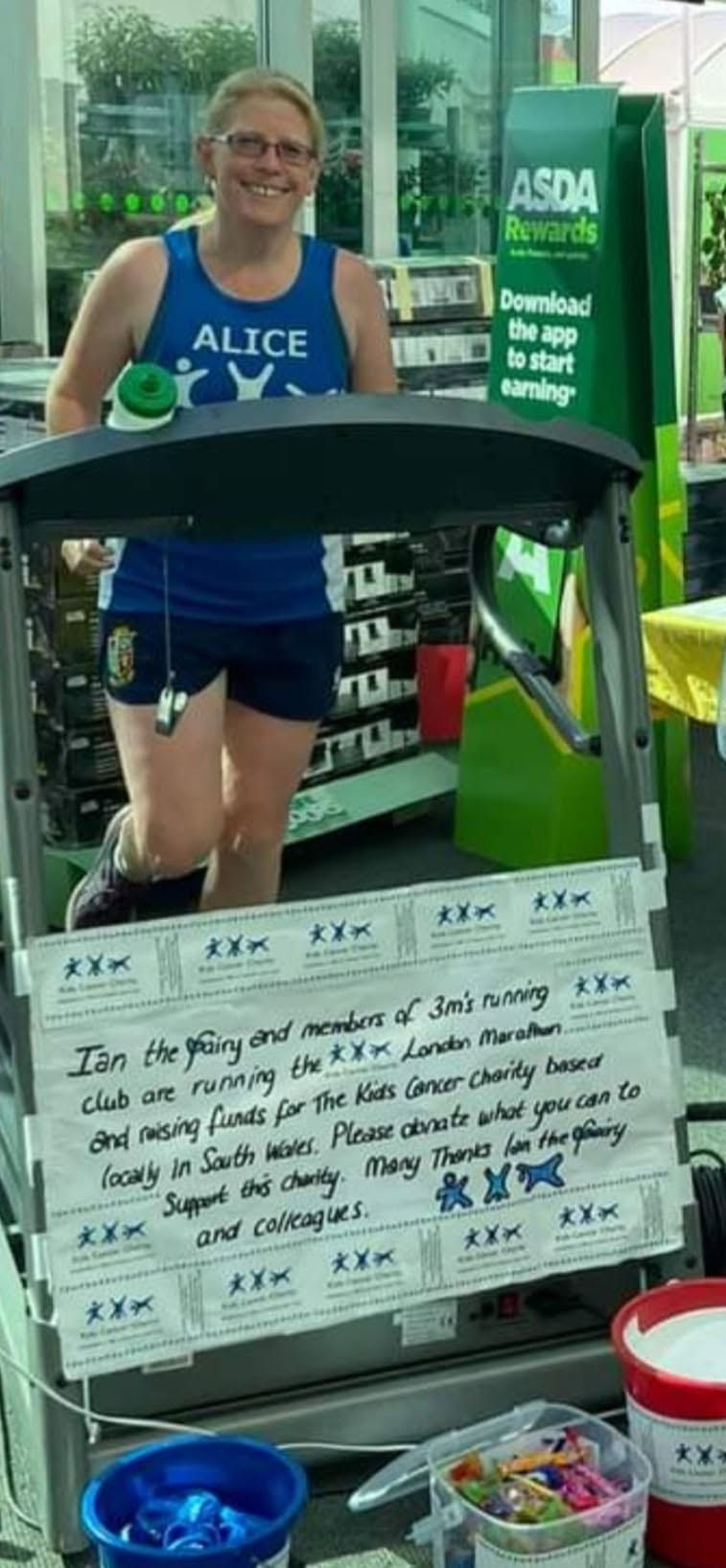
Alice tried several approaches instead of relying on repeated donation requests. She held cake sales, spent time on a treadmill in a supermarket foyer, organised a raffle through her running club and put together a curry and quiz night.
She was thoughtful about where she asked for support. Many people in her running club were fundraising for different charities, so she did not want every conversation there to become another request for money. She also reached out to people in her street, at her children’s rugby club, through church and in family chats.
The supermarket treadmill sessions introduced the charity to people outside her usual circle. Some shoppers noticed her on their way in and donated on their way out. Alice says the small contributions added up, and having a team to share the running and speak to shoppers helped keep the energy going.
For the curry and quiz night, she approached a local restaurant about using a quiet evening. The restaurant offered a reduced set menu, allowing part of each ticket price to go to the charity. Simple games and quiz rounds gave guests more ways to join in. Alice estimates that this evening alone raised around £500 to £600.
Her experience shows the value of choosing fundraising ideas that suit the people around you. A social evening gave supporters something to enjoy together, while the treadmill sessions helped her reach people she would not otherwise have met.
More Fundraising Ideas For Runners
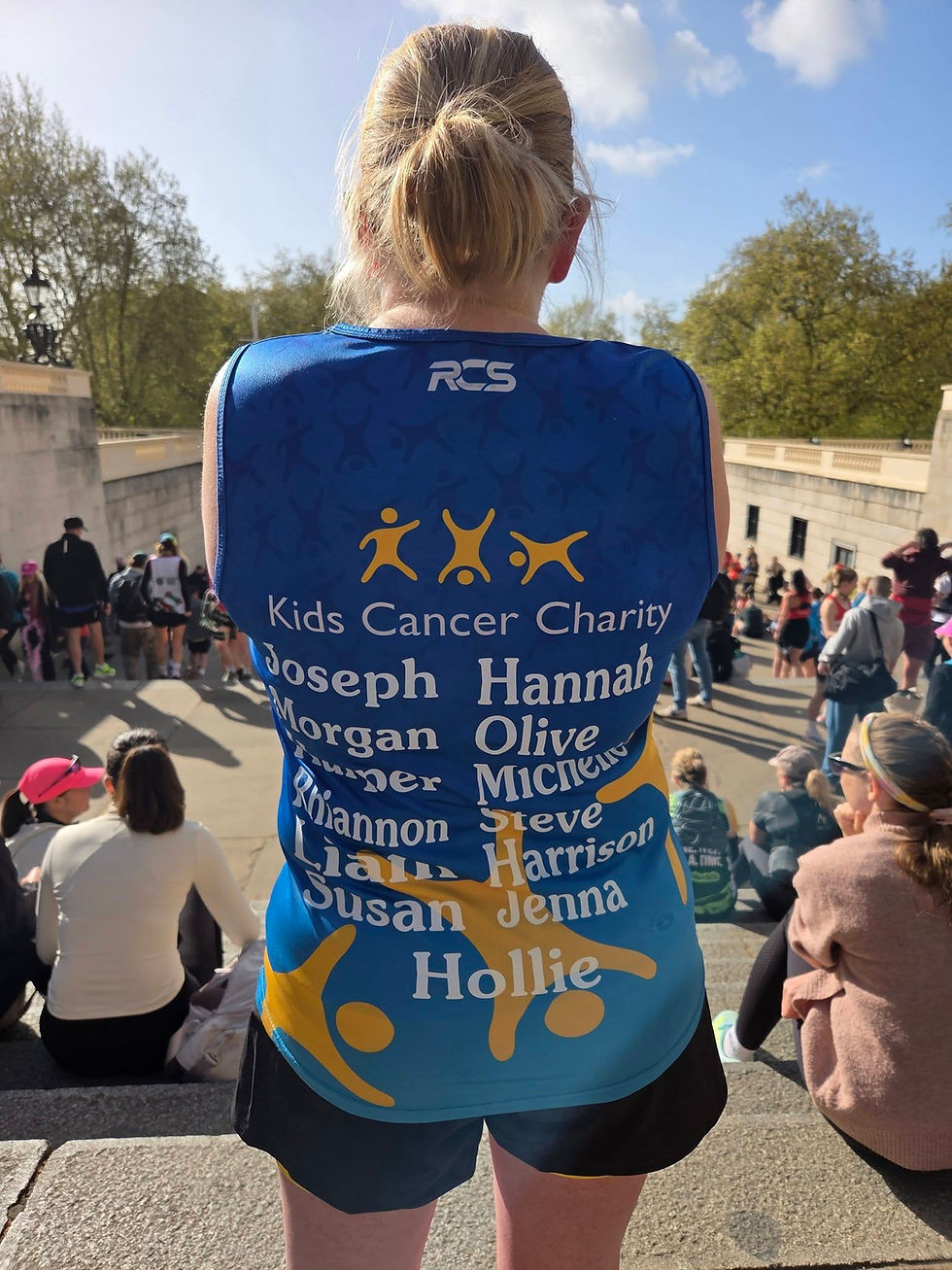
For the London Landmarks Half Marathon, Alice found another way to connect her fundraising with the people she was running for. She placed thirteen names on the back of her vest, one for each mile.
She invited families and supporters to add a name or a meaningful mile in the message accompanying a donation. Some chose a child’s age or birthday. As Alice reached each mile, she spent time thinking about that person and their family.
The names also started conversations with other runners, who could see that the writing on her vest was about more than identifying the person wearing it. Alice had set no fixed donation amount for adding a name.
“It kept me going round and [it was] a privilege really to carry them, as well as it being a fundraiser,” she says.
It was a personal approach, and one that depended on the families choosing to share their names. For Alice, it gave each mile a purpose she could hold on to.
Alice’s Advice For New Runners
Alice’s own journey began with shorter distances. She recommends building gradually and finding a way to run that feels welcoming, whether that means trying a local club, going to parkrun or following a beginner running plan independently.
Running with other people helped her. They encouraged her, shared what they had learned and reminded her not to do too much too soon. She also recognises that some beginners would rather start on their own. The useful first step is the one you feel able to take.
Alice moved from 10Ks to half marathons before considering a marathon. At each stage, the next distance once seemed out of reach. Running shorter events gave her the confidence to reconsider what she might be able to do.
More Than A Finish Time
Since her first London Marathon, Alice has also run the Rome Marathon and completed a virtual London Marathon route overnight. Yet her story is about more than adding races to a list.
Running for Kids Cancer Charity brought together her work, her friendships and the families she wanted to support. Fundraising gave her practical ways to involve other people, while learning more about the charity gave her something to draw on through training and on race day.
If you are thinking about taking on a charity run, Alice’s advice is to get to know the cause behind your place. Find out what the charity does, ask how your fundraising helps and choose ideas that fit your community. The finish line will still matter, but you may find that the people you run for stay with you long after you cross it.
If you'd like to run for Kids Cancer Charity you can find out more here


Comments