.png)

Hamstring Injuries From Running: Causes, Symptoms, Treatment And Prevention
Hamstring pain can be particularly frustrating for runners. It may begin as a feeling of tightness at the back of the thigh, or it can appear suddenly during a faster run with a sharp pain that immediately forces you to slow down or stop.
The hamstrings play an important role in running, helping to control the leg as it moves through each stride and contributing to the force needed to propel you forwards. They work particularly hard during faster running, which is one reason hamstring strains are commonly associated with sprinting and sudden increases in speed.
Not every ache at the back of your thigh means you have injured your hamstring. Understanding the difference between normal muscle soreness, persistent tightness and a possible strain can help you decide whether to keep running, reduce your training or get the problem assessed.

What Are The Hamstrings?
Your hamstrings are a group of three muscles running down the back of each thigh. They help bend your knee and extend your hip, making them important for everyday movement as well as running.
During running, the hamstrings repeatedly lengthen and contract as your legs move through the running cycle. The demands placed on them increase as you accelerate and run faster, particularly as the leg prepares to make contact with the ground.
A hamstring injury usually involves damage to muscle fibres, although the severity can vary considerably. At one end of the scale there may be a relatively minor strain, while a serious injury can involve a substantial or complete tear.
What Causes Hamstring Injuries In Runners?
A hamstring strain can occur when the muscle is subjected to more force than it can currently tolerate. Sudden acceleration, sprinting, a fast finish or demanding speed session can expose the hamstrings to much greater forces than steady running.
Changes in training can also contribute. Increasing your running volume or intensity too quickly, introducing speed sessions after months of predominantly easy running or returning too aggressively after a break can increase the demands on muscles that may not yet be prepared for them.
Fatigue may also affect the hamstrings' ability to cope with those demands. Previous hamstring injury is another important risk factor, which makes proper rehabilitation and a progressive return to running particularly important for anyone who has strained a hamstring before.
Tight Hamstring Or Hamstring Injury?
Runners frequently describe their hamstrings as "tight", but tightness does not necessarily mean that muscle fibres have been damaged. You may simply notice stiffness after a hard training session, after increasing your mileage or following an unfamiliar type of exercise.
Delayed onset muscle soreness can also cause aching and stiffness after demanding exercise. It usually develops in the hours after exercise and can be felt in both legs, whereas an acute hamstring strain is more likely to cause distinct pain in a particular area during activity.
A strain becomes more likely if you experience sudden pain while running, particularly when accelerating or running quickly. Continuing to repeatedly test a painful hamstring by increasing your pace can aggravate the problem rather than telling you whether it has recovered.
What Does A Hamstring Strain Feel Like?
A mild hamstring strain may cause localised discomfort or tenderness at the back of the thigh. You might be able to walk relatively normally but notice pain when running, bending or straightening the leg, or when the hamstring is placed under greater load.
More significant injuries typically cause sharper and more immediate pain. Some runners describe feeling as though something suddenly grabbed or struck the back of their thigh, while a more serious injury may be accompanied by a popping or snapping sensation.
Swelling and bruising can develop following a substantial injury and may become more noticeable over the following hours or days. Walking or putting weight through the affected leg can also become difficult when the injury is more severe.
Should You Run With Hamstring Pain?
Running through sharp or worsening hamstring pain is not a sensible strategy. If pain appears suddenly while you are running, particularly during a fast effort, stop the session rather than trying to complete the planned distance.
Milder discomfort needs a little more judgement, but pain that increases as you run or causes you to alter your normal stride should not simply be ignored. Repeatedly compensating for a painful leg can turn what initially seemed like a minor problem into a longer interruption to your training.
If discomfort is persistent, keeps returning or you are unsure whether you have actually injured the muscle, a physiotherapist or other suitably qualified healthcare professional can assess the problem. Pain at the back of the thigh can have other causes, so it should not automatically be assumed to be a hamstring strain.
What Should You Do Immediately After A Hamstring Injury?
If you experience sudden hamstring pain during a run, stop running and avoid activities that clearly aggravate it. During the first few days, the priority is generally to protect the injured area while maintaining comfortable movement rather than repeatedly testing the muscle.
Ice can provide short-term pain relief for some people, although it does not repair the injured muscle or necessarily speed healing. Compression may also help with swelling and comfort, particularly after a more significant strain.
Avoid aggressive stretching or deep massage immediately after an acute injury. Pulling hard on a newly injured muscle because it feels tight can place unnecessary stress on damaged tissue rather than helping it recover.
How Are Hamstring Injuries Treated?
Rehabilitation generally becomes progressively more active as pain and movement improve. Rather than simply waiting until the hamstring stops hurting, recovery usually involves gradually restoring comfortable movement before rebuilding the muscle's strength and ability to tolerate increasing loads.
Strengthening is an important part of rehabilitation because running places considerable demands on the hamstrings. Exercises can be progressed over time, including work that strengthens the hamstrings while they lengthen, before running and eventually faster training are gradually reintroduced.
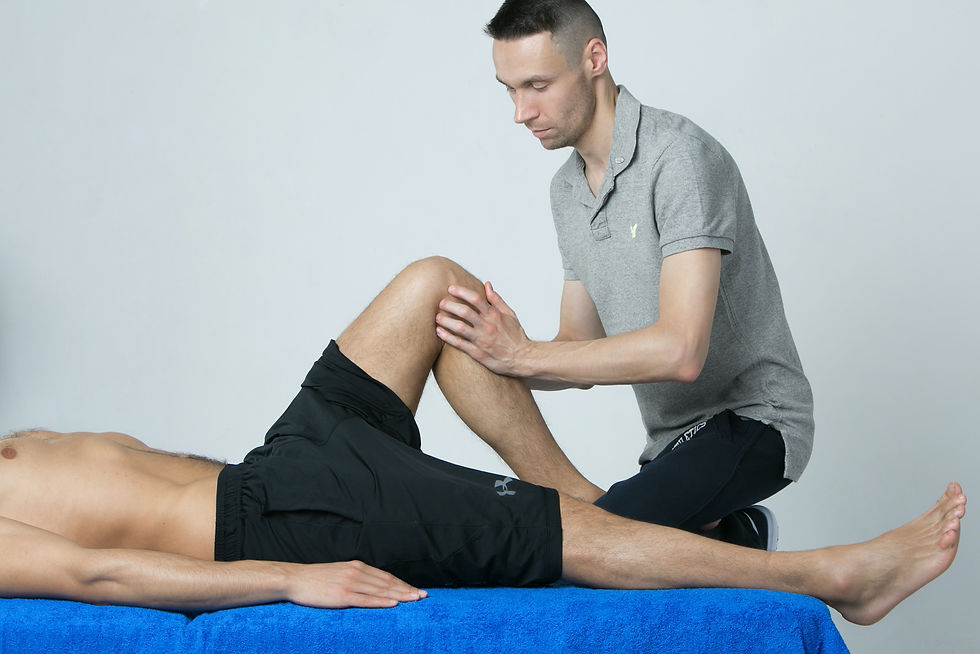
A physiotherapist can tailor rehabilitation to the runner, the location of the injury and its severity. Severe tears are very different from ordinary running strains and may require specialist treatment, although surgery is uncommon for typical hamstring strains.
How Long Does A Hamstring Injury Take To Heal?
There is no single recovery time because hamstring injuries range from minor strains to major muscle or tendon injuries. A mild strain may settle within a few weeks, while a more significant injury can require considerably longer before normal training can be resumed safely.
Recovery time also depends on where the injury is located, its severity and the demands you intend to return to. A runner preparing to resume easy jogging has a different requirement from someone attempting to return to sprinting or high-intensity racing.
This is why simply waiting a predetermined number of days is not a reliable way to judge recovery. Pain, strength, movement and the hamstring's ability to tolerate progressively harder exercise are all important when deciding when to increase your running again.
When Can You Start Running Again?
Returning to running should be a progression rather than an immediate return to your previous training schedule. Everyday activities should be comfortable, and you should have regained sufficient movement and strength to begin exposing the hamstring to the demands of running.
Initial runs will normally be short and easy, with distance and then intensity gradually increased according to how the hamstring responds. Faster running places substantially greater demands on the hamstrings, so intervals, sprinting and hard racing should generally return later in the rehabilitation process.
Pay attention to how the leg responds both during and after each run. Being able to complete one easy session is encouraging, but the aim is to rebuild enough capacity for the hamstring to cope consistently as your normal training gradually returns.
How Can Runners Reduce The Risk Of Hamstring Injuries?
It is impossible to prevent every hamstring injury, but sensible training progression can reduce avoidable risk. Large and sudden increases in running speed or overall training load are best avoided, particularly if you have not done faster running for some time.
Regular strength training can also help prepare the hamstrings and surrounding muscles for the demands of running. A programme that progressively challenges the hamstrings through different movements can be more useful than only starting strengthening exercises after an injury has occurred.
A progressive warm-up before demanding sessions can prepare your body for faster running, particularly before intervals, hills and races. If you have previously suffered a hamstring injury, maintaining appropriate strengthening and gradually reintroducing higher-speed running can be especially important.
When Should You Get A Hamstring Injury Checked?
Seek prompt medical assessment if you have severe pain, heard or felt a pop, develop substantial swelling or bruising, cannot walk normally or notice significant weakness in the leg. A visible change in the shape of the muscle or a severe injury following a sudden movement also needs appropriate medical attention.
Less dramatic symptoms may still benefit from assessment if they are not improving, repeatedly return when you run or prevent you progressing back towards your normal training. Persistent pain around the upper hamstring or close to the buttock can also involve the hamstring tendon rather than a straightforward muscle strain and may need a different rehabilitation approach.
Final Thoughts On Hamstring Injuries From Running
Hamstring discomfort is not always a hamstring injury, and post-run stiffness or muscle soreness is different from the sudden, localised pain of an acute strain. When pain appears abruptly during a run, particularly during faster running, stopping the session is a better option than trying to push through it.
For a genuine hamstring injury, recovery involves more than simply waiting for the pain to disappear. Progressive movement, strengthening and a gradual return to running can rebuild the hamstring's ability to cope with training, while severe, persistent or recurring symptoms should be assessed by an appropriate healthcare professional.


Comments