.png)

Helsinki City Half 2027: Race Guide, Course And How To Enter
The Helsinki City Half returns to the Finnish capital on Saturday 8 May 2027, bringing thousands of runners together for Finland's largest half marathon.
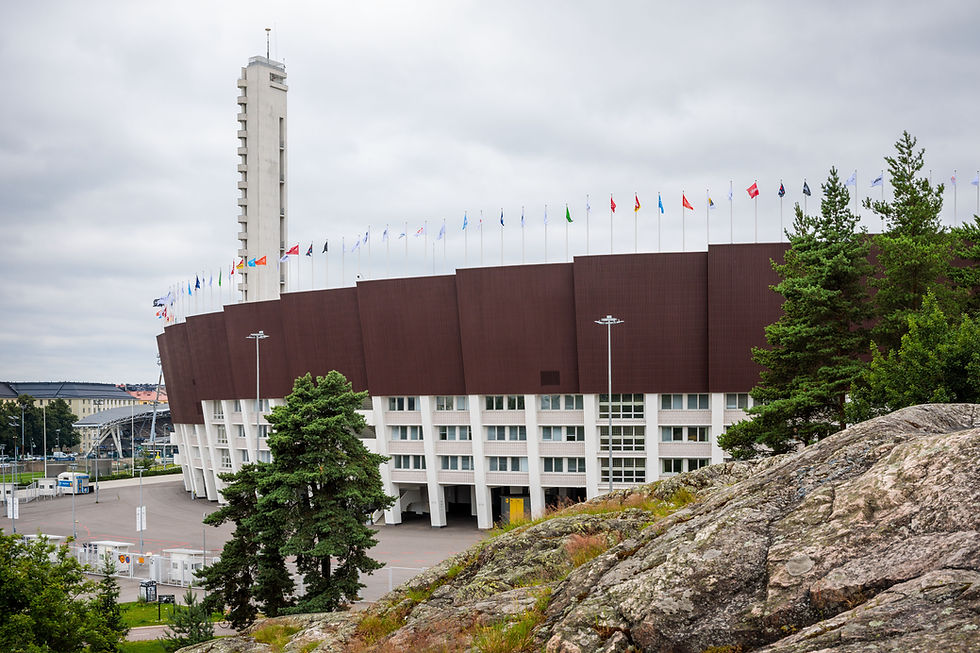
The race forms part of the Helsinki City Run weekend and combines central Helsinki with coastal and greener areas of the city. It starts close to the Helsinki Olympic Stadium before eventually returning for a finish inside one of Finland's most important sporting venues.

The Destination
Helsinki sits on Finland's southern coast, surrounded by the Baltic Sea and an archipelago containing hundreds of islands. It is a relatively compact capital, making many of its central attractions easy to explore on foot or by public transport.
Senate Square and Helsinki Cathedral are among the city's best known landmarks, while nearby Market Square sits beside the harbour. Ferries connect the city with Suomenlinna, the historic sea fortress spread across several islands just off the coast.
Helsinki also has a strong sporting history. The Helsinki Olympic Stadium hosted the 1952 Summer Olympics and remains one of the city's most recognisable buildings, as well as providing the finish for the Helsinki City Half.
History Of The Helsinki City Half
The half marathon was first held in 1994 under the Helsinki City Run name. It grew considerably over the following decades and is now the largest half marathon in Finland.
In 2018, the race joined the Helsinki City Marathon and other distances as part of a combined running event. The wider weekend has continued to develop and now uses the
Helsinki City Run name originally associated with the half marathon.
The programme now brings together several different running events over the same weekend. These range from shorter distances through to the marathon, while the Helsinki City Double allows runners to complete both the marathon and half marathon on the same day!
When Is The Helsinki City Half 2027?
The Helsinki City Half 2027 takes place on Saturday 8 May. It forms part of the Helsinki City Run weekend, which begins on Friday 7 May and continues throughout Saturday.
Runners are allocated to start groups according to their expected finishing times, although the organiser can make changes to the schedule before race weekend.
The maximum running time is three hours. Results are based on net time, meaning each runner's individual time begins when they cross the start line.
Helsinki City Half Expo And Race Bib Collection
The Race Office and Running Expo are based at the Helsinki Olympic Stadium. Runners collect their race bib here and should have the QR code provided by the organiser available when doing so.
The current 2027 information shows bib collection available on Friday and again from Saturday morning. Half marathon runners collecting on Saturday must do so at least one hour before their start time, while another person can collect a bib on a runner's behalf if they have the relevant QR code.
Runners should check the final collection times before travelling because detailed event arrangements can change as race weekend approaches.
Race Morning
The Helsinki City Half starts on Mäntymäentie, close to the Paavo Nurmi statue and Helsinki Olympic Stadium. The area is served by Helsinki's public transport network, although runners should allow for road closures and changes to normal services around the event.
Seven start waves are provisionally planned for 2027, beginning at 2.20pm and continuing at eight minute intervals. Runners should use the group allocated to them by the organiser and check their final race information for any changes to the published schedule.
Participant services are centred around the main event area at the Olympic Stadium. Allowing enough time for bag storage, toilets and reaching the correct start group should make the build up to the race considerably easier.
Helsinki City Half Course
The final course for the Helsinki City Half 2027 has not yet been published. The organiser currently provides information for the 2026 route, so individual streets and sections should not be treated as confirmed for 2027 until the new map is released.
The 2026 course started beside the Olympic Stadium before heading towards central Helsinki and then west towards the coast. It travelled through districts and islands including Ruoholahti, Lauttasaari, Kaskisaari, Lehtisaari and Kuusisaari before returning towards the stadium through the northern side of central Helsinki.
The following description therefore provides an indication of the type of course runners can expect based on the most recent route rather than presenting it as the confirmed 2027 course.
Mäntymäentie And Mannerheimintie
The race started on Mäntymäentie beside the Paavo Nurmi statue and close to the Olympic Stadium. Runners then reached Mannerheimintie, one of Helsinki's principal roads and an important route through the centre of the capital. This opening part of the course placed runners within the more urban side of Helsinki before the route moved towards the western districts. Several of the city's major cultural and civic buildings are concentrated around this part of central Helsinki.
Central Helsinki And Baana
The route continued through central Helsinki before reaching Baana, a pedestrian and cycling corridor constructed through a former railway cutting. It provides a distinctive route through the city and connects the central area with districts further west. This section marked the transition away from Helsinki's busiest central streets. From Baana, the race continued towards Ruoholahti and the coastal parts of the course.
Ruoholahti And Lauttasaari
Runners travelled through Ruoholahti before crossing towards Lauttasaari, one of the larger islands immediately west of central Helsinki. The surroundings changed noticeably here as the route moved away from the dense city centre. The Baltic Sea became a much more prominent feature through this part of the race. Bridges, coastal roads and views across the surrounding water reflected the geography that makes Helsinki very different from many inland European capitals.
Kaskisaari, Lehtisaari And Kuusisaari
From Lauttasaari, the 2026 route continued through a chain of islands on the western side of Helsinki. Kaskisaari, Lehtisaari and Kuusisaari provided some of the more residential and coastal surroundings on the course. The connections between these islands meant runners repeatedly encountered the water as they travelled north. This extended the maritime character of the middle part of the race before the route began turning back towards central Helsinki.
Meilahti And Pikku Huopalahti
The return journey took runners through areas including Meilahti and Pikku Huopalahti. These districts combine residential streets with parks and waterfront areas, providing another change in surroundings after the island sections. The course then continued towards Laakso and the northern side of the city centre. From here, runners approached the area around Töölö and the Olympic Stadium once again.
The Olympic Stadium Finish
The closing section brought runners back towards the Helsinki Olympic Stadium before they entered the stadium itself for the finish. This provides the race with a distinctive conclusion after its journey through central and western Helsinki. The stadium originally opened in 1938 and became internationally known when Helsinki hosted the 1952 Summer Olympics. Finishing inside a venue with such an important place in Finnish sporting history is one of the defining features of the Helsinki City Half.
How Difficult Is The Helsinki City Half Course?
The Helsinki City Half is not defined by major sustained climbs, although the route does include changes in elevation as it moves between central Helsinki, the coast and the western islands. The precise profile for 2027 cannot be assessed until the final course has been released.
The organiser describes the current course as faster than its predecessor, while the route is also AIMS certified. These characteristics make Helsinki an interesting option for runners looking for a major city half marathon without significant hills dominating the course.
Weather can provide another variable, particularly on the more exposed coastal and island sections. Early May can bring cool spring conditions in Helsinki, but wind and rain can also affect the race.
What Makes The Helsinki City Half Special?
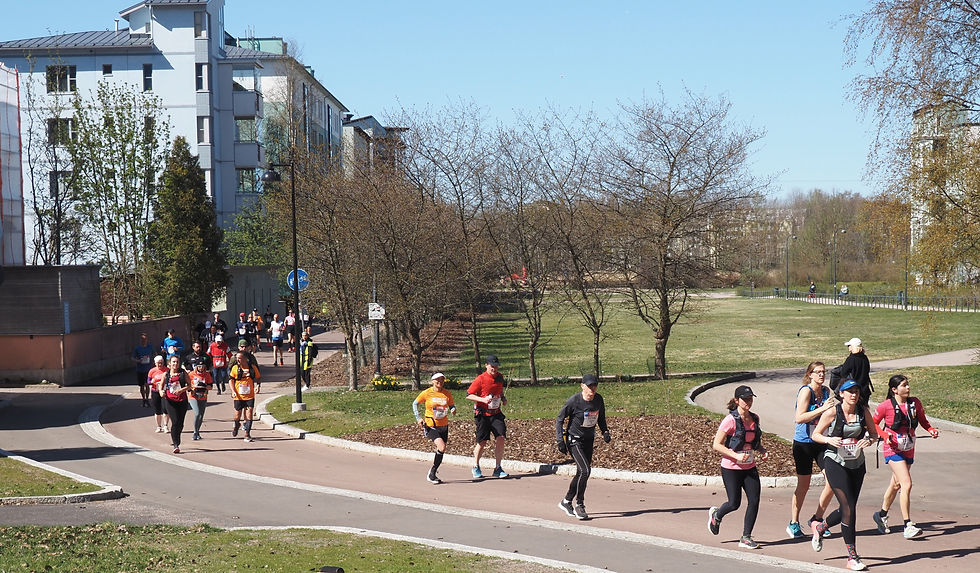
Helsinki's geography gives the race much of its character. The course does not remain entirely within the city centre, instead combining major urban streets with islands, coastal roads, residential districts and greener areas.
The Olympic Stadium finish provides another point of difference. After travelling around the Finnish capital, runners complete their half marathon inside a venue closely associated with Finland's sporting history.
The race also forms part of a much larger running weekend rather than operating as a standalone event. The different distances bring runners with a wide range of goals together around Helsinki and the Olympic Stadium.
Is The Helsinki City Half Good For First Time Half Marathon Runners?
Helsinki can be a good choice for runners taking on their first half marathon. The course does not contain major sustained climbs, while the three hour time limit provides a reasonable window for runners across a broad range of abilities.
The event also has the infrastructure associated with a large international race, including multiple start groups, bag storage and refreshment points around the course. Pacers have traditionally been available for a selection of finishing times, although the final arrangements for 2027 have not yet been confirmed.
How To Enter The Helsinki City Half 2027
Entries for the Helsinki City Half 2027 are open and runners can register directly while places remain available. There is no ballot for standard entries, although the registration price increases in stages as the event approaches.
The entry fee is €59 until 31 October 2026, with the next published price increasing to €65. Entry includes official timing, on course and finish refreshments, bag storage and a finisher medal for runners completing the race within the time limit.
Race numbers are personal and cannot be transferred to another runner. Anyone planning to enter should check the organiser's current terms, entry price and availability before completing their registration.
Running The Helsinki City Half For Charity
There is currently no confirmed 2027 charity entry programme comparable with the systems used by some major races where charities receive allocations of guaranteed places.
Standard entries remain available directly from the organiser, making it possible for runners to secure their own place and then fundraise for a cause of their choice.
This approach allows runners to choose the charity they want to support without relying on an organisation having places in the race. Any fundraising target or other arrangements can then be agreed directly with the chosen charity.
Where To Stay
Helsinki has a wide choice of accommodation and a public transport network covering the city centre and surrounding districts. Staying close to a tram, train or Metro connection can therefore be just as useful as choosing accommodation immediately beside the event area.
Töölö is particularly convenient for runners who want to stay close to the Olympic Stadium. The district also provides easy access to central Helsinki while keeping runners within reasonable walking distance of the race area.
The area around Helsinki Central Station is another practical option. It provides convenient transport connections, including trains to Helsinki Airport, while many of the city's main attractions and restaurants are within walking distance.
Kamppi, immediately west of the central area, also has a wide choice of accommodation and good public transport connections. It can work particularly well for runners combining the race with a longer weekend exploring Helsinki.
Accommodation in convenient central locations can become more expensive as the event approaches. Booking ahead gives runners a wider choice, particularly if staying close to the Olympic Stadium or city centre is important.
Our Verdict
The Helsinki City Half offers an interesting alternative to some of Europe's better known spring half marathons. Its combination of central streets, islands and coastal scenery gives the course a strong connection with Helsinki rather than simply using the city as a backdrop.
The Olympic Stadium finish adds something genuinely distinctive, while direct entry makes the race relatively straightforward to access compared with heavily oversubscribed events. Combined with a compact capital that works well for a weekend away, Helsinki has plenty to offer runners looking for a European half marathon in 2027.
Race Website
Affiliate disclosure: This article contains affiliate links. If you make a purchase through one of these links, Sapphire Running Zone may receive a commission at no additional cost to you.


Comments