.png)

Inside a Sub 3 Hour Marathon: How Adam Dixon Ran Manchester in 2:57
For most runners, completing a marathon is a remarkable achievement. For others, the challenge lies not just in crossing the finish line but in chasing ambitious time goals that require months of disciplined training, meticulous pacing, and unwavering mental focus.
In the latest podcast from Sapphire Running Zone, Adam Dixon shares his experience of running the Manchester Marathon in a very impressive 2 hours and 57 minutes. Along the way, he offers valuable insights into training, race strategy, nutrition, and the mindset required to perform at your best.
HAVE A LISTEN TO THE PODCAST HERE
From Casual Runner to Competitive Marathoner
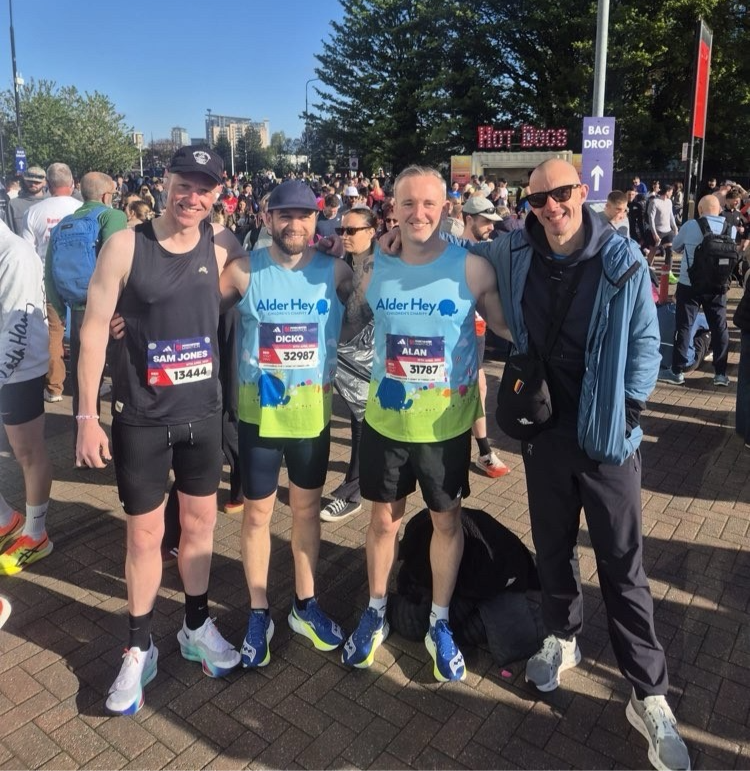
Adam's running journey accelerated during the COVID years, when he began taking training more seriously and focusing on structured marathon preparation. Despite balancing work with Alder Hey Children's Charity and everyday life commitments, he has steadily developed into a highly capable endurance athlete. Interestingly, his Manchester Marathon training block wasn't ideal from the outset. A three-week trip to Japan delayed the start of focused training until late January, yet he still managed to build a successful programme around speed sessions, long runs, gym work, and easy mileage. His average training volume was around 37 miles per week; lower than many runners targeting a sub-three-hour marathon.
The Importance of Strength Training and Hills For A Sub 3 Hour Marathon
One recurring theme throughout Adam's interview was the importance of strength training.
While many runners focus exclusively on mileage, Adam credits gym work and hill training as key contributors to marathon success. He regularly incorporated interval sessions, long runs with significant elevation gain, and strength work to build resilience. Rather than chasing marathon pace during every run, he focused on making his body stronger and more efficient.
"The biggest one for me is mindset. You need to have a positive mind."
This philosophy extended beyond physical preparation. Adam believes that enjoying the process and approaching training with a positive attitude is just as important as the workouts themselves.
The Manchester Marathon Experience
Having previously completed Manchester Marathon, Adam was eager to return. The combination of a fast course, excellent organisation, and local convenience made it an easy choice. Despite arriving later than planned due to traffic and road closures, he quickly settled into his race rhythm. One of the standout features of Manchester Marathon was the crowd support. Adam compared the atmosphere favourably with some of the biggest marathon events in the world, praising the thousands of spectators who lined the streets throughout the course. "The support was immense," he explained, highlighting how the crowds created an unforgettable race-day environment.
Running a Smart Marathon
For many runners, one of the most valuable parts of the conversation was Adam's explanation of pacing. His target was to run between 6:40 and 6:45 per mile. If he found himself running even a few seconds too quickly, he deliberately slowed down to preserve energy for later in the race. The result was an exceptionally well-executed performance. His second half marathon was only 30 seconds slower than the first, an almost perfect pacing strategy.
"I always think it's better to leave more in the tank towards the end."
Rather than chasing time early and risking a dramatic slowdown, Adam focused on maintaining consistency throughout the race. It's a lesson that applies whether you're aiming for a sub-three marathon or simply trying to achieve a personal best.
Nutrition: The Often Overlooked Performance Tool
Adam also shared his race-day nutrition strategy. Using the same products he trained with, he consumed a gel approximately every three and a half miles, taking a total of eight gels throughout race day, including one before the start. He believes this consistency has helped him avoid the dreaded marathon "wall" that many runners experience. His advice was simple: never experiment with new nutrition products on race day. Alongside gels, Adam also incorporated beetroot shots and daily creatine supplementation into his preparation, helping support recovery and performance throughout the training cycle.

The Emotional Finish
As the finish line approached, Adam knew he was on course to break three hours. Months of training, sacrifices, early mornings, and hard sessions were about to pay off. The result was a highly emotional finish and a personal milestone that reflected every hour invested in the journey.
"No one can take that away from you. That's something that you've earned."
It's a powerful reminder that marathon success is about far more than a finish time. Every runner who commits to the process earns something valuable through the experience.

Beyond Manchester: Taking on an Ultra Challenge
Just weeks later, he entered a Backyard Ultra event, where runners complete a 4.1-mile loop every hour until only one participant remains. Although he fell short of his ambitious 100-mile target, he still completed 54 miles and gained valuable lessons about endurance, mindset, and the unique mental challenges of ultra-running. The experience reinforced his belief that success in endurance sport is as much about mental resilience as physical fitness.
What's Next?
Adam's next target is the Warsaw Marathon, where he'll aim to improve further and chase a Good For Age qualifying time for the London Marathon. To bridge the gap between his current personal best and his next goal, he plans to increase his weekly mileage, continue strength training, and add more mobility and rehabilitation work into his routine. For runners of every ability, Adam's story offers a valuable reminder that progress comes from consistency, smart training, and self-belief. Whether your goal is three hours, four hours, or simply finishing your first marathon, the principles remain the same: Train consistently. Stay patient. Trust the process. Believe in yourself.


Comments