.png)

Kiprun Running Shoes Explained: Everything You Need To Know
Updated: Sep 30
Kiprun is Decathlon’s running brand, with road shoes covering everything from first runs to marathon racing. Its range has grown beyond straightforward entry level footwear. You can now choose between everyday shoes, maximum cushioning, a dedicated support model and several options for faster training and racing.
Kiprun’s range has something for many kinds of road runner, but the right choice depends on what you need the shoes to do. A pair for comfortable daily miles has a different job from one built for faster sessions or race day. This guide explains Kiprun’s approach to running shoes, explores its current road range and helps you work out which models are worth trying.

The History Of Kiprun
Kiprun is Decathlon’s running brand. According to the company, its name came from the encouragement to “keep running” heard at the 2007 New York City Marathon. That idea still shapes how Kiprun presents itself: equipment for people starting to run as well as athletes pursuing faster times.
The range has expanded into road, track and trail running. Its road shoes now cover everyday training, additional support, faster sessions and carbon plated racing. Kiprun also develops products with feedback from competitive athletes and other runners.
That breadth is one of the most interesting things about the brand. A runner buying their first pair of dedicated running shoes and an experienced marathoner looking for a race shoe could both find an option from Kiprun, although they would be looking at very different parts of the range.
Why Are Kiprun Running Shoes Different?
It would be too simple to assume that every Kiprun shoe is a low cost alternative to another brand’s model. Some provide an accessible starting point, while others use more specialised foams and constructions. The useful question is whether a particular shoe suits your running, rather than whether Kiprun as a whole is a budget or performance brand.
The names become more useful once you know the range. Kipcore includes versatile road shoes, Kipride focuses on comfortable daily running, and Kipstorm contains much of the faster training and racing collection. Some current shoes still use older names, such as KS900 Support, so it is worth checking the purpose of each model.
How Do Kiprun Running Shoes Fit?
There is no single Kiprun fit that applies to every road shoe. An everyday model and a racing shoe have different jobs, and their uppers can hold the foot differently.
When trying a pair, check that your heel feels secure without pressure across the top of your foot. You should have enough room in front of your longest toe, particularly if the shoes will be used for long runs when your feet may swell. A faster shoe may feel more secure around the foot, but it should remain comfortable over the distance you intend to race.
Do not assume that your size in another brand will transfer exactly to Kiprun, or that two Kiprun models will fit identically. Trying the specific shoe is the most reliable approach where possible.
What Cushioning Does Kiprun Use?
Kiprun uses different midsole materials across its road range. Kipcore Premium uses Softech foam for daily running, while Kipride uses Fastech foam in a shoe designed to handle a variety of training sessions. Kipride Max puts more emphasis on cushioning with Softech+.
Further up the performance range, Kipstorm Tempo uses Fastech+ for faster running. The carbon plated racing shoes differ again in their foams, plates and overall design.
These names are useful when comparing models, but they cannot tell you exactly how a shoe will feel. The amount and shape of the cushioning, the width of the platform and the fit all affect the experience. A softer shoe will not automatically be the best choice for every runner or every session.
What Is Heel Drop?
Heel drop is the difference in height between a shoe’s heel and forefoot. Kiprun does not use the same drop throughout its road range. Kipride and Kipride Max have a 6mm drop, while Kipstorm Tempo has an 8mm drop.
Neither number makes a shoe automatically better. A substantial change from the shoes you normally wear can alter the demands placed on your calves and lower legs, so introduce an unfamiliar shoe gradually. Comfort and intended use matter more than choosing a model solely by its drop.
Does Kiprun Make Neutral Running Shoes?
Yes. Much of Kiprun’s road range is aimed at neutral running, including daily shoes and faster models. A neutral shoe does not have a dedicated feature intended to guide the movement of your foot in the way a support shoe does.
That does not mean all neutral Kiprun shoes feel alike. A cushioned daily shoe may feel more settled than a lighter racing model, even though both are classed as neutral. Your experience with previous shoes can help you narrow the choice.
Does Kiprun Make Stability Shoes?
Yes. KS900 Support is a road shoe designed for runners looking for additional stability. Kiprun uses the geometry of its sole to provide support, giving the range an option for people who prefer more guidance than its neutral models offer.
You do not need to choose a support shoe solely because your feet roll inwards as you run. Many runners are comfortable in neutral shoes. If you have had persistent discomfort or are unsure which type suits you, trying different models and seeking a specialist fitting may be more useful than choosing by category alone.
Does Kiprun Make Carbon Plate Running Shoes?
Yes. Kiprun’s carbon plated road range includes Kipstorm Challenger, Kipstorm Elite and Kipstorm Lab. They are built for different kinds of racing rather than simply offering three versions of the same shoe.
Challenger is positioned as the more accessible carbon plated option and is listed for racing and faster training from 5K to the marathon. Elite focuses on half marathon and marathon racing. Lab is a more specialised, lightweight model with particular emphasis on shorter road races.
A carbon plate is only one part of a racing shoe. Foam, shape, fit and weight all influence how it runs. The most specialised option will not necessarily be the most comfortable or useful one for your event.
Does Kiprun Make Trail Running Shoes?
Yes. Kiprun produces trail shoes alongside its road range, although this guide focuses on shoes for running primarily on roads and other firm surfaces.
If your routes regularly include mud, loose ground or technical trails, choose according to the surfaces you encounter most often. Occasional well kept paths do not necessarily require a trail shoe, while a road outsole may struggle when grip becomes the main concern.
Which Kiprun Running Shoe Is Right For You?
Kiprun Kipcore Premium
Kipcore Premium is a versatile road shoe for regular training. Kiprun positions it for daily running and distances from 5K to the half marathon, with cushioning intended to balance comfort and responsiveness. It is a useful place to start if you want one general purpose pair and have no particular need for maximum cushioning, added support or a racing shoe. As always, the decision should come down to how it fits and feels when you run.
Kiprun Kipride
Kipride is an everyday road shoe intended to cover much of a runner’s training. Its Fastech cushioning is designed to provide comfort without making the shoe suitable only for slow running. Kiprun lists easy runs, recovery runs and faster training among its uses. For someone building a running habit or preparing for an event, Kipride is one of the more straightforward models to consider. It has a clearer everyday purpose than Kiprun’s specialised racing shoes.
Kiprun Kipride Max
Kipride Max places greater emphasis on cushioning for easy runs, recovery and longer road runs. Its Softech+ midsole and higher sole are intended to provide a softer experience than Kiprun’s more general daily shoes. More cushioning is a preference, rather than a requirement for longer distances. If possible, try it alongside Kipride or another everyday model. The shoe that feels best on your feet is more useful than choosing solely by how much cushioning the specification promises.
Kiprun KS900 Support
KS900 Support is the model to consider if you prefer a road shoe designed to provide additional guidance. It has a different purpose from Kiprun’s neutral daily models, using sole geometry intended to help provide stability. The deciding factor should be whether its support and overall fit feel comfortable as you run. A feature described as supportive will only help if the complete shoe works for you.
Kiprun Kipstorm Tempo
Kipstorm Tempo is aimed at tempo runs, intervals and racing up to the half marathon. It uses Fastech+ foam and is intended to feel livelier than an everyday training shoe. It makes most sense if faster sessions are a regular part of your running. If most of your miles are relaxed, a daily shoe is likely to be a more useful first purchase.
Kiprun Kipstorm Challenger
Kipstorm Challenger is Kiprun’s more accessible carbon plated racing option. The brand lists it for faster workouts and races from 5K to the marathon. That wide distance range does not mean it will suit every runner equally well over every distance. If you are considering it for a marathon, use it for appropriate training sessions first to check that its fit and ride remain comfortable as the miles build.
Kiprun Kipstorm Elite
Kipstorm Elite is designed with half marathon and marathon racing in mind. It combines a carbon plate with Fastech+ foam and has a more specific long distance racing purpose than Challenger. Give yourself enough time to wear any prospective race shoe in training before an important event. The aim is to arrive knowing how it feels at your intended pace and over a meaningful distance.
Kiprun Kipstorm Lab
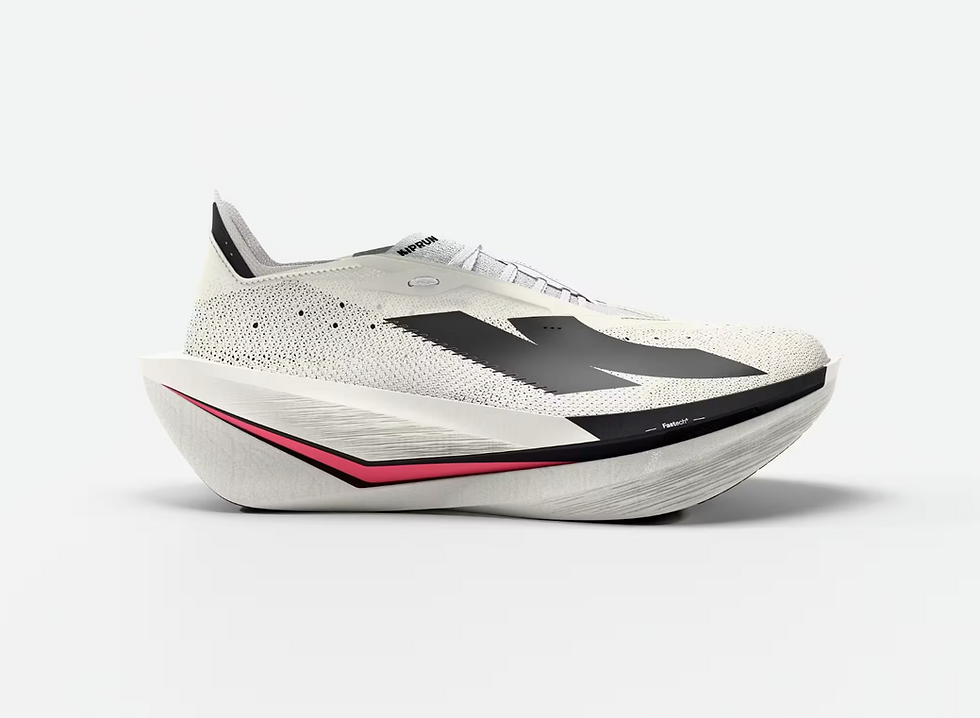
Kipstorm Lab (pictured above) sits at the most specialised end of Kiprun’s road range. It is an especially lightweight carbon plated shoe for road racing, with particular emphasis on 5K and 10K performance. Its purpose is specific enough that most runners should begin elsewhere in the range. It becomes more relevant if you know what you want from a short distance race shoe and can establish whether its close, race focused feel suits you.
Are Kiprun Running Shoes Sustainable?
Kiprun has taken a specific step with Kipnext, a road shoe made using a construction that avoids glue. The company says this reduces production emissions for that model. It would be misleading, however, to apply a claim about Kipnext to every shoe in the Kiprun range.
Running shoes still use materials and manufacturing processes with an environmental impact. How long a pair remains comfortable and usable also matters, and that varies by shoe and runner. If environmental impact is a priority, compare claims for the particular model you are considering.
Are Kiprun Running Shoes Worth It?
Kiprun is worth a closer look if you want a road shoe chosen around a clear purpose. Its range includes options for everyday running, extra cushioning, support, faster training and racing. Its connection with Decathlon may also make it practical for some runners to compare models in person.
The challenge is choosing the right part of a broad range. Kipride and Kipstorm Lab have little in common beyond the brand name. Begin with the running you do most often, then consider fit and comfort before being drawn towards a particular foam or plate.
For most runners buying one pair, a comfortable everyday model is the sensible starting point. A faster or more specialised shoe becomes useful when your training gives it a specific job.
Final Thoughts On Kiprun Running Shoes
Kiprun has developed into a road shoe brand with options for far more than one type of runner. Its range covers accessible daily running shoes, extra cushioning, support, faster training and carbon plated racing. The connection with Decathlon is part of its identity, but the shoes are best judged by what each model is designed to do.
The range becomes easier to navigate when you start with your usual running. Kipcore Premium and Kipride are versatile daily options, while Kipride Max puts more emphasis on cushioning. KS900 Support provides additional guidance, Kipstorm Tempo is designed for faster sessions, and the carbon plated Kipstorm models have different racing purposes.
If you are considering Kiprun running shoes, decide first whether you need a pair for most of your training or for a more specific job. Then check the fit and how the shoe feels at the pace and distance you plan to run. The most advanced model in the range will not necessarily be the right one for your feet.
Affiliate disclosure: This article contains affiliate links. If you make a purchase through one of these links, Sapphire Running Zone may receive a commission at no additional cost to you.


Comments