.png)

Maranoia: Amber Whitaker On Marathon Anxiety And Social Media Pressure
Training for a marathon is supposed to build confidence. You complete longer runs, tick off the weeks on your training plan and gradually prove to yourself that you can cover distances that once seemed impossible. But as race day approaches, confidence does not always follow the same upward path.
For Amber Whitaker, some of the most difficult moments came after the hardest training had already been completed. Amber joined us previously on the Bitten by the Running Bug podcast to talk about her London Marathon experience, and this time she returned to discuss something we had not explored in that first conversation: maranoia.
The term is commonly used by runners to describe the anxiety, doubt and sometimes irrational worries that can appear as race day approaches. For Amber, those feelings became particularly intense during the taper before the 2026 London Marathon, with social media adding another layer of pressure at exactly the time she needed reassurance.
Amber has kindly allowed us to share three videos she recorded during her London Marathon training. Taken at different points in her journey, they provide a very personal insight into the doubts and anxiety she was experiencing at the time and help illustrate some of the issues discussed in the podcast. Watching them alongside Amber’s reflections now shows just how powerful maranoia can become, even when the training itself has gone to plan.
From Half Marathon Runner To London Marathon
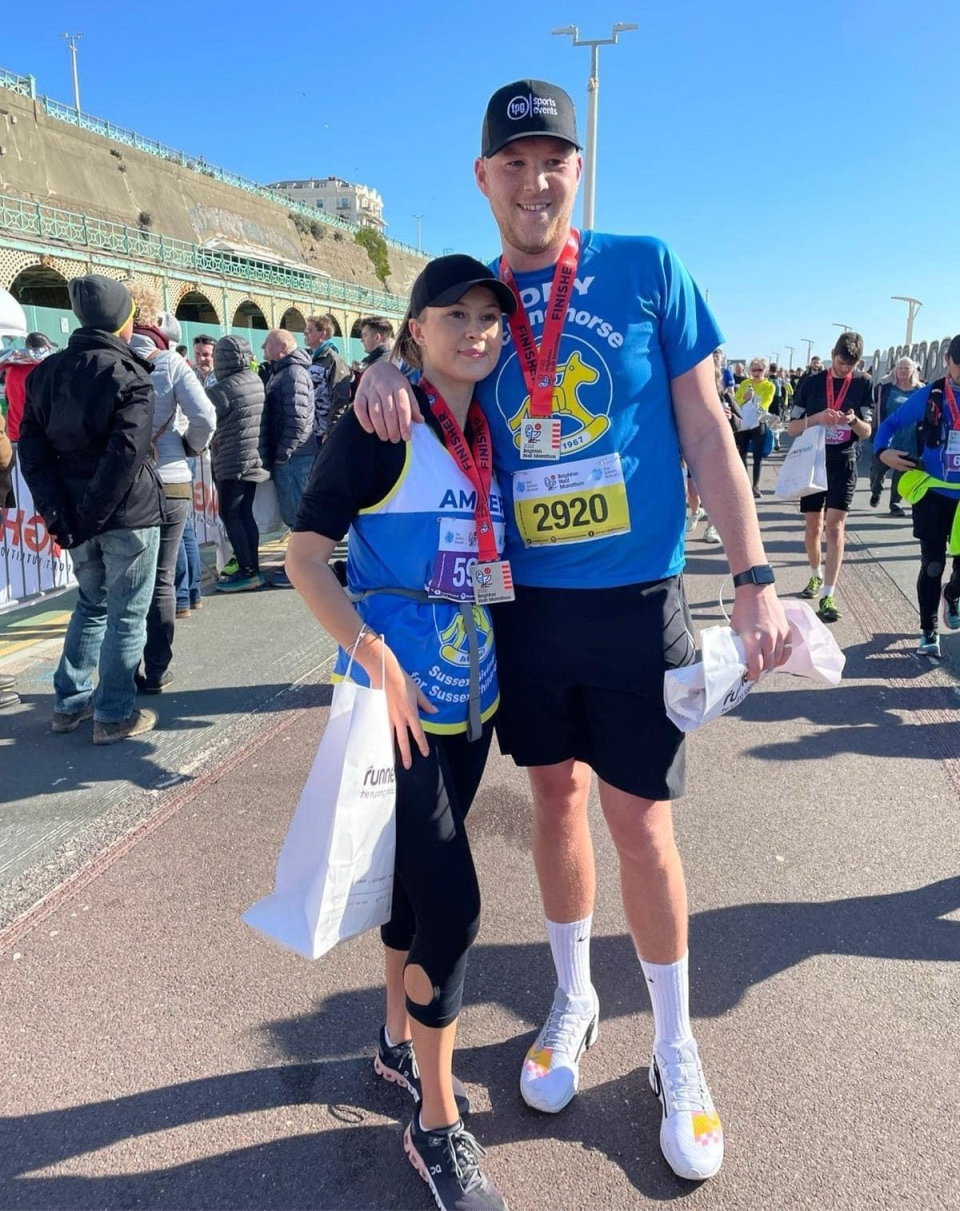
Amber's running journey began when she signed up for the Brighton Half Marathon, completing her first half marathon in 2018 after starting from virtually no running background. She went on to complete several more half marathons before entering the London Marathon ballot.
After securing a place, injury meant her original marathon plans had to be postponed, but she eventually reached the start line of the 2026 London Marathon. Her training had largely gone to plan, with only a minor niggle around six weeks before the race interrupting her preparation.
Amber completed the sessions in her training plan, including her longest run of 20 miles. Then the taper began and, instead of feeling increasingly prepared for the marathon, she found herself beginning to question whether she was ready at all.
When The Taper Started To Create Doubt
Reducing your mileage before a marathon can feel strange. After months of gradually doing more, your training suddenly asks you to do less, just as the event you have spent months thinking about is getting closer.
Amber went from completing her 20 mile long run to considerably shorter distances as race day approached. Rather than seeing that reduction as part of the training process, she began questioning what it meant and whether she was losing the fitness she had worked so hard to build.
The self doubt became strong enough to affect her running. On one planned 12 mile run, Amber reached around 5K and felt unable to continue, despite having successfully covered 20 miles the previous week.
"I ran twenty miles last week and I can't even run 5K now. Like, what's going on?"
Physically, Amber knew she should have been capable of continuing. Mentally, however, she had reached what she described as a brick wall, and the confidence created during months of training was rapidly disappearing.
How Social Media Made Maranoia Worse
One of the biggest influences on Amber's anxiety was social media. As the marathon became an increasingly important part of her life, she naturally watched more running content and, in response, the algorithms showed her even more of it.
The problem was that much of what appeared on her feed did not reflect her own experience. Amber described herself as an average first time marathon runner whose main ambition was to finish, perhaps somewhere around the five hour mark.
Instead, she was frequently seeing experienced runners chasing considerably faster times, discussing higher mileage training and approaching the marathon from a completely different perspective. Some of the comments she encountered were even more damaging, including suggestions that slower marathon runners were somehow less deserving of their place.
For someone already experiencing doubts before her first marathon, those opinions began to have an impact. Rather than concentrating on everything she had successfully completed during training, Amber began comparing herself with runners who had different experience, goals, training schedules and abilities.
"Am I Even Worthy?"
That comparison led to something deeper than ordinary pre race nerves. Amber began questioning whether someone like her should even be running a marathon, despite having followed her plan and completed the training required to reach the start line.
There were suddenly questions about whether her running shoes were good enough, whether she had chosen the right kit and whether she should complete another long run. Decisions she had already made successfully during months of training suddenly seemed uncertain.
"Am I even worthy? Should I be running a marathon if it's going to take me over five hours?"
Amber described the feeling as being similar to imposter syndrome. She saw herself as a casual 5K and 10K runner who had completed a few half marathons and began wondering what had made her think she could run a marathon.
In reality, runners like Amber make up an important part of mass participation events. A marathon is not exclusively for runners chasing elite performances or ambitious finishing times, and a runner's pace does not determine how seriously they have taken their training or what completing the distance means to them.
The Physical Impact Of Marathon Anxiety
Amber's experience also demonstrates that anxiety does not necessarily remain confined to your thoughts. She described problems sleeping, feeling physically sick and struggling to eat in the days before the marathon, despite knowing that fuelling properly was particularly important at that stage.
Her anxiety became so intense that her partner took her phone away the day before the race so she could stop looking at running content and concentrate on something else. On marathon morning the nerves were still there, and Amber cried on the journey to Greenwich and even asked her partner whether she should simply not do the race.
This was after months of training and after successfully completing a 20 mile long run. The preparation had not disappeared, but Amber's belief in that preparation had been badly affected.
Amber also discussed changes to her menstrual cycle following the marathon. She believes the intense stress and anxiety surrounding the event contributed to the disruption she experienced, although an individual experience cannot establish the medical cause of a menstrual change.
Persistent or unexplained changes to your menstrual cycle should not simply be assumed to be caused by running or anxiety. If you are concerned about changes to your cycle or any other physical symptoms, speak to an appropriate healthcare professional.
Everything Changed On Race Day
Something important happened once Amber actually started running. Instead of being surrounded by carefully selected social media content, she was surrounded by thousands of real runners with different abilities, ambitions and reasons for taking part.
Many were running at a similar pace. They had jobs, families and other commitments, and some had trained three times a week rather than building their lives around running. They were not all chasing extraordinary finishing times; they were simply taking on the London Marathon in their own way.
Amber recognised runners around her whom she had seen earlier on the course and realised she was surrounded by people whose marathon experience looked much more like her own. The real world of marathon running was very different from the version her social media algorithm had been showing her.
At 20 miles, Amber reached the furthest distance she had covered in training. Rather than allowing the doubts to return, she spoke positively to herself, reminded herself of the work she had done and concentrated on covering the remaining distance.
She finished the London Marathon smiling, exactly as she had hoped.
The Highlight Reel Is Not The Whole Story
Looking back, Amber believes one of the biggest mistakes she made was comparing her marathon preparation with what she saw online. Social media rarely provides a complete picture of another runner's training or their wider life.
A runner might post the successful long run without showing the difficult one from the previous week. Someone might celebrate a personal best without showing the years of running that preceded it, while another runner's training volume, finishing time or race ambitions might bear little resemblance to yours.
Even disappointment needs context. A runner who misses an ambitious time target may understandably be disappointed because of their own goals, but that does not diminish the achievement of somebody completing the same marathon several hours later.
They are different runners undertaking the same distance for different reasons. Comparing the two tells you very little about whether either runner deserves to be there.
What Amber Would Do Differently
When we asked Amber what she would change if she could return to the final weeks before her first London Marathon, her answer was straightforward. She would spend far less time looking at social media and far more time trusting the preparation she had already completed.
"Don't look at your phone for that four weeks. Turn up and put your hard work into action."
That does not mean all running content is negative. Amber found runners online whose experiences were far more relatable and even started sharing parts of her own journey in the hope that another first time marathon runner might find something that reflected their experience.
The important distinction is between content that supports your preparation and content that repeatedly makes you question it. If your feed is making you feel less confident as race day approaches, stepping away from it may be more useful than watching another runner explain what they did differently.
Trust The Training You Have Done
If you have followed an appropriate training plan, completed your long runs and prepared your race day strategy, seeing somebody else's training on social media does not suddenly make your preparation inadequate. Their training was designed around their circumstances, experience and goals rather than yours.
The taper can already be a difficult period psychologically. Your mileage falls, your legs may feel different and race day is close enough for all the unanswered questions to become louder, so adding constant comparison with other runners can make those doubts much harder to manage.
For some runners, temporarily reducing the amount of running content they consume as race day approaches may help. You can also be more selective about who you follow and concentrate on runners whose experiences, goals and approach are relevant and supportive rather than allowing an algorithm to decide what you see.
You Are Worthy Of The Start Line
Perhaps the most powerful change in Amber's thinking came from what she saw during the London Marathon itself. The race showed her something that her social media feed had failed to show her: there were thousands of runners like her.
Some were faster and some were slower. Some were chasing times, while others simply wanted to finish, and many were using the challenge to raise significant amounts of money for charity. None of those reasons makes somebody's marathon less valid.
Amber finished knowing not only that she could run a marathon, but that she belonged there. If maranoia starts appearing during your own taper, remember what your social media feed cannot show you: the start line will be filled with runners with different speeds, different ambitions and different stories.
Your marathon does not have to look like somebody else's to matter. Trust the work you have done, concentrate on the challenge in front of you and give yourself the opportunity to discover what Amber discovered when she finally reached the start line.


Comments