.png)

London Marathon Route Explained: Every Landmark From Greenwich To The Finish
Updated: Jul 28
The London Marathon is one of the most famous races in the world, attracting more than 50,000 runners and hundreds of thousands of spectators every year. From its unique start in Greenwich to its unforgettable finish on The Mall in front of Buckingham Palace, the London Marathon route takes runners past some of London's most iconic landmarks while providing an atmosphere that few sporting events can match.
The course is renowned for being fast, with very little elevation, making it an excellent choice for runners chasing a personal best as well as those simply hoping to complete their first marathon. Although the route itself is relatively flat, the day presents plenty of challenges. Learning what lies ahead at each stage of the course can help you pace yourself properly, know when to expect the biggest crowds and make the most of one of the greatest marathon experiences in the world.

Miles 1–3: The Start In Greenwich And Woolwich
The London Marathon begins on Blackheath, where runners gather long before the race starts. Depending on your allocated wave, you'll begin from either the Blue, Green or Red start areas before the three routes merge just over 3 miles later. Arriving early is well worth it, not only to avoid unnecessary stress but also to enjoy the unique atmosphere as thousands of runners make their final preparations.
The opening miles head east through Charlton before reaching Woolwich. Despite the excitement of finally getting underway, this is not the place to get carried away. Adrenaline is running high, the crowds are enthusiastic and your legs feel fresh, making it very easy to run faster than planned. Keeping your pace under control during these early miles will pay dividends much later in the race.
Around mile three the three separate starting routes merge into a single course. If you're hoping to meet friends who started from a different colour start, this can be one of the first opportunities to do so. Make sure you have agreed an exact meeting point beforehand, including which side of the road you'll be on, as simply saying "I'll see you around mile three" is unlikely to work when tens of thousands of runners are arriving together.

Miles 3–5: Settling Into The Race
Once the courses have merged, runners begin heading back towards Greenwich. There is a short climb shortly after four miles which, although modest by most standards, is one of the few noticeable hills on the entire route. At around 400 metres long with an average gradient of approximately four percent, it is enough to remind runners that even flat marathons contain the occasional challenge.
This is a quieter section of the course with fewer famous landmarks and slightly smaller crowds than those waiting further ahead. That actually makes it an ideal time to settle into your planned marathon pace, relax into your rhythm and avoid expending unnecessary energy. The excitement of the start has begun to fade and the race now starts to feel more controlled.
Miles 5–6: Greenwich And The Cutty Sark
As the course reaches Greenwich the atmosphere changes dramatically. The streets become much busier, spectators pack the pavements and runners receive one of the first major boosts of the day. The support through Greenwich is always outstanding, with pubs, cafés and restaurants overflowing with spectators cheering every runner who passes.
The highlight of this section is undoubtedly the famous Cutty Sark. The beautifully restored Victorian tea clipper sits in dry dock and provides one of the most recognisable images of the entire London Marathon. Running around the ship while thousands of spectators create a wall of noise is an unforgettable experience and one of the moments many runners remember most vividly.
The nearby Old Royal Naval College provides another spectacular backdrop before the route continues west. Depending on your starting wave, congestion around the Cutty Sark can still be quite heavy, so be prepared for the pace to slow slightly as runners funnel through this iconic section.

Miles 7–9: Deptford, Surrey Quays And Bermondsey
After leaving Greenwich, the course heads through Deptford before continuing towards Surrey Quays and Bermondsey. This part of the marathon is often overlooked because it lacks the famous landmarks found later in the race, but it remains an important stage in establishing a comfortable rhythm.
The crowds are slightly thinner than those around Greenwich, although there is still excellent support throughout much of the route. Long, straight roads allow runners to settle into an even pace while conserving energy for the more demanding miles ahead. This is also a good opportunity to focus on nutrition and hydration, taking on fluids and any planned energy gels before fatigue begins to build later in the race.
Miles 10–12: Approaching Tower Bridge
Excitement starts to build as runners make their way towards one of the most famous landmarks in British sport. Even before Tower Bridge comes into view, the atmosphere begins to change as spectators gather in ever increasing numbers and runners sense they are approaching one of the defining moments of the London Marathon.
Crossing Tower Bridge is everything runners hope it will be. The roar from the crowd is extraordinary and the emotional impact often takes people by surprise. It is one of those rare moments where even experienced marathon runners find themselves slowing slightly to take everything in. Looking ahead and seeing thousands of runners stretching across the bridge creates one of the most iconic sights in distance running.
Immediately after crossing Tower Bridge the course reaches halfway before turning east along the north side of the River Thames through Wapping. The atmosphere naturally becomes quieter after the excitement of the bridge, making this a good time to refocus and settle back into your planned pace. Many runners also catch sight of participants on the opposite side of the course who are several miles ahead, providing a useful reminder of what still lies ahead.

Miles 13–15: Limehouse And The Isle Of Dogs
Leaving Tower Bridge behind, the route continues east through Wapping before reaching Limehouse and the Isle of Dogs. Although this section doesn't receive the same attention as some of London's more famous landmarks, it remains an important part of the race. The crowds are still enthusiastic, but there is a little more space between spectators, allowing runners to settle back into their own rhythm after the excitement of Tower Bridge.
For many runners this is where the marathon truly begins. The halfway point has been reached, legs are still feeling reasonably comfortable and pacing becomes increasingly important. If you've followed your race plan during the opening miles, you should still feel in control. If you've started too quickly, however, this is often where the first warning signs begin to appear.
Miles 15–18: Canary Wharf
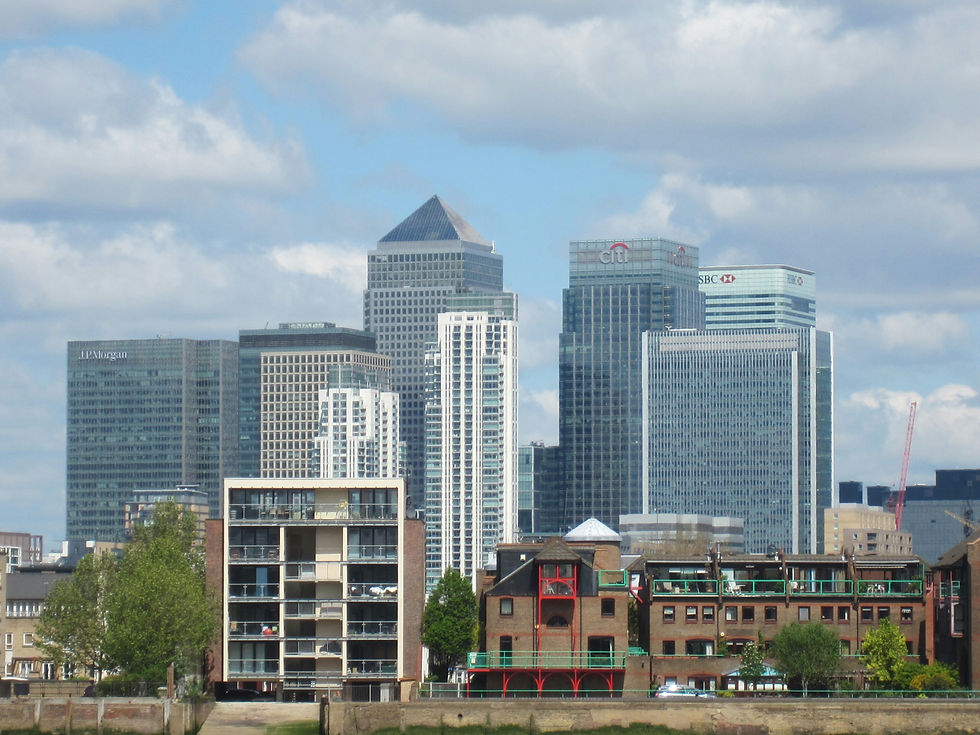
The towering skyscrapers of Canary Wharf create one of the most dramatic backdrops anywhere on the London Marathon route. As runners weave through London's financial district, the modern glass buildings provide a striking contrast to the historic landmarks passed earlier in the race. One Canada Square dominates the skyline and serves as an impressive focal point throughout this section.
The route twists and turns more than elsewhere on the course, and runners often notice their GPS watches becoming less accurate as satellite signals bounce off the surrounding buildings. Don't be tempted to adjust your pace based solely on your watch. Instead, concentrate on running comfortably and consistently until the course opens up again.
Crowd support through Canary Wharf has improved enormously over the years. Although it still isn't quite as packed as Greenwich or the Embankment, there are now plenty of enthusiastic spectators creating a fantastic atmosphere. The noise echoes between the skyscrapers, producing a unique experience unlike anywhere else on the course.
Miles 18–20: The Toughest Part Of The Course
As runners leave Canary Wharf, they enter one of the most challenging psychological sections of the marathon. The roads become longer and more exposed, fatigue starts to build and the finish still feels a long way away. This is where many runners begin to question themselves and where maintaining concentration becomes just as important as physical fitness.
Westferry Road and the surrounding streets have earned a reputation for testing even experienced marathon runners. Although there are still plenty of spectators, the atmosphere naturally feels quieter than at Tower Bridge or Greenwich. That makes any support from friends and family particularly valuable. If you're arranging to meet spectators, this can be one of the best places to do so because a familiar face can provide a significant mental boost when motivation begins to fade.
Many runners also pass the famous Mudchute area during this section. The nearby farm attracts families throughout race day and creates a welcoming atmosphere that helps break up what can otherwise become a difficult stretch of the course.
Miles 20–22: Hitting The Wall
For countless marathon runners, mile 20 is where the race changes completely. Glycogen stores become depleted, tired muscles begin to complain and concentration becomes increasingly difficult. This is the point where people often talk about "hitting the wall", although good pacing and sensible nutrition can significantly reduce the chances of experiencing it.
The route heads back towards Limehouse and Commercial Road, where crowd support begins to increase once again. The energy from spectators becomes increasingly noticeable and many runners draw enormous encouragement from the knowledge that the final few miles are now approaching. If you've managed your effort well during the opening twenty miles, this is where you can begin thinking about maintaining your pace rather than simply surviving to the finish.
Miles 22–23: The Tower Of London
One of the great features of the London Marathon is that the famous landmarks continue right until the closing stages. As runners head back towards central London, they pass Tower Bridge once again, this time from the north side, before reaching the magnificent Tower of London.
Seeing this historic fortress signals that the hardest part of the race is almost over. The crowds become larger once again and the atmosphere lifts noticeably as spectators realise runners are entering the final stages of their marathon journey. Although tired legs make every step harder than it was earlier in the day, the knowledge that the finish is drawing closer provides fresh determination.
Miles 23–24: Along The Victoria Embankment
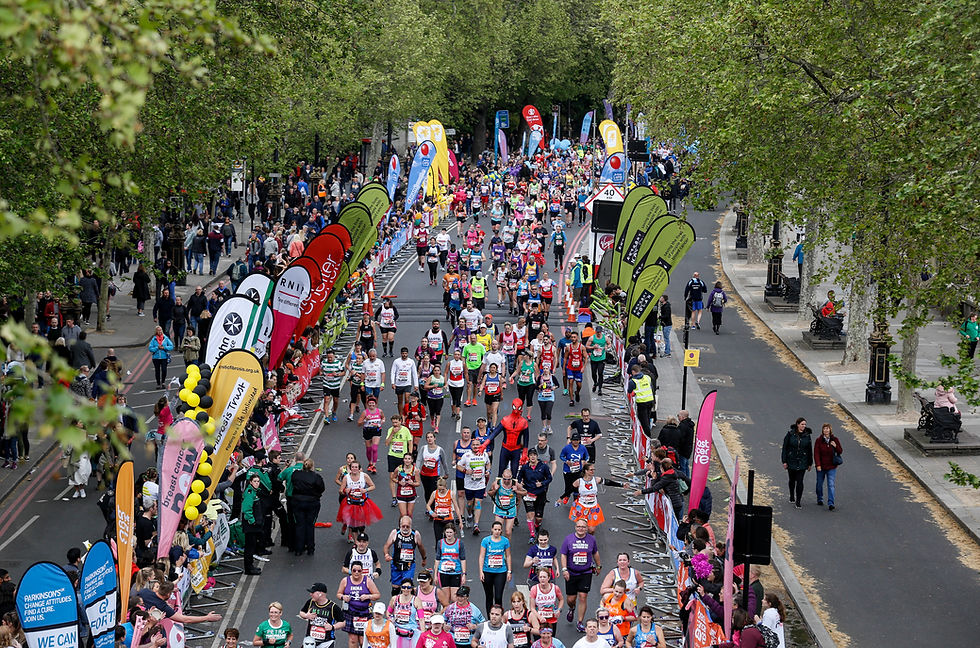
The Victoria Embankment is one of the loudest and most memorable sections of the entire London Marathon. Thousands of spectators line both sides of the road, creating an almost continuous wall of encouragement that carries runners towards Westminster.
The London Eye appears across the River Thames and several of London's famous bridges come into view as runners follow the river towards the finish. There is one final climb after passing through the Blackfriars underpass. It is short, but after more than twenty-three miles even modest inclines feel much steeper than they really are. Keeping your effort steady rather than trying to accelerate here will usually prove the wiser option.
Miles 24–25: Westminster And Big Ben
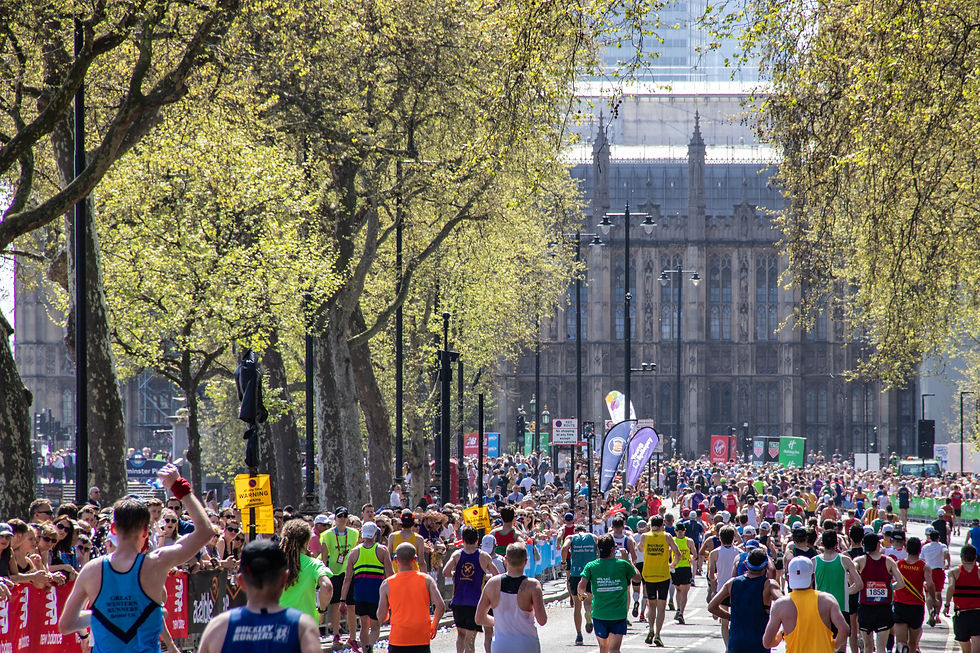
Few moments in marathon running compare to seeing Big Ben and the Houses of Parliament appear ahead. These iconic landmarks remind runners that they are entering the final stages of one of the world's greatest races and emotions often begin to take over.
Many runners describe this as the point where they finally allow themselves to believe they are going to finish. Months of training, early morning runs, fundraising efforts and countless miles have all led to this moment. The combination of relief, excitement and exhaustion creates memories that last a lifetime.
Miles 25–26: Birdcage Walk And The Turn Onto The Mall
After passing Westminster, the course follows Birdcage Walk with St James's Park on one side and Buckingham Palace just ahead. The crowds are enormous, the noise is relentless and every step brings runners closer to the finish line.
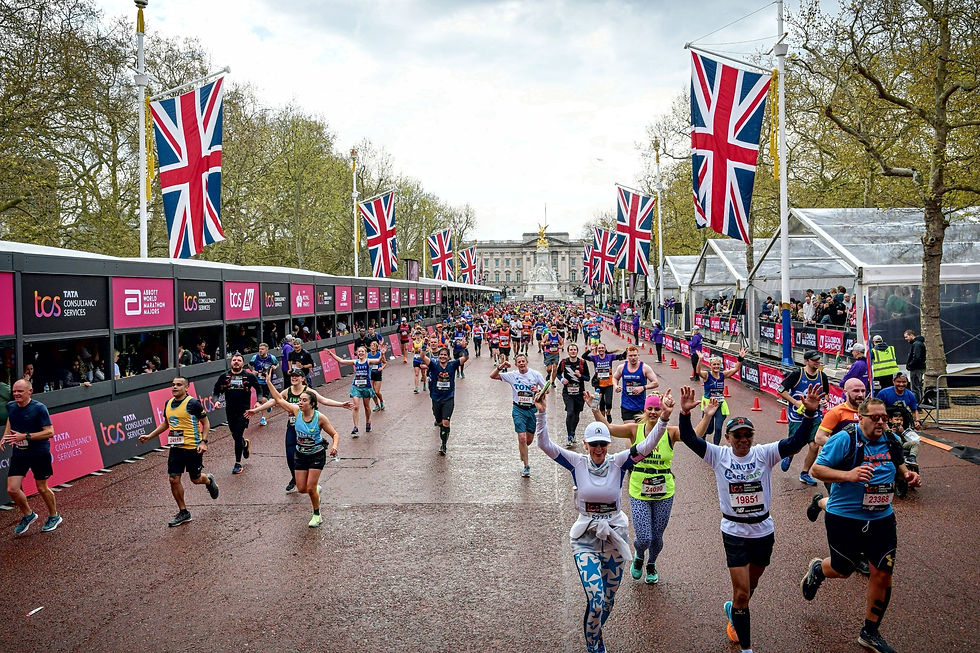
The final right-hand turn around Buckingham Palace is one of the most iconic moments in world marathon running. As runners turn left onto The Mall, the famous red surface stretches out ahead beneath rows of Union flags. Even those who are struggling physically often find one last burst of energy for the final few hundred metres.
The Finish On The Mall
Crossing the finish line on The Mall is an unforgettable experience. Buckingham Palace provides a spectacular backdrop as runners complete 26.2 miles through the heart of London, surrounded by thousands of cheering spectators. For many people, this is the culmination of months or even years of preparation, making it one of the proudest moments of their lives.
Although the race is over, take your time after finishing. Collect your medal, rehydrate, enjoy the atmosphere and soak up the achievement before arranging to meet friends and family. The reunion after the finish is often every bit as memorable as the race itself.
Final Thoughts On The London Marathon Route
The London Marathon is much more than a 26.2-mile race. It is a journey through one of the world's greatest cities, taking runners past internationally recognised landmarks while being supported by some of the most enthusiastic crowds in sport. Whether you're aiming for a personal best or simply hoping to cross the finish line, understanding the course can help you pace yourself more effectively and enjoy every mile.
It's easy to become completely focused on your watch or finishing time, but don't forget to look up and appreciate what's around you. From the Cutty Sark and Tower Bridge to Big Ben and Buckingham Palace, the London Marathon offers a sightseeing tour unlike any other. However many times you run it, you'll almost certainly discover something new every time you take your place on the start line.



Comments