.png)

Twin Cities Marathon 2027: Race Guide, Scenic Course And How To Enter
The Twin Cities Marathon takes runners on a 26.2 mile journey between Minneapolis and Saint Paul in Minnesota. First held in 1982, the event has become one of America's most established autumn marathons, combining city streets, lakeside parkways, residential neighbourhoods and historic landmarks.
The marathon is particularly well known for the variety of its course, which showcases two cities with distinct characters. From the recreational areas of Minneapolis to the imposing architecture of Saint Paul, it offers runners an opportunity to experience a different side of American city marathon running.
The Destination
Minneapolis and Saint Paul are collectively known as the Twin Cities, forming the largest metropolitan area in Minnesota. Situated along the Mississippi River, they offer visitors a mixture of cultural attractions, historic architecture, waterfront scenery and extensive green spaces.
Minneapolis is the larger of the two cities and is particularly well known for its parks and lakes. The Chain of Lakes provides miles of walking and cycling routes, while the Mississippi riverfront includes historic flour mills, the Stone Arch Bridge and views of Saint Anthony Falls.
The city's cultural attractions include the Minneapolis Institute of Art, the Walker Art Center and the Minneapolis Sculpture Garden. Visitors can also explore the North Loop district, where former warehouses now accommodate restaurants, independent shops and entertainment venues.
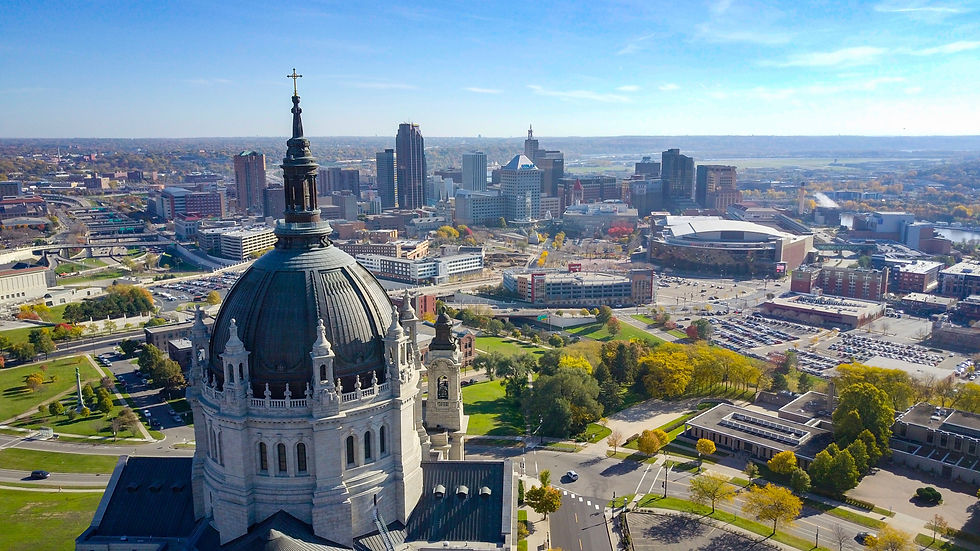
Saint Paul, Minnesota's state capital, has a more traditional architectural character, with historic buildings and attractive residential streets. The Minnesota State Capitol and Cathedral of Saint Paul are among its most recognisable landmarks, while the surrounding neighbourhoods offer opportunities to explore the city's history.
Autumn is an appealing time to visit Minnesota, with changing foliage creating colourful displays throughout the region. Visitors planning a longer stay can also explore nearby state parks and the wider Mississippi River valley.
History Of The Twin Cities Marathon
The Twin Cities Marathon was first held in 1982, establishing a point to point race connecting Minneapolis and Saint Paul. Its original concept was to create a major road running event that celebrated the distinctive character of both cities.
The marathon developed a reputation for its attractive course and strong neighbourhood involvement. Over the following decades, it attracted elite international athletes, competitive club runners and recreational participants from across the United States and overseas.
The event also became an established choice for runners seeking Boston Marathon qualifying performances. Its combination of competitive racing and local involvement helped strengthen its position within the American marathon calendar.
Today, the race is organised by Twin Cities In Motion, a nonprofit organisation that promotes participation in running and other forms of physical activity. Marathon weekend has expanded to include shorter distances, family events and charitable fundraising opportunities.
When Is The Twin Cities Marathon 2027?
The Twin Cities Marathon takes place on Sunday 17 October 2027, with the main race scheduled to begin at 8.00am Central Time. The marathon is the centrepiece of a running weekend that traditionally includes shorter races and activities for families.
The established programme features a 5K, 10K, 10 mile race and half marathon, alongside the Loony and Ultra Loony challenges. These challenges allow participants to combine several distances across the weekend, although the final 2027 supporting event schedule should be checked when published.
The 2027 marathon moves from its traditional early October date to the middle of the month. Announced in July 2026, the change follows an assessment of weather conditions, with organisers seeking to reduce the likelihood of excessive heat during the race.
Minnesota's autumn weather can still be unpredictable, with cold mornings, wind and rain all possible. The later date may offer more favourable temperatures, but runners should remain prepared for changing conditions.
Twin Cities Marathon 2027 Expo And Race Bib Collection
The Twin Cities Marathon Weekend Health & Fitness Expo brings together participants, running brands and exhibitors ahead of the main events. It provides an opportunity to collect race materials, explore running products and obtain information about the weekend's arrangements.
The expo has been held at the Saint Paul RiverCentre in downtown Saint Paul, with the 2026 event taking place on Friday and Saturday. Admission is free, and the event has featured more than 60 exhibitors alongside official merchandise and opportunities to meet race pacers.
For the 2026 marathon, participants were required to collect their race packets before Sunday, with no race morning collection available. Runners needed their bib number and photographic identification, although an authorised representative could collect materials on their behalf.
Participants should check the final 2027 instructions for confirmed opening hours, collection procedures and venue arrangements. International visitors should allow sufficient time to complete these requirements before race day.
Race Morning
The Twin Cities Marathon begins in downtown Minneapolis, with the established starting area located near U.S. Bank Stadium, home of the Minnesota Vikings NFL team. The surrounding streets provide space for runners to gather before beginning their journey towards Saint Paul.
Participants should check their official start instructions for arrival times, assigned corrals and baggage arrangements. Road closures and the number of people travelling into downtown Minneapolis can affect access, making advance planning particularly important.
October mornings in Minnesota can be cold, so additional clothing may be useful while waiting for the start. Runners should also familiarise themselves with the event's permitted items and baggage procedures.

Twin Cities Marathon Course
The Twin Cities Marathon follows a point to point route from downtown Minneapolis to the Minnesota State Capitol in Saint Paul. The established course combines urban streets, lakeside parkways, residential neighbourhoods and sections near the Mississippi River.
The following description reflects the traditional marathon route. Participants should check the organiser's final 2027 course information for any adjustments.
Downtown Minneapolis And The Start
The marathon begins near U.S. Bank Stadium, taking runners through the streets of downtown Minneapolis before heading towards the city's residential districts. The opening section introduces participants to the urban landscape, with commercial buildings gradually giving way to greener surroundings. The start attracts large numbers of spectators, creating a lively atmosphere as runners leave the city centre. The transition towards the parkways marks the beginning of one of the course's most distinctive sections.
The Minneapolis Chain Of Lakes
The marathon continues through the Minneapolis lake districts, passing Lake of the Isles, Bde Maka Ska and Lake Harriet. These interconnected lakes are among the city's best known recreational areas, surrounded by parkland, mature trees and attractive residential properties. The lakeside roads provide open views across the water, contrasting with the more enclosed streets of downtown Minneapolis. The established route follows sections of the parkway network, with local residents gathering at accessible points to encourage participants.
Lake Nokomis And Southern Minneapolis
The route continues through southern Minneapolis, passing the area around Lake Nokomis and neighbouring residential streets. This section features established parkways, open green spaces and attractive neighbourhoods that reflect the city's strong connection with outdoor recreation. Lake Nokomis is a popular destination for local runners, walkers and cyclists, with recreational paths and parkland surrounding the water. The marathon's passage through this area adds another scenic element before the course heads towards the Mississippi River.
The Mississippi River
The Mississippi River is an important feature of the marathon, marking the transition from Minneapolis towards Saint Paul. The established route follows roads near the river valley before crossing into the neighbouring city. Wooded riverbanks and surrounding parkland provide a different landscape from the earlier lakeside sections. The river has played a central role in the development of both cities, making its crossing a significant landmark on the journey towards the finish.
Summit Avenue And Saint Paul
Summit Avenue is one of the most recognisable sections of the Twin Cities Marathon. The broad, tree lined street is famous for its historic houses, including an extensive collection of Victorian era properties. The approach to Summit Avenue includes a sustained gradual climb during the later stages of the race. Although the gradient is relatively modest, its position after more than 20 miles makes it one of the course's principal challenges.
Local residents and spectators provide encouragement along the avenue, which has become closely associated with the marathon's identity. The historic architecture and residential surroundings create an attractive setting as runners approach central Saint Paul.
Cathedral Hill And The Finish
The closing section takes runners past the Cathedral of Saint Paul, an imposing landmark overlooking the city. Its prominent dome provides a memorable sight as participants enter the final stages of the marathon. From the cathedral area, the route descends towards the Minnesota State Capitol. The finish is located on the Capitol grounds, where the building's grand architecture provides a striking backdrop as runners complete their 26.2 mile journey.
Participants then enter the official recovery area before reuniting with supporters and celebrating their achievement.
How Difficult Is The Twin Cities Marathon Course?
The Twin Cities Marathon is a moderately challenging road race, with a combination of relatively flat sections, gentle undulations and more noticeable climbing during the later miles. Although the course does not feature major hills, its elevation profile is more demanding than some of America's flattest marathons.
The gradual ascent towards Summit Avenue is the most significant challenge, with its position late in the race adding to the difficulty. However, the final approach towards the Capitol provides a welcome descent.
The established course is USATF certified and can be used to achieve a Boston Marathon qualifying time, subject to the relevant qualification requirements. Competitive performances are possible, but runners should be prepared for changing gradients rather than expecting a completely level route.
Weather can also influence the difficulty of the event. October conditions in Minnesota can vary considerably, with cold mornings, wind, rain and occasional warmer temperatures all possible.
What Makes The Twin Cities Marathon Special?
One of the defining features of the Twin Cities Marathon is the variety of its surroundings. Rather than concentrating on downtown streets, the route incorporates recreational areas and residential districts that give runners a broader impression of Minneapolis and Saint Paul.
The event also has a strong connection with the local community. Residents, volunteers and neighbourhood organisations contribute to the race weekend, helping create an atmosphere that appeals to competitive athletes and recreational participants alike.
Another attraction is the opportunity to experience two different cities within a single marathon. The contrast between Minneapolis and Saint Paul gives the event a character that distinguishes it from races concentrated within a single downtown area.
Is The Twin Cities Marathon Good For First Time Marathon Runners?
The Twin Cities Marathon can be a good choice for first time marathon runners, particularly those looking for a well established event with an interesting course and substantial spectator support. The changing surroundings provide a series of recognisable landmarks throughout the distance.
Beginners should be comfortable with the demands of a full marathon and follow a structured training programme that includes preparation for changing gradients. The event's varied terrain makes it important to arrive with sufficient endurance rather than relying on a completely flat course.
The point to point format requires additional planning compared with races that start and finish in the same location. Participants should understand the transport arrangements and choose accommodation that suits their race weekend priorities.
For runners who have prepared properly, Twin Cities offers a rewarding first marathon experience. Its established organisation and welcoming atmosphere make it an appealing alternative to larger events.

How To Enter The Twin Cities Marathon 2027
Registration for the Twin Cities Marathon 2027 is now open, with runners able to enter directly rather than through a ballot. Participants can select the marathon distance, complete their personal details and pay the entry fee online to secure their place, subject to availability.
Entry fees may increase as registration progresses, so runners are encouraged to enter early. Participants should also check the organiser's withdrawal, refund and transfer policies before completing their registration.
Running The Twin Cities Marathon For Charity
Charitable fundraising is an established part of Twin Cities Marathon Weekend, with Twin Cities In Motion providing opportunities for nonprofit organisations to recruit runners and raise money through its official charity programme.
In 2025, the organiser launched the Raise the Community Pace initiative, designed to expand the fundraising impact of its running events. The programme aims to increase annual charity fundraising from approximately $1 million to $2.62 million by 2028.
The initiative also targets an increase in the number of fundraising participants from 800 to 3,000 and an expansion of charity teams from 54 to 100. These figures represent the programme's ambitions rather than confirmed participation numbers for the 2027 marathon.
Runners interested in securing a charity entry should explore the official programme and contact participating organisations directly. Fundraising commitments and entry availability vary between charities, so applicants should understand the requirements before accepting a place.
Participants who already have their own marathon entry can also choose to raise money independently for a cause that matters to them. This provides an alternative for runners who want to fundraise without joining an official charity team.
Where To Stay
The Twin Cities offer a wide range of accommodation, from major hotels to smaller independent properties. Because the marathon starts in Minneapolis and finishes in Saint Paul, choosing a suitable location can make travelling around the weekend considerably easier.
Downtown Minneapolis is a convenient choice for runners wanting to stay close to the starting area. Hotels near U.S. Bank Stadium and the surrounding central districts can reduce the need for additional travel on race morning.
Downtown Saint Paul is another option, particularly for visitors who prefer to stay near the finish and the traditional expo location. The area around the Saint Paul RiverCentre provides access to restaurants, hotels and several of the city's principal attractions.
The two cities are connected by public transport, including the METRO Green Line light rail service. Visitors should check operating times and race weekend arrangements before relying on public transport for early morning journeys or returning from the finish.
Accommodation demand is likely to increase during marathon weekend, especially in the most convenient downtown locations. Booking early provides a better opportunity to secure a preferred location and compare available prices.
Our Verdict
The Twin Cities Marathon is an excellent choice for runners looking for an established American autumn marathon that combines an attractive course with a strong sense of local identity. Its route between Minneapolis and Saint Paul offers an experience that feels different from many of the country's larger metropolitan races.
The course is suitable for a wide range of abilities, although the later climbs mean runners should not underestimate its demands. The event's reputation for organisation and community involvement makes it particularly appealing to those looking beyond the biggest international marathons.
Race Website
Affiliate disclosure: This article contains affiliate links. If you make a purchase through one of these links, Sapphire Running Zone may receive a commission at no additional cost to you.


Comments