.png)

Brooks Running Shoes Explained: A Complete Guide To The Brand And Its Most Popular Models
Updated: Jul 25
Brooks is one of the few major footwear companies that focuses almost entirely on running. While many sports brands divide their attention between football, fashion trainers and lifestyle clothing, Brooks has built its reputation by designing shoes specifically for runners. That specialist approach has helped it develop one of the most loyal followings in the running world.
Whether you're buying your first pair of running shoes or replacing a trusted favourite, there's a good chance you've come across models such as the Ghost, Glycerin or Adrenaline GTS. These shoes have become staples in specialist running shops because Brooks has consistently prioritised comfort, reliability and performance over short-lived trends.
In this guide, we'll look at the history of Brooks, explain the technology behind its shoes, highlight the most popular models and help you decide whether Brooks could be the right brand for your next pair of running shoes.
The History Of Brooks Running
Brooks traces its origins back to 1914 when the company was purchased by John Brooks Goldenberg. During its early years it manufactured a wide range of footwear, including ballet shoes, football boots and baseball cleats, before turning its attention to running during the running boom of the 1970s.
After becoming one of the leading running shoe brands in the United States, Brooks experienced financial difficulties during the 1980s and changed ownership several times. The company's fortunes improved dramatically after becoming a subsidiary of Berkshire Hathaway, when it made the decision to focus almost exclusively on running.
Rather than competing across multiple sports, Brooks simplified its product range and invested heavily in research and development. That strategy proved successful and today Brooks sells running shoes in more than 60 countries while remaining one of the world's leading specialist running brands.
What Makes Brooks Different?
Brooks has always taken a straightforward approach to running shoes. Instead of producing dozens of overlapping models, each shoe has a clearly defined purpose within the range.
The Ghost is designed as an everyday neutral shoe, the Glycerin focuses on maximum comfort, the Adrenaline GTS provides additional support, while the Hyperion range is aimed at faster training and racing.
This consistency makes it easier for runners to choose the right shoe and explains why so many people return to the same Brooks model year after year. Another strength of Brooks is that the brand has generally preferred gradual improvements over dramatic redesigns. New versions tend to refine what already works rather than completely changing the feel of a popular shoe.
Brooks Running Shoe Technology
Like every major running shoe manufacturer, Brooks has developed its own cushioning technologies to suit different types of running. The company's premium cushioning is DNA LOFT v3, a nitrogen-infused foam that delivers a softer ride while remaining lightweight and durable. It's used in shoes such as the Glycerin and Ghost Max, where comfort is the priority.
For runners looking for greater responsiveness, Brooks uses DNA FLASH, another nitrogen-infused foam designed to feel lighter and more energetic during faster sessions. This technology appears throughout the Hyperion performance range.
One of Brooks' newest developments is DNA Tuned, introduced in the Glycerin Max. By varying the density of the cushioning through different parts of the shoe, Brooks has created a midsole that offers softer landings under the heel while maintaining a more responsive feel through toe-off.
Brooks is also well known for its GuideRails support system. Rather than relying on large sections of firm foam, GuideRails are designed to gently reduce excessive movement when runners begin to fatigue. Shoes using this technology carry the GTS (Go-To Support) name, such as the Adrenaline GTS and Ghost GTS.
The Most Popular Brooks Running Shoes
Brooks Ghost
The Ghost has become Brooks' best-selling running shoe and remains one of the most popular daily trainers available. It offers balanced cushioning, a comfortable fit and enough versatility for everything from shorter training runs to marathon preparation.
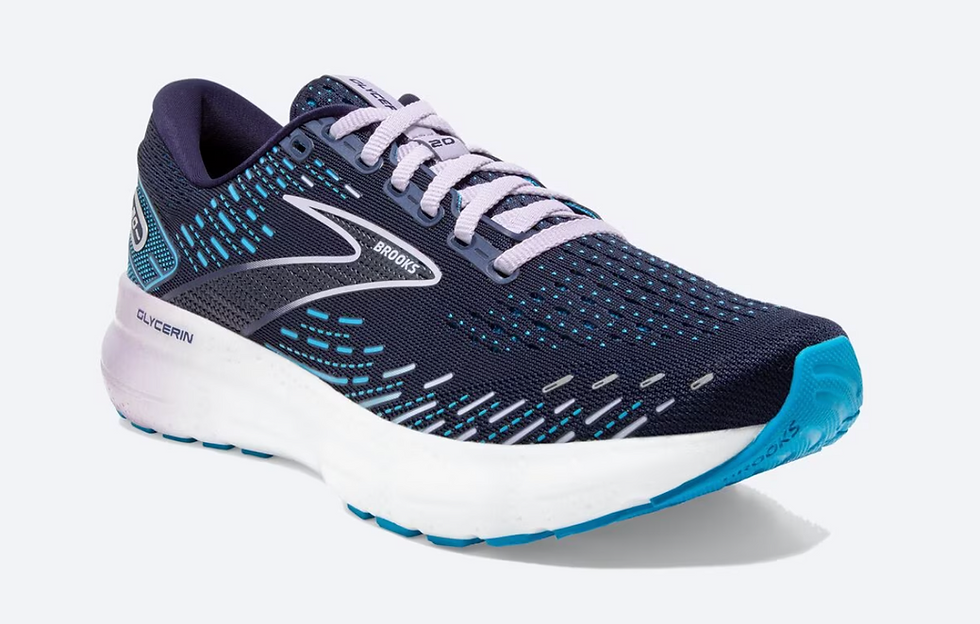
Brooks Glycerin
The Glycerin is designed for runners who prioritise comfort. With more cushioning than the Ghost, it's an excellent choice for easy runs, recovery sessions and long-distance training where protecting tired legs is often more important than saving a few grams of weight.
Brooks Glycerin Max
The Glycerin Max is Brooks' answer to the growing demand for highly cushioned running shoes. Featuring a much thicker midsole and the latest DNA Tuned foam, it delivers an exceptionally soft ride while remaining surprisingly smooth over longer distances.
Brooks Adrenaline GTS
Few stability shoes have built the reputation of the Adrenaline GTS. Combining generous cushioning with the GuideRails support system, it has become one of the most trusted choices for runners who need additional stability without sacrificing comfort.
Brooks Hyperion
The Hyperion family is aimed at runners looking to improve their speed. Whether you're tackling interval sessions, tempo runs or race day itself, these lightweight shoes are designed to provide a faster, more responsive ride than Brooks' everyday trainers.
Brooks Cascadia
The Cascadia has long been one of Brooks' flagship trail running shoes. Offering reliable grip, good protection and plenty of stability over uneven terrain, it's equally at home on forest trails, mountain paths and long-distance off-road adventures.

Who Are Brooks Shoes Best Suited To?
Brooks has built its reputation by producing dependable shoes for everyday runners rather than focusing solely on elite athletes.
The range is particularly well suited to runners looking for reliable daily training shoes, marathon preparation, long-distance comfort and stability options. Brooks also offers a wide variety of widths, making it a popular choice for runners who struggle to find a comfortable fit elsewhere.
If you're looking for the lightest possible racing shoe or an extremely minimalist design, other brands may offer more options. However, for consistent comfort and durability, Brooks remains one of the safest choices available.
Are Brooks Running Shoes Good Value?
Although Brooks shoes sit firmly in the premium end of the market, they generally offer excellent value for runners who prioritise comfort, durability and consistency.
Many Brooks models comfortably last several hundred miles when used for their intended purpose, and the company has built a reputation for refining successful shoes rather than making unnecessary changes every year. That means runners who find a model they enjoy can often upgrade with confidence when a new version is released.
As with any running shoe, the most expensive option isn't automatically the best. Visiting a specialist running shop and trying several different models remains the best way to find the shoe that suits your running style and goals.
Final Thoughts
Brooks may not always generate the same headlines as brands like Nike or HOKA, but it has earned its reputation through years of producing reliable, high-quality running shoes. By focusing almost exclusively on runners, the company has developed a range that is straightforward to understand and trusted by everyone from beginners to experienced marathon runners.
Whether you're looking for a dependable neutral shoe like the Ghost, maximum comfort from the Glycerin, extra support from the Adrenaline GTS or a faster option from the Hyperion range, Brooks offers something for almost every type of runner. If comfort, consistency and performance are your priorities, it's a brand that's well worth considering when you buy your next pair of running shoes.


Comments