.png)

Adidas Running Shoes Explained: History, Technology And Models
Adidas is one of the biggest names in running, with a range that stretches from comfortable shoes for everyday miles to some of the fastest racing shoes in the sport. The brand is particularly well known for its Adizero range, but there is much more to Adidas running shoes than carbon technology and marathon racing.
That breadth can make the range more complicated than it first appears. An Adizero racing shoe has a very different purpose from a Supernova designed for regular training, while Adidas also makes shoes for faster workouts, supportive running and trails.
This guide explains what Adidas running shoes are known for, how the main technologies and ranges differ and some of the models worth knowing about. It is a starting point rather than a complete catalogue, with different generations and regional variations often available at the same time.
Who Is Adidas?
Adidas is a German sportswear company founded by Adolf “Adi” Dassler in Herzogenaurach in 1949. Its roots go back further, however. Adi and his brother Rudolf had previously produced specialist footwear for athletes through their family shoe business before going their separate ways.
Adi established Adidas, while Rudolf founded Puma, creating two sportswear companies in the same German town that would become global rivals.
Running was part of the story long before the modern recreational running boom. Adidas developed footwear for track athletes and subsequently became an important name in road running as the sport grew. Today it is one of the world's largest sporting goods companies, with running remaining an important part of its performance range.
What Makes Adidas Running Shoes Different?
Adidas does not have one particular type of running shoe. Its range stretches from relatively straightforward shoes for everyday running to highly specialised racing shoes developed for elite athletes.
The Adizero family is the performance end of the road range. Shoes within it are generally designed around lower weight and faster running, although their purposes vary considerably. The Evo SL is a lightweight performance shoe, the Boston is designed with faster training in mind and the Adios Pro is a specialist racing shoe.
Supernova provides another route into the range for runners prioritising everyday comfort and support, while Adidas Terrex covers trail running. Understanding those families is more useful than simply looking for the Adidas shoe with the most advanced sounding technology.
How Do Adidas Running Shoes Fit?
Fit varies between Adidas running shoes. A lightweight Adizero model designed to hold your foot securely at speed can feel different from an everyday running shoe, so do not assume that finding your size in one Adidas model guarantees the same fit in another.
Check the length, toe room and hold around your heel and midfoot. Your feet can also expand during longer runs, making the fit you experience after several miles more important than how a shoe feels for a few moments when you first put it on.
If possible, try the particular model you are considering with the socks you normally use for running. This becomes especially important when moving between very different parts of the Adidas range.
What About Heel Drop?
There is no single heel drop across Adidas running shoes. The difference in height between the heel and forefoot varies between models because the shoes are designed for different types of running.
Heel drop can be useful when comparing a new shoe with something you already run comfortably in, particularly if you are considering a substantial change. It should not be treated as a measure of how cushioned, fast or suitable a shoe will be.
The overall ride also depends on the amount and type of foam, sole geometry, stiffness and the way the shoe works with your stride. Check the specification of the exact model and version you are considering rather than assuming shoes from the same Adidas family will be identical.
What Is Adidas Cushioning Like?
There is no single Adidas ride. The company uses different cushioning systems across its range, and a shoe designed for comfortable everyday miles can feel markedly different from an Adizero racing shoe.
One of the most important developments came in 2013 with the introduction of Boost. Developed with German chemical company BASF, the cushioning combined softness with energy return and subsequently appeared across a large part of the Adidas range.
The performance range has since moved towards lighter foams. Lightstrike and particularly Lightstrike Pro have become important parts of the Adizero family, while the Supernova Rise 3 uses Dreamstrike+ cushioning for a softer everyday ride.
Do not choose an Adidas shoe solely because it contains a particular foam. The amount of cushioning, geometry and other components surrounding it all influence how the finished shoe actually feels.
What Are Adidas EnergyRods And Energyrim?
EnergyRods became one of the most distinctive technologies in Adidas performance running shoes. Rather than relying solely on a conventional full carbon plate, Adidas developed a system of rods within the midsole, with different versions appearing in its performance shoes.
The Boston 13, for example, uses Energyrods 2.0 alongside Lightstrike Pro as part of a shoe designed primarily for faster training.
Adidas has now introduced another approach at the top of its racing range. The Adizero Adios Pro 5 replaces the EnergyRods used in the previous Adios Pro with a carbon fibre infused Energyrim. This provides stiffness around the Lightstrike Pro midsole while allowing the foam to sit uninterrupted directly beneath the foot.
The technology is therefore evolving, and the presence of carbon alone does not tell you how an Adidas shoe will run. Foam, geometry, weight and the way the carbon structure is incorporated all influence the finished ride.
What Is Continental Rubber?
Continental Rubber has become a recognisable feature of many Adidas running shoes. Adidas works with tyre manufacturer Continental on outsole rubber designed to provide traction, and it appears across both road and trail models.
The presence of Continental Rubber does not mean every outsole is the same. Coverage, tread pattern and lug depth vary depending on the job of the shoe, while a road racing outsole has very different demands from one designed for trails.
Look at the complete outsole of the model you are considering, particularly if you regularly run on wet roads or other surfaces where grip is important.
Does Adidas Make Neutral Running Shoes?
Yes. A substantial part of the Adidas road running range consists of neutral shoes, with options covering everyday mileage, faster sessions and racing.
Neutral does not mean that every shoe will feel equally stable beneath you. The width of the platform, midsole geometry, stack height and upper construction can all influence how secure a neutral shoe feels.
If you already have a neutral shoe that works well, compare its fit and ride with the Adidas model you are considering rather than choosing solely because both are described as neutral.
Does Adidas Make Stability Running Shoes?
Yes. The Supernova Solution is Adidas' dedicated supportive option within the Supernova family. It uses Stability Support Rods and geometry designed to provide additional guidance and support while retaining the cushioning expected from an everyday running shoe.
That approach is different from the traditional firm medial post once commonly used in stability shoes. Modern support can also come from geometry, a broader platform, sidewalls and the way different sections of the midsole work together.
If you know that you prefer a supportive shoe, the Supernova Solution is a more logical part of the Adidas range to investigate than simply choosing one of its neutral daily shoes because it feels stable when you first put it on.
Does Adidas Make Carbon Plated Running Shoes?
Yes, although Adidas does not use exactly the same carbon construction across all of its performance shoes.
The Adizero Adios Pro 5 uses the new carbon fibre infused Energyrim with Lightstrike Pro cushioning, while earlier Adios Pro generations used carbon infused EnergyRods. The specialist Adios Pro Evo family has also been developed around extremely low weight and elite road racing performance.
A carbon racing shoe is not essential simply because you are entering a race. Fit, comfort and how confidently you can run in a shoe over your chosen distance remain more important than the presence of carbon.
Does Adidas Make Trail Running Shoes?
Yes. Adidas uses the Terrex name for much of its trail and outdoor footwear, with the Agravic family forming an important part of its current trail running range.
The Terrex Agravic 4 is an all round trail running shoe designed for training across varied terrain. It uses Lightstrike cushioning and a Continental Rubber outsole, providing a very different combination of cushioning and grip from Adidas' road shoes.
Choose a trail shoe according to where you actually run. Dry park paths, muddy woodland, loose rock and technical mountain trails place very different demands on grip, protection and stability, so a road shoe with a substantial outsole is not automatically a substitute for a dedicated trail shoe.
Which Adidas Running Shoes Should You Consider?
The Adidas range is extensive and changes regularly, with previous generations often remaining available alongside newer shoes. The models below represent some of the main parts of the range rather than every Adidas running shoe you can buy.
Adidas Supernova Rise 3
The Supernova Rise 3 is one of the places to start if you want an Adidas shoe for regular road running rather than racing. It uses a full length Dreamstrike+ midsole and is designed around comfortable everyday mileage rather than outright speed. Consider it for easy runs, regular training and accumulating mileage without needing the aggressive feel of a performance model. For runners new to Adidas, the Supernova family is a more logical starting point than automatically choosing one of the brand's fastest shoes.
Adidas Supernova Solution
The Supernova Solution is the model to investigate if you want more dedicated support. It combines the comfort focused approach of the Supernova family with Stability Support Rods designed to provide additional guidance. It has a different purpose from the lightweight Adizero shoes. Choose it for the way its support and cushioning work on your regular runs rather than because you think a stability shoe is automatically better than a neutral one.
Adidas Adizero EVO SL
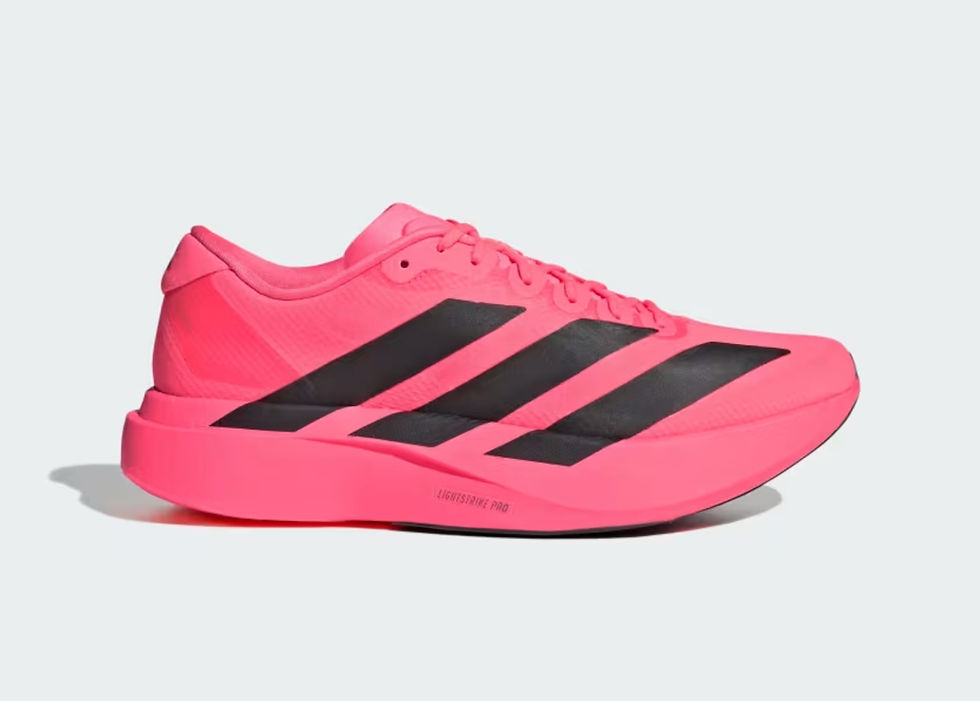
The Adizero EVO SL (pictured above) brings some of the character of Adidas' racing range into a more versatile lightweight shoe. It uses Lightstrike Pro cushioning and takes inspiration from the exceptionally light Adios Pro Evo 1. That makes the Evo SL worth considering for faster training and for runners who simply enjoy a lighter, more energetic shoe. Its role is different from the Adios Pro even though both sit within the broader Adizero family.
Adidas Adizero Boston 13
The Boston 13 (pictured below) sits between a conventional daily running shoe and Adidas' specialist racers. Adidas designed it particularly for fast workouts and tempo runs, using Lightstrike Pro cushioning and Energyrods 2.0. Think of the Boston as a performance training shoe rather than simply a less expensive version of the Adios Pro. It is designed to help cover the faster training that leads towards race day rather than being the brand's ultimate racing model.
Adidas Adizero Adios Pro 5
The Adios Pro 5 is the latest generation of Adidas' flagship road racing shoe. It uses Lightstrike Pro cushioning with the new carbon fibre infused Energyrim, replacing the EnergyRods found in the previous generation. The shoe is designed specifically for racing, including the marathon, and represents a significant change in the construction of the Adios Pro family. It is a specialist performance shoe rather than an obvious choice for everyday mileage. If you are considering it for a marathon or another important race, use it in training first and make sure its fit and ride work for you at your intended race pace.
Adidas Adizero Adios Pro Evo 2
The Adios Pro Evo 2 sits at the extreme performance end of the Adidas range. It followed the exceptionally light Evo 1 and was developed as a specialist race day shoe with a strong focus on minimising weight and maximising performance. This is not simply an upgraded daily running shoe. It is an expensive and highly specialised piece of racing footwear, and most recreational runners will find more practical options elsewhere in the Adidas range.
Adidas Terrex Agravic 4
The Terrex Agravic 4 is designed as a versatile trail running shoe rather than a road shoe adapted for occasional off road use. It combines Lightstrike cushioning with a Continental Rubber outsole and a construction intended to provide protection and stability on trails. It is a useful place to start within the Terrex range if you want a shoe for regular trail running. More specialist trail shoes are also available, so match the model to the terrain and type of running you intend to do.

Are Adidas Running Shoes Good For Beginners?
They can be. Adidas makes shoes suitable for runners at different levels, and there is no reason a new runner needs to avoid the brand simply because much of its marketing focuses on performance.
If you are starting to run, concentrate on finding a comfortable shoe that fits securely and suits the majority of your running. An everyday model such as the Supernova Rise 3 is likely to make more sense for many beginners than a specialist Adizero racing shoe.
As your running develops, you may decide to add a lighter shoe for faster sessions or racing. There is no requirement to build a rotation, however. One comfortable everyday running shoe can cover a great deal of running.
Are Adidas Running Shoes Sustainable?
Adidas has increased its use of recycled and alternative materials across its wider footwear and clothing business and has experimented with different approaches to reducing the environmental impact of footwear. Futurecraft.Loop, introduced in 2019, was one example of the company's work on footwear designed around recyclability.
Those company wide initiatives should not be taken to mean that every Adidas running shoe has the same environmental credentials. Materials and manufacturing processes vary between models, and a recycled component does not by itself make an entire shoe sustainable.
If environmental impact influences your choice, check the material information for the exact model you are considering. Durability, how frequently you replace your shoes and whether you buy footwear that genuinely suits your running are relevant parts of the decision too.
Are Adidas Running Shoes Worth Trying?
Adidas is worth considering whether you want a comfortable shoe for everyday running, something lighter for faster training, additional support or a specialist racing shoe. The strength of the range is the amount of choice, but that also makes understanding the purpose of each model important.
Start with the job you need the shoe to do, then compare models within that part of the range. A Supernova Rise, Supernova Solution, Evo SL, Boston and Adios Pro may all be Adidas road running shoes, but they are designed with very different priorities.
Fit remains more important than the three stripes on the side. A highly regarded shoe that does not work with your feet or your running is still the wrong shoe for you.
Final Thoughts On Adidas Running Shoes
Adidas has been making footwear for athletes for generations, and running has been part of the company's story since before the Adidas name was created. Its modern range combines that history with some of the most advanced technology currently used in road and trail running shoes.
The Supernova family provides options for everyday and supportive running, the Evo SL and Boston occupy different parts of the faster training market, the Adios Pro family focuses on road racing and Terrex takes Adidas onto the trails. There are many more models and previous generations available than we can usefully cover in one guide.
Start with the type of running you actually do and choose from that part of the range. The best Adidas running shoe for you is not necessarily its fastest or most expensive model, but the one that fits properly and does the job you need it to do.
Affiliate disclosure: This article contains affiliate links. If you make a purchase through one of these links, Sapphire Running Zone may receive a commission at no additional cost to you.


Comments