.png)

Brooks Running Shoes Explained: History, Technology And Models
Updated: Oct 1
Brooks is one of the most established names in running shoes, with a range that stretches from dependable shoes for everyday miles to stability footwear, maximum cushion models, trail shoes and carbon plated racers. Models such as the Ghost and Adrenaline GTS have become familiar sights at running clubs and races around the world, while newer shoes have pushed Brooks further into maximum cushioning and high performance running.
The range is broader than many runners realise. The Ghost remains a versatile everyday option, the Glycerin provides a more plush experience and the Adrenaline GTS adds structured support. The Ghost Max pushes cushioning and protection further, while the Hyperion family covers faster training and racing and the Cascadia remains an important part of the company's trail collection.
This guide explains what Brooks running shoes are known for, how the main technologies and ranges differ and some of the models worth knowing about. It is a starting point rather than a complete catalogue, with numerous models, previous generations, different widths and regional variations available at the same time.

Who Is Brooks?
Brooks is an American running brand whose history stretches back to 1914. The company began in a small factory in Philadelphia, initially producing bathing shoes and ballet slippers rather than the running footwear for which it is known today.
Over the following decades, Brooks produced footwear for several different sports. Baseball cleats arrived during the 1920s, while its varied history also included roller skates, football footwear and other specialist shoes.
The company's move towards running accelerated in the 1970s. American Frank Shorter's victory in the marathon at the 1972 Munich Olympics helped fuel a running boom in the United States, and Brooks began concentrating more seriously on footwear for runners.
In 1974, Brooks developed the Villanova with feedback from Olympic middle distance runner Marty Liquori. Three years later, the Vantage became a best seller and included an early use of EVA cushioning, a material that would go on to become enormously important throughout the running shoe industry.
The Adrenaline GTS arrived in 1999 and helped establish another important part of the modern Brooks range. A bigger change followed in 2001 when the company decided to concentrate on running rather than continuing to produce footwear for numerous different sports.
Brooks is now based in Seattle and produces shoes for road running, trail running and racing alongside running clothing and accessories. The long established families like the Ghost and Glycerin now sit alongside newer maximum cushion and performance models.
What Makes Brooks Running Shoes Different?
Brooks has built much of its reputation around comfortable and dependable running shoes. Models such as the Ghost and Adrenaline have developed loyal followings partly because runners know broadly what role those shoes are intended to perform.
That does not mean every Brooks shoe feels similar. The Ghost Max combines a high stack with rocker geometry, while the Hyperion range has a very different focus on faster training and racing.
Support is another important part of the Brooks range. The company offers conventional neutral shoes alongside GTS models using its GuideRails system, while some neutral models use broad platforms and their geometry to create greater inherent stability.
The result is a range that extends well beyond the dependable everyday shoes for which Brooks is best known.
How Do Brooks Running Shoes Fit?
Fit varies across Brooks running shoes, although one of the company's strengths is the number of width options available in some of its most popular models. The Ghost and Adrenaline GTS, for example, are available in several widths, which can make Brooks particularly useful for runners who struggle to find an appropriate fit in standard width footwear.
Do not assume every Brooks shoe will fit identically. A Ghost designed for everyday mileage, a highly cushioned Glycerin and a lightweight Hyperion Elite racing shoe have different purposes and their uppers are designed accordingly.
Check that you have sufficient room around the toes while your heel and midfoot remain secure. Your feet can expand during longer runs, so the fit after several miles matters more than how a shoe feels for a few moments when you first put it on.
If possible, try the exact model and width you are considering with your usual running socks. This becomes particularly important if you are moving between different Brooks shoe families or from a conventional daily shoe into a closer fitting performance model.
What About Heel Drop?
There is no single heel drop across Brooks running shoes. Current models range from relatively traditional higher drop everyday shoes to lower drop maximum cushion and performance footwear.
The Ghost 18 and Adrenaline GTS 25, for example, use a 10mm drop, while the Glycerin 23 has an 8mm drop. Other models move lower still, demonstrating why you should check the specifications of the particular shoe and generation you are considering.
Heel drop describes the difference in height between the heel and forefoot. It can be useful when comparing a new Brooks shoe with something you already run comfortably in, particularly when the difference between the two is substantial.
Do not use heel drop alone to decide whether a shoe will suit you. Stack height, cushioning, rocker geometry, stiffness and the way the shoe interacts with your stride all contribute to how it feels when you run.
What Is Brooks Cushioning Like?
There is no single Brooks cushioning experience. The company uses several different midsole materials to create shoes ranging from balanced everyday options to plush high stack models and lightweight performance footwear.
DNA Loft v3 is a nitrogen infused foam used in shoes including the Ghost 18 and Ghost Max 4. The amount of foam and the geometry surrounding it differ considerably between those models, allowing Brooks to create different running experiences from the same underlying cushioning technology.
DNA Tuned takes a different approach. Brooks uses different cell sizes within the foam to alter how the cushioning behaves in different parts of the shoe, with the intention of combining softer landings with a more responsive toe off. It is an important part of the current Glycerin range.
At the performance end of the collection, Brooks uses lighter and more responsive foams alongside different plate and rocker constructions in the Hyperion family.
Do not choose a Brooks shoe solely because it contains a particular foam. The amount of cushioning, stack height, geometry and any plate or rocker within the shoe can substantially change the finished ride.
What Is DNA Loft v3?
DNA Loft v3 is one of Brooks' main cushioning materials for everyday and maximum cushion running shoes. It uses a nitrogen infused construction designed to provide soft cushioning while keeping weight under control.
The Ghost 18 uses DNA Loft v3 to create the balanced cushioning associated with the Ghost family. The Ghost Max 4 uses a higher stack of cushioning and combines it with different geometry and a GlideRoll Rocker, creating a more protective and assisted ride.
That difference demonstrates why the name of the cushioning material should not determine your choice by itself. Two shoes can use related cushioning technology while being designed for noticeably different types of running.
What Is DNA Tuned?
DNA Tuned is Brooks' cushioning system used in the current Glycerin family. Instead of giving the entire midsole exactly the same characteristics, its dual cell construction uses different cell sizes in different areas of the shoe.
The intention is to provide softer landings while retaining a more responsive sensation at toe off. The Glycerin 23 also has additional cushioning beneath the forefoot compared with its predecessor.
The Glycerin GTS 23 combines the same cushioning concept with GuideRails structured support. That allows runners who enjoy the Glycerin's cushioning to choose between the standard model and a version offering additional guidance.
What Are DNA Gold And DNA Flash?
Brooks uses different cushioning materials in its faster training and racing shoes, where keeping weight down and creating a more responsive ride become greater priorities.
DNA Gold sits at the performance end of the range and is used in the Hyperion Elite 6. The shoe combines its lightweight cushioning with a carbon SpeedVault+ plate and rocker geometry to create a dedicated race day package.
The Hyperion Max 4 combines DNA Gold with DNA Flash v2 and uses a nylon SpeedVault plate rather than the carbon construction of the Elite. It is designed primarily as a fast training shoe rather than a dedicated carbon plated racer.
The distinction is important. Brooks' faster training shoe and its specialist racing shoe share some performance technology, but their cushioning, plates and intended uses are different.
How Does Brooks Stability Technology Work?
Stability has long been an important part of the Brooks range, but the company's modern approach is different from the traditional method of placing a firm medial post along the inside of a running shoe.
Its best known support technology is the GuideRails system. Rather than attempting to control every part of the runner's stride, GuideRails are designed to help limit excess movement when it occurs.
The technology appears in GTS models such as the Adrenaline GTS and Glycerin GTS. This means a runner who likes the cushioning of the standard Glycerin can choose a Glycerin GTS with structured support without moving to a completely different shoe family.
Brooks also uses platform width, cushioning and geometry to create inherent stability in shoes without GuideRails. Additional stability therefore does not automatically mean choosing a conventional support shoe.
What Do Brooks Support Levels Mean?
Brooks uses its own terminology to describe the support provided by different shoes, so its product descriptions can initially be confusing if you are accustomed to simply dividing footwear into neutral and stability categories.
A shoe such as the Ghost 18 is described as providing Balanced Support. It does not use GuideRails but combines a secure heel and the construction of the shoe to provide inherent stability. Brooks describes GTS models using GuideRails as providing Structured Support.
Other shoes can provide substantial inherent support through a broad base, cushioning and geometry without becoming traditional stability shoes. The Ghost Max is a good example of why it is useful to understand how the support is being created rather than relying solely on a label.
What Are SpeedVault Plates And RapidRoll?
Brooks uses SpeedVault plates in some of its faster shoes, but not every plate is made from the same material or intended for the same purpose.
The Hyperion Max 4 uses a nylon SpeedVault plate to help create quicker transitions during faster training. The Hyperion Elite 6 uses a carbon SpeedVault+ plate as part of a more aggressive race day construction.
RapidRoll describes Brooks' rocker geometry designed to assist the transition towards toe off. It works alongside the cushioning and plate rather than acting as a separate propulsion system.
These technologies illustrate the difference between the Hyperion training and racing models. A plated shoe is not automatically a carbon super shoe, and the type of plate and the construction surrounding it matter considerably.
Does Brooks Make Neutral Running Shoes?
Yes. Brooks makes a large range of road shoes without its structured GuideRails system, covering everyday training, maximum cushioning, faster sessions and racing.
The Ghost 18 is one of its best known everyday options, while the Glycerin 23 provides a softer, more cushioned ride. The Ghost Max adds a higher stack and rocker geometry for runners wanting greater cushioning and an assisted transition.
At the faster end of the range, Brooks also produces performance shoes without structured GuideRails support, including models within the Hyperion family.
Neutral does not mean that every shoe will feel equally stable. A broad platform, midsole geometry and the shape of the upper can all provide inherent stability without turning a shoe into a traditional stability model.
Does Brooks Make Stability Running Shoes?
Yes. Stability footwear remains one of Brooks' strongest areas, with the Adrenaline GTS among the best known support shoes in running.
The Adrenaline GTS 25 combines cushioned everyday running with Brooks' GuideRails technology. It is designed for runners who want structured support in a regular road shoe rather than maximum cushioning.
The Glycerin GTS 23 provides another option. It combines the cushioning of the standard Glycerin with GuideRails, making it suitable for runners who want greater cushioning and comfort, alongside structured support.
Brooks also makes more substantial support footwear, including the Beast GTS and Ariel GTS. This gives the company several options rather than one stability model intended to suit everyone.
Not every runner who overpronates automatically needs a stability shoe. Comfort, fit and how the shoe behaves while you are running remain important considerations.
Does Brooks Make Carbon Plated Running Shoes?
Yes. Brooks produces specialist carbon plated road racing footwear, with the Hyperion Elite 6 sitting at the performance end of its current road range.
The Hyperion Elite 6 combines lightweight performance cushioning with a carbon SpeedVault+ plate and RapidRoll rocker geometry. Brooks has changed the plate angles and geometry from the previous generation to create a more aggressive racing construction.
It is designed specifically for road racing rather than everyday training, with the half marathon and marathon among the distances for which this type of shoe is likely to be considered.
Brooks also uses plates in training footwear, but that does not make every plated Brooks shoe a carbon racer. The Hyperion Max 4, for example, uses a nylon SpeedVault plate.
A carbon plated shoe is not necessary simply because you are racing. Comfort, fit and whether you can run confidently in the shoe over your chosen distance remain important.
Does Brooks Make Trail Running Shoes?
Yes. Brooks has a substantial trail range, and the Cascadia has been one of its best known off road shoes for around two decades.
The Cascadia 20 continues that family as a dedicated trail shoe, while the wider Brooks range provides alternatives for runners looking for different combinations of cushioning, speed and protection.
The Ghost family has also moved off road with the Ghost Trail, providing an option aimed at surfaces such as city parks, gravel and groomed trails rather than more technical mountain terrain.
At the more performance focused end, Brooks also produces trail racing shoes. The right model therefore depends heavily on the terrain and the type of running you plan to do.
Choose a trail shoe according to where you actually run. Dry park paths, muddy woodland, loose rock and technical mountain trails place very different demands on grip, cushioning and protection.
Which Brooks Running Shoes Should You Consider?
The Brooks range is extensive and changes regularly, with previous generations often remaining available after a new model appears. The shoes below represent some of the most important parts of the current collection rather than every Brooks running shoe you can buy.
Brooks Ghost 18
The Ghost 18 is one of Brooks' core everyday road running shoes and a useful starting point for understanding the brand. It uses nitrogen infused DNA Loft v3 cushioning and has a 10mm midsole drop, creating the balanced everyday ride associated with the Ghost family.
It is designed for daily running rather than one particular specialist session. Easy runs and regular training mileage fit naturally within its role, making it particularly useful for runners who want one dependable shoe to cover much of their running. Brooks also offers the Ghost in multiple widths. That combination of a straightforward purpose, balanced cushioning and width options helps explain why the Ghost has remained such an important part of the Brooks range.
Brooks Glycerin 23
The Glycerin 23 moves further towards a more cushioned ride. It uses DNA Tuned foam and adds more cushioning beneath the forefoot than its predecessor. The intention is to provide soft landings while retaining enough response at toe off to stop the shoe feeling entirely focused on softness. Its broad platform also contributes to a smooth and stable transition through the stride. Consider the Glycerin if you want a neutral everyday Brooks shoe with a softer and more cushioned feel than the Ghost. It is designed for regular road running and longer runs rather than outright speed.
Brooks Adrenaline GTS 25
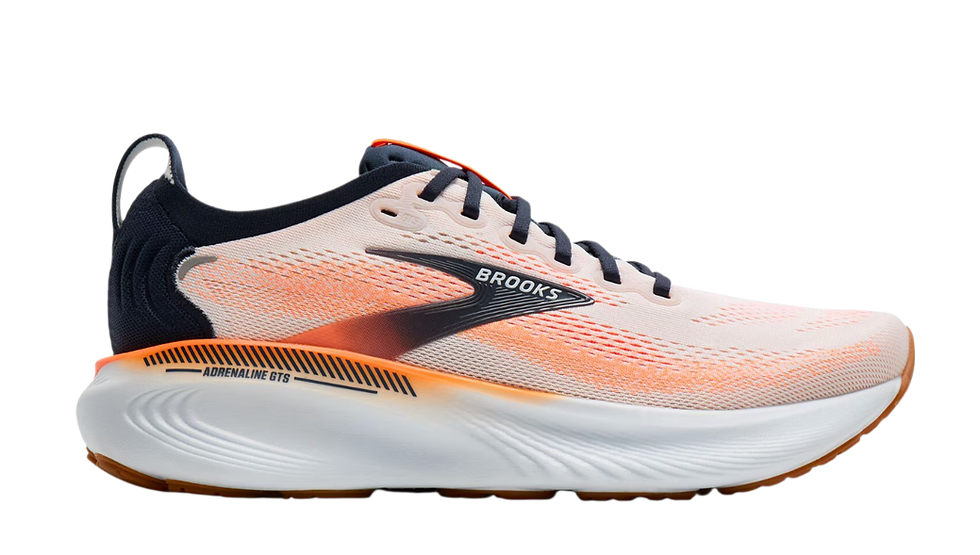
The Adrenaline GTS 25 (pictured below) is one of Brooks' key stability shoes. The Adrenaline family dates back to 1999 and has become one of the company's defining support ranges. The current shoe combines cushioned everyday running with the GuideRails system to provide structured support. Its role is relatively straightforward: regular road running for people who prefer additional guidance. That makes it a useful comparison with the Ghost, which covers a similar everyday part of the range without GuideRails structured support. If you have used much older versions of the Adrenaline, do not assume the modern shoe will provide exactly the same experience simply because the name remains.
Brooks Glycerin GTS 23
The Glycerin GTS 23 takes the DNA Tuned cushioning of the standard Glycerin and adds Brooks' GuideRails support system. That gives runners a useful choice within the same family. If you enjoy the cushioning and fit of the Glycerin but prefer structured support, the GTS version provides it without requiring you to move to a completely different cushioning concept.
Brooks Ghost Max 4
The Ghost Max 4 pushes beyond the standard Ghost towards greater cushioning and protection. Its high stack construction is combined with GlideRoll Rocker geometry designed to assist the transition from landing towards toe off. A broad base provides inherent stability without the GuideRails structured support used in Brooks' GTS models. This distinction matters because a stable feeling running shoe is not necessarily a conventional stability shoe. Consider the Ghost Max for easy running, longer runs and recovery sessions if you want more cushioning and an assisted transition. Despite sharing the Ghost name, it provides a noticeably different experience from the standard Ghost 18.
Brooks Hyperion Max 4
The Hyperion Max 4 is designed for faster training rather than straightforward easy mileage. It combines performance cushioning with a nylon SpeedVault plate and RapidRoll rocker geometry. Despite the Max name, its purpose is not simply to provide maximum softness. It is intended for faster sessions and long runs where cushioning and quicker transitions can both be useful. It is important not to confuse it with the Hyperion Elite. The Max uses a nylon plate and is primarily a training shoe, while the Elite uses a carbon plate and is designed specifically around racing.
Brooks Hyperion Elite 6
The Hyperion Elite 6 is Brooks' specialist carbon plated road racing shoe. It combines lightweight performance cushioning with a carbon SpeedVault+ plate and aggressive RapidRoll geometry. This is specialist performance footwear rather than simply a lighter everyday Brooks shoe. Its construction is designed around faster road racing, where reducing weight and creating an efficient transition become greater priorities than everyday durability and versatility. If you are considering it for an important race, use it during training first to make sure the fit, geometry and plate work comfortably with your running.
Brooks Cascadia 20
The Cascadia 20 continues one of Brooks' longest established trail shoe families. The Cascadia range has been part of the company's off road collection for around two decades and remains designed around versatile trail running. It is a more dedicated off road option than the Ghost Trail, making it a logical place to start for runners who regularly move beyond roads, gravel and straightforward park paths. As with any trail shoe, terrain should influence whether it suits you. Grip and protection requirements change considerably between dry tracks, mud, loose surfaces and technical mountain trails.
Are Brooks Running Shoes Good For Beginners?
They can be. Brooks makes several straightforward everyday running shoes alongside its specialist performance footwear, giving new runners plenty of options without requiring them to understand every technology in the range.
The Ghost is an obvious place to investigate if you want a conventional everyday road shoe, while the Glycerin provides a softer, more cushioned ride. Runners who prefer structured support can look towards the Adrenaline GTS.
Brooks' range of width options can also be useful for beginners who have previously struggled to find comfortable running footwear. Getting an appropriate fit is more important than buying the shoe with the most cushioning or newest technology.
There is no need for a beginner to buy a carbon plated Hyperion Elite or create a rotation of several different shoes. One comfortable everyday running shoe can cover a great deal of running while you discover what type of fit, cushioning and ride you prefer.
Are Brooks Running Shoes Sustainable?
Brooks has established environmental targets across its wider business, including work to reduce greenhouse gas emissions, increase the use of recycled materials and reduce the environmental impact associated with producing its footwear.
Recycled content is already used in current models. The Ghost 18, for example, lists more than half of the material in its upper as recycled.
Brooks has also previously used carbon neutral versions of the Ghost as part of its environmental programme, combining reductions in product emissions with carbon credits while working towards longer-term emissions reductions.
Those company wide initiatives do not mean every Brooks running shoe has the same environmental impact. Materials and manufacturing processes vary between models and generations, so check the sustainability information for the particular shoe you are considering.
Are Brooks Running Shoes Worth Trying?
Brooks is worth considering whether you want a dependable shoe for everyday road running, plush cushioning, structured stability, a high stack option, faster training, trail footwear or a carbon plated racing shoe.
Its range is particularly strong for runners who value choice around fit and support. Several core models are available in different widths, while the GTS system allows runners to choose structured support in different types of shoe rather than relying on one stability model.
The modern range is also much broader than the Ghost and Adrenaline models for which Brooks has traditionally been best known. Shoes such as the Ghost Max, Hyperion Max and Hyperion Elite give runners options that feel quite different from the company's conventional daily footwear.
Start with the type of running you need the shoe to handle and compare models within that part of the range. Fit remains more important than the Brooks name on the side, and even the most technically advanced shoe is the wrong choice if it does not work comfortably with your feet and your running.
Final Thoughts On Brooks Running Shoes
Brooks has been making footwear since 1914, but its decision to concentrate on running in 2001 helped transform the company into the specialist brand runners recognise today. Its long history now sits alongside modern cushioning, GuideRails support, rocker geometries and plated performance footwear.
There are many more Brooks shoes and previous generations available than we can usefully cover in one guide. Start with the type of running you actually do and choose from that part of the range. The best Brooks running shoe for you is not necessarily its fastest, softest or most technically advanced model, but the one that fits properly and does the job you need it to do.
Affiliate disclosure: This article contains affiliate links. If you make a purchase through one of these links, Sapphire Running Zone may receive a commission at no additional cost to you.


Comments