.png)

Altra Running Shoes Explained: History, Technology And Models
Altra has developed one of the most distinctive identities in running footwear. The brand became known for running shoes shaped to provide more room around the toes and for its zero drop platform, creating an alternative to the tapered forefoot and elevated heel traditionally found in many running shoes.
The modern Altra range is considerably broader. Zero drop remains central to the collection, but runners can now also choose 4mm drop shoes. Road footwear stretches from everyday and lower stack models to highly cushioned shoes, stability options and specialist racing footwear, while Altra has an extensive presence in trail and ultra running.
This guide explains what Altra running shoes are known for, how technologies including FootShape, Altra Ego cushioning and GuideRail support work and some of the current models worth knowing about. It is a starting point rather than a complete catalogue, with different generations and regional variations often available at the same time.
Who Is Altra?
Altra developed from the ideas of runners working in a specialist running store in Utah in the United States. Golden Harper and Brian Beckstead were among the people behind the company, experimenting with running shoes that differed considerably from the conventional designs available at the time.
One of the most important ideas involved removing the difference in height between the heel and forefoot. Harper experimented by modifying existing running shoes to create a level platform, an approach that eventually became closely associated with Altra.
The company subsequently built its identity around combining this level platform with a shoe shape designed to provide more space around the toes. Rather than simply creating another conventional running shoe, Altra developed footwear around a noticeably different combination of fit and geometry.
Those principles remain visible throughout the modern collection, although Altra has evolved considerably. The introduction of 4mm drop footwear means the company is no longer exclusively associated with zero drop, while modern cushioning, stability technology, carbon plates and specialist trail shoes have broadened the range.
What Makes Altra Running Shoes Different?
The most recognisable difference is FootShape. Altra designs its shoes to provide more space around the toes than many conventional running shoes, allowing the forefoot to sit differently inside the shoe rather than being contained within a strongly tapered shape.
Heel drop is the other defining characteristic. Many of Altra's best known shoes remain at 0mm, meaning the heel and forefoot sit at the same height above the ground. The modern collection also includes 4mm shoes, giving runners an alternative to the completely level platform for which Altra became known.
The combination means Altra should no longer simply be described as a zero drop running shoe company. Its current collection covers zero to low drop footwear while retaining the distinctive approach to toe room that remains one of the brand's most recognisable
characteristics.
A Torin 9 therefore provides a very different experience from an Experience Flow 3 or Vanish Carbon 3. Understanding what you want the shoe to do, how much cushioning you prefer and whether you want a 0mm or 4mm drop makes the range considerably easier to navigate.
How Do Altra Running Shoes Fit?
Altra is particularly associated with additional room around the toes, but that does not mean every Altra shoe has exactly the same fit. The company uses three FootShape fits to change the amount of space and security provided by individual models.
Original FootShape provides the roomiest experience and appears in models including the Escalante and Lone Peak. Standard FootShape retains characteristic Altra toe room while creating a more secure fit through the middle of the shoe. Slim FootShape provides the closest fitting version for models where a more precise fit is required.
The distinction is important when moving between Altra models. Runners who enjoy the spacious feel of an Original FootShape shoe should not automatically assume every Altra will provide exactly the same volume, even when the labelled size is identical.
Altra also produces specific wide versions of some shoes. FootShape should therefore not be confused with conventional width sizing, and runners needing additional width should check the options available for the individual model.
What About Heel Drop?
Heel drop is particularly important when discussing Altra because the company's reputation was built around zero drop running shoes. In a 0mm shoe, the heel and forefoot sit at the same height above the ground rather than the heel being elevated above the toes.
Many important Altra models retain this construction. The Torin, Escalante and Lone Peak are among the shoes that continue to use a 0mm platform, making zero drop an important part of the company's identity.
Altra has subsequently introduced 4mm shoes, particularly through its Experience family and other newer road models. This gives runners a small amount of heel elevation while retaining other characteristics associated with Altra footwear.
Moving to a substantially lower drop than you normally use can alter the demands placed on your feet and lower legs. Runners making a significant change should allow themselves time to become accustomed to the different geometry rather than immediately completing all of their running in the new shoes.
Heel drop should not be considered in isolation. Stack height, cushioning, flexibility, rocker geometry and the complete shape of the shoe all influence how it feels while running.
What Is FootShape?
FootShape is the name Altra uses for the characteristic shape of its footwear. The concept centres on providing space around the toes while retaining enough security through the remainder of the shoe for running.
This differs from simply making the entire shoe wider. Altra's different FootShape designs alter the shape and volume of the shoe, particularly around the forefoot and midfoot, while dedicated wide versions are available separately within parts of the range.
Original FootShape is the roomiest option, Standard provides a middle ground and Slim creates Altra's closest fitting shape. The version used depends on what the individual shoe is designed to do.
The distinction makes it important to judge each model individually. An Altra can provide noticeably more or less internal space than another Altra even though both carry the same brand name and labelled size.
What Is Altra Ego?
Altra Ego is the name used across a family of cushioning materials found throughout the company's running footwear. Different versions are designed to provide different combinations of cushioning, responsiveness, weight and durability.
Standard Altra Ego appears in shoes including the Escalante and Lone Peak, where it provides cushioning without turning either model into an extremely soft or highly stacked shoe. Altra Ego Max moves towards greater cushioning and appears in road and trail models where additional protection is required.
Altra has also developed newer and more performance focused foams for different parts of the range. The Torin 9, for example, uses P35X dual density cushioning, while specialist racing footwear uses cushioning designed around lower weight and greater responsiveness.
The name of the foam therefore provides only part of the story. Stack height, geometry, outsole, flexibility and the other components surrounding the cushioning all contribute to how the finished shoe behaves.
What Is GuideRail?
GuideRail is one of Altra's approaches to additional support. Rather than relying on the traditional firm medial post historically found in many stability shoes, the system is designed to provide additional guidance within the overall construction of the shoe.
The technology appears in supportive models including the Torin ST. This allows Altra to provide additional stability while retaining the toe room and low drop geometry that distinguish much of its footwear.
Altra also uses GuideRail in 4mm footwear such as the Experience Flow ST, giving runners a supportive option without requiring them to choose a completely level platform.
As with any stability technology, GuideRail should not automatically determine whether a shoe is right for you. Comfort, fit and how the complete shoe feels during your running remain more useful considerations than choosing footwear according to one support feature alone.
Does Altra Make Neutral Running Shoes?
Yes. A large part of Altra's road and trail collection consists of neutral running shoes, with different models covering cushioning levels, heel drops and types of running.
The Torin 9 is one of the clearest examples and provides a versatile 0mm everyday road shoe. The Experience Flow 3 offers a 4mm alternative, while the Escalante 5 uses a lower stack construction for runners wanting a different experience beneath the foot.
Move towards faster running and Altra offers specialist performance footwear including the Vanish family. Trail runners have an equally broad choice, ranging from the versatile Lone Peak to more cushioned models such as the Timp and specialist racing footwear including the Mont Blanc Carbon.
Neutral therefore describes the absence of a dedicated stability system rather than one particular type of Altra. Cushioning, stack height, fit and geometry can differ considerably between models.
Does Altra Make Stability Running Shoes?
Yes. Altra produces supportive running shoes while retaining many of the characteristics that distinguish the brand from conventional stability footwear.
The Torin ST provides one route into the current range. It combines Altra's roomy forefoot philosophy and 0mm geometry with GuideRail support, making it relevant to runners who want additional guidance within an everyday road shoe.
The Experience Flow ST provides another approach by combining GuideRail support with a 4mm heel to toe drop. This makes it particularly relevant to runners who want additional stability but prefer some heel elevation rather than a completely level platform.
Altra also has a longer history of supportive footwear through models including the Paradigm. The current range therefore gives runners different approaches to stability rather than relying on one traditional support construction.
Does Altra Make Carbon Plated Running Shoes?
Yes. Altra produces carbon plated footwear for both road and trail racing, allowing the company to apply its distinctive approach to fit and geometry to specialist performance shoes.
The Vanish Carbon 3 sits at the specialist end of the road collection. It combines lightweight performance cushioning with a carbon plate in a shoe designed around faster road running and racing.
Trail runners also have the Mont Blanc Carbon, which combines performance cushioning with a full length carbon plate and Vibram outsole technology. Its construction is intended for faster running across trails rather than everyday road mileage.
A carbon plate does not automatically make a shoe appropriate for every runner or every run. Fit, comfort, stability and whether the complete geometry works with your running style remain more important than choosing footwear simply because it contains a plate.
Does Altra Make Trail Running Shoes?
Yes. Trail running is one of the most established parts of Altra's range, and the brand has developed a particularly strong presence in trail and ultra running.
The Lone Peak 9+ is one of the best known options and combines a 0mm drop, Original FootShape fit, Altra Ego cushioning and Vibram Megagrip. Its relatively moderate cushioning and spacious construction create a different experience from heavily cushioned trail footwear.
The Timp 6 provides a more cushioned alternative for runners wanting additional protection beneath the foot. It combines Altra Ego Max cushioning with a 0mm platform and Vibram Megagrip outsole.
Move towards specialist trail racing and the Mont Blanc Carbon introduces a full length carbon plate and more performance focused construction. These models demonstrate the breadth of Altra's trail range rather than representing different versions of the same basic trail shoe.
Which Altra Running Shoes Should You Consider?
Altra's range changes regularly and older generations often remain available alongside newer shoes. The models below represent some of the most important parts of the current collection rather than every Altra running shoe available.
The range is particularly broad because runners can now choose between 0mm and 4mm road shoes while retaining the characteristic Altra approach to toe room. Trail runners have an equally varied collection stretching from everyday footwear to carbon plated racing shoes.
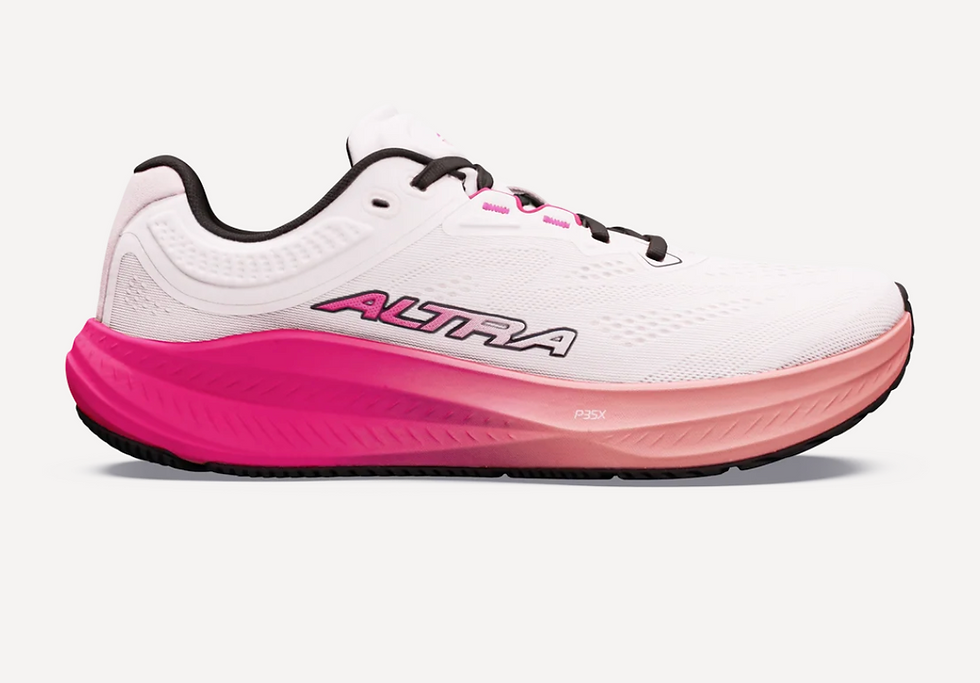
Altra Torin 9
The Torin 9 (picture above) sits near the centre of Altra's road running collection and is one of the clearest starting points for understanding the brand. It is a neutral everyday road shoe with a 0mm drop, Standard FootShape fit and 28mm stack height. Its P35X dual density midsole combines different cushioning characteristics across the platform, while a Vibram XS Dura outsole adds greater emphasis on grip and durability. The result is a shoe designed to provide cushioning while retaining a stable and controlled everyday experience. Its role remains straightforward. The Torin is designed for regular road mileage and provides a useful option for runners who want Altra's characteristic toe room and 0mm geometry without moving towards either lower stack footwear or a specialist performance shoe.
Runners wanting a 4mm drop can move towards the Experience Flow 3, while the Escalante 5 provides a lower stack 0mm alternative. Those wanting additional guidance can investigate the Torin ST.
Altra Experience Flow 3
The Experience Flow 3 is one of the most important shoes for understanding modern Altra because it demonstrates how the brand has expanded beyond the zero drop construction for which it became known. It uses a 4mm heel to toe drop with a 32mm heel and 28mm forefoot stack, together with Altra Ego P35 cushioning and a Standard FootShape fit. Rocker geometry contributes to the shoe's rolling transitions through the stride. Its position is different from the Torin 9 despite both being neutral road shoes suitable for regular mileage. The Torin retains a completely level platform, while the Experience Flow introduces a small heel to toe offset and a different geometry. That distinction can make the Experience Flow particularly interesting for runners who like the principles behind Altra's roomy forefoot but do not specifically want a 0mm running shoe.
Altra FWD Via 2
The FWD Via 2 moves towards the highly cushioned end of Altra's road collection and provides another 4mm option for runners who want more material beneath the foot.
Its construction combines substantial cushioning with rocker geometry intended to create smooth transitions during road running. This gives the shoe a noticeably different role from lower stack models such as the Escalante. The FWD Via 2 is particularly relevant for easy running, longer road mileage and runners who prioritise cushioning. Its 4mm drop also separates it from highly cushioned zero drop shoes that have traditionally been associated with Altra. Runners wanting a more conventional amount of cushioning can begin with the Experience Flow 3, while those specifically wanting a 0mm everyday road shoe are more likely to investigate the Torin 9.
Altra Escalante 5
The Escalante 5 takes Altra's road range in a different direction by combining a 0mm drop with a 24mm stack and Original FootShape fit. It uses Altra Ego cushioning and a knit upper, with the lower stack helping create greater connection with the ground than Altra's more cushioned road shoes. Its relatively simple construction also makes it relevant for runners who prefer a more flexible experience. The Escalante is therefore not simply a less cushioned Torin. It is designed for runners who actively want a lower and less substantial shoe beneath their feet while retaining Altra's level platform and roomiest FootShape design.
Runners wanting more cushioning for everyday mileage are more likely to begin with the Torin 9, while those wanting a 4mm drop and more pronounced rocker geometry can investigate the Experience Flow 3.
Altra Torin ST
The Torin ST provides a supportive alternative within Altra's road range and is particularly relevant to runners who want additional guidance without abandoning the brand's 0mm geometry. GuideRail technology provides the principal distinction from Altra's neutral everyday footwear. Rather than relying on a traditional firm medial post, the shoe incorporates support into a modern stability construction. Its role places it alongside the Torin family as an everyday road option rather than a specialist shoe. The difference is the additional guidance provided for runners who prefer a more supportive experience during regular training. Runners wanting some heel elevation as well as support can investigate the Experience Flow ST, while those who do not require dedicated stability technology are more likely to begin with the neutral Torin 9.
Altra Vanish Carbon 3
The Vanish Carbon 3 (pictured below) sits at the specialist end of Altra's road collection and is designed around faster running and racing rather than everyday mileage. It combines performance cushioning with a carbon plate and a lightweight construction, bringing Altra into the specialist racing category while retaining characteristics associated with the brand's approach to fit and geometry. The Vanish Carbon has a very different purpose from the Torin, Experience Flow or Escalante. Its construction is intended to help runners perform at faster speeds rather than provide the most versatile option for everyday training. Consider it if you specifically want Altra's specialist road racing technology. Runners wanting a shoe for the majority of regular mileage are better served elsewhere in the range.
Altra Lone Peak 9+
The Lone Peak is one of Altra's best known trail families and has become closely associated with the company's presence in trail and ultra running. The Lone Peak 9+ retains a 0mm drop and Original FootShape fit, providing generous room around the toes. Altra Ego cushioning creates a moderate rather than highly stacked platform, while the 9+ uses a Vibram Megagrip outsole for traction across varied trail surfaces. Its combination of toe room, moderate cushioning and level platform creates a noticeably different experience from highly cushioned trail shoes. That makes it particularly relevant to runners who value a less substantial shoe and greater connection with the terrain. Runners wanting more cushioning for longer trail mileage can investigate the Timp 6, while those moving towards specialist trail racing have options including the Mont Blanc Carbon.
Altra Timp 6
The Timp 6 moves further towards cushioning while retaining several characteristics closely associated with Altra trail footwear. It uses a 0mm platform and Altra Ego Max cushioning to provide more protection beneath the foot than the Lone Peak. Vibram Megagrip provides traction across varied terrain, while its Standard FootShape fit creates a more secure middle ground than Altra's roomiest Original shape. This gives the Timp a useful position between the more ground connected Lone Peak and Altra's specialist trail racing footwear. It makes particular sense for longer trail runs where additional cushioning can become increasingly useful. The choice between Lone Peak and Timp should therefore depend on the experience you want rather than assuming one is the superior trail shoe. The Lone Peak provides the lower and roomier option, while the Timp places greater emphasis on cushioning.
Altra Mont Blanc Carbon
The Mont Blanc Carbon sits at the specialist end of Altra's trail collection and is designed for faster running and racing across demanding terrain. It combines a full length carbon plate with Altra Ego Pro and Altra Ego Max cushioning. A Vibram Megagrip outsole with Litebase provides trail traction while helping keep the construction focused on performance. Despite the addition of a carbon plate, the shoe retains a 0mm drop and Standard FootShape fit. This gives Altra a specialist trail racing option while maintaining several of the characteristics found elsewhere in its collection. The Mont Blanc Carbon is considerably more specialised than a Lone Peak or Timp. It makes most sense for runners specifically looking for faster trail footwear, while the other models provide greater versatility for regular training and everyday trail mileage.

Are Altra Running Shoes Good For Beginners?
They can be, but beginners should understand the importance of heel drop rather than choosing Altra solely because of the additional space provided around the toes.
The Torin 9 provides one of the clearest routes into the range for runners comfortable with a 0mm platform. It is designed for everyday road mileage and avoids the specialist characteristics of Altra's faster footwear.
The Experience Flow 3 can be particularly interesting for runners who want Altra's approach to toe room but prefer some heel to toe offset. Its 4mm drop gives runners another route into the range without immediately moving to a completely level platform.
Runners moving from shoes with a substantially larger drop should allow themselves time to adjust to lower drop footwear. Getting the fit and geometry right remains more important than choosing an Altra because of one particular technology or design principle.
Are Altra Running Shoes Sustainable?
Altra incorporates recycled materials into parts of its footwear range, although the exact materials and proportions vary between models and generations.
Some shoes use recycled materials within their uppers, while other environmental considerations depend on the cushioning, outsole, upper and manufacturing processes used for the individual model.
Sustainability claims should therefore be considered at product level rather than assuming every Altra shoe has the same environmental characteristics. The construction of an everyday road shoe, trail shoe and carbon plated racing shoe can be substantially different.
Durability is also relevant when considering the wider impact of running footwear. Runners particularly interested in sustainability should check the current specification of the individual shoe they are considering because materials and manufacturing processes can change between generations.
Are Altra Running Shoes Worth Trying?
Altra is particularly worth considering if you value additional room around the toes or want to explore zero to low drop running footwear. The modern collection provides considerably more choice than the brand's traditional reputation for zero drop shoes might suggest.
The Torin 9 remains one of the clearest entry points into Altra's 0mm road collection, while the Escalante 5 provides a lower stack alternative. The Experience Flow 3 introduces a 4mm drop and the FWD Via 2 moves further towards substantial cushioning.
Runners wanting additional support can investigate the Torin ST or 4mm Experience Flow ST, while the Vanish Carbon 3 moves into specialist road racing rather than regular everyday training.
Trail running remains an important part of the range. The Lone Peak 9+ provides a distinctive combination of toe room, zero drop geometry and moderate cushioning, while the Timp 6 increases cushioning and the Mont Blanc Carbon moves into specialist trail racing.
Final Thoughts On Altra Running Shoes
Altra built its reputation by taking a noticeably different approach to two established characteristics of conventional running shoes: the shape around the toes and the difference in height between the heel and forefoot.
That identity remains important, but modern Altra is broader than its zero drop reputation suggests. The company now produces both 0mm and 4mm running shoes while offering different FootShape fits, cushioning levels and support systems across road and trail footwear.
The best Altra running shoe for you is not necessarily the model with the most cushioning or the most advanced technology. FootShape fit, heel drop, cushioning, terrain and the type of running you actually intend to do should all influence the decision.
For runners new to Altra, heel drop deserves particular attention. The brand now provides more ways to experience its distinctive approach to fit than it once did, but moving from a conventional higher drop shoe to a 0mm model remains a meaningful change and should be approached progressively.
Affiliate disclosure: This article contains affiliate links. If you make a purchase through one of these links, Sapphire Running Zone may receive a commission at no additional cost to you.


Comments