.png)

Nike Running Shoes Explained: History, Technology And Models
Nike is one of the most recognisable sports brands in the world, but running has been central to the company since its earliest days. From Bill Bowerman experimenting with running shoe designs in Oregon to the development of Nike Air, ZoomX foam and carbon plated racing shoes, running footwear has repeatedly been used by Nike as a testing ground for new ideas.
Today, the Nike running range stretches from dependable shoes for everyday miles to maximum cushion models, stability footwear, trail shoes and some of the most recognisable carbon plated racers in the sport. The Pegasus remains its long established everyday option, the Vomero family provides greater cushioning and the Structure focuses on additional support. Move towards faster running and shoes including the Zoom Fly, Vaporfly and Alphafly take over.
This guide explains what Nike running shoes are known for, how the main technologies and ranges differ and some of the models worth knowing about. It is a starting point rather than a complete catalogue, with numerous models, previous generations and regional variations available at the same time.

Who Is Nike?
Nike's origins can be traced to Blue Ribbon Sports, the company established by Phil Knight and his former University of Oregon athletics coach Bill Bowerman in 1964.
Bowerman was particularly interested in improving running footwear. Rather than simply accepting the shoes available at the time, he experimented with different constructions in an attempt to make footwear lighter and better suited to his athletes.
One of his important early designs became the Cortez. Its combination of cushioning and road running performance helped establish the foundations of what would become Nike's footwear business.
The Nike name was introduced in the early 1970s, accompanied by the Swoosh logo that would become one of the world's most recognisable sporting symbols. Bowerman continued experimenting with footwear and famously used a waffle iron while developing an outsole pattern designed to provide traction without conventional metal spikes.
The resulting Waffle Trainer helped establish Nike as an important running brand during the running boom of the 1970s. The company subsequently expanded far beyond running, but footwear for runners continued to play an important role in its product development.
Nike Air arrived in running footwear during the late 1970s, while the Pegasus followed in the early 1980s. Later decades brought technologies including Zoom Air, Flyknit and React foam, followed more recently by ZoomX, carbon fibre plates and the modern generation of Nike racing shoes.
Nike is now a global sports company covering numerous sports and lifestyle categories, but running remains closely connected to both its history and its current footwear technology.
What Makes Nike Running Shoes Different?
Nike has one of the broadest ranges in running, so there is no single characteristic shared by every shoe.
The Pegasus is designed around responsive everyday running, while the Vomero family moves towards greater cushioning. The Structure provides additional support, and the Vaporfly and Alphafly are specialist racing shoes built around lightweight foam, carbon fibre plates and performance focused geometry.
One of Nike's strengths is the way technology appears in different parts of the range. Air cushioning that became famous decades ago remains relevant in modern shoes, while ZoomX foam can now be found in both highly cushioned daily footwear and specialist racing models.
Nike has been particularly influential in modern road racing footwear. Its development of shoes combining highly responsive foam, increased stack heights, carbon fibre plates and carefully designed geometry helped change expectations around what a racing shoe could provide.
That performance technology should not obscure the rest of the collection. Most runners looking for a regular Nike running shoe are more likely to need something from the Pegasus, Vomero or Structure families than an Alphafly.
How Do Nike Running Shoes Fit?
Fit varies across Nike running shoes, so do not assume that every model will feel the same simply because it carries the Swoosh.
A regular Pegasus has a very different purpose from a lightweight Vaporfly or Alphafly, and the uppers, internal volume and shape of those shoes reflect their different roles. Nike also changes the fit of individual shoe families between generations.
The Pegasus 42 is a useful example. Nike increased the space around the forefoot and toe box compared with its predecessor, demonstrating why experience with an older version does not guarantee that a newer model will fit identically.
Some Nike running shoes are available in alternative widths, although the options vary according to model and market. If you require a wider fit, check the particular shoe rather than assuming every model is offered in the same widths.
Check that you have sufficient room around the toes while your heel and midfoot remain secure. Feet can expand during longer runs, so how a shoe feels after several miles matters more than how snug it feels when you first put it on.
What About Heel Drop?
There is no standard heel drop across Nike running shoes. Different parts of the range use different geometries according to the purpose of the shoe.
The Pegasus 42, Vomero 18, Vomero Plus and Structure 26 use a 10mm drop. Nike's faster footwear can move lower, with the Zoom Fly 6 and Alphafly 3 using an 8mm drop and the Vaporfly 4 using 6mm.
Heel drop describes the difference in height between the heel and forefoot. It can be useful when comparing a new Nike shoe with something you already run comfortably in, particularly when the difference between the two is substantial.
Do not use heel drop alone to decide whether a shoe will suit you. Stack height, cushioning, rocker geometry, stiffness and the way the shoe interacts with your stride all contribute to how it feels when you run.
What Is Nike Running Shoe Cushioning Like?
There is no single Nike cushioning experience. The company uses several different technologies to create shoes ranging from everyday options to maximum cushion models and lightweight performance footwear.
ReactX is used across parts of Nike's everyday running collection. ZoomX sits towards the lighter and more responsive end of the company's foam technology and appears in both racing footwear and highly cushioned road shoes.
Air Zoom adds another element. Rather than being a conventional foam, it uses pressurised units containing tensile fibres that compress under load and return towards their original shape.
Nike also combines these technologies within individual shoes. The Pegasus Premium, for example, uses ZoomX, a sculpted full length Air Zoom unit and ReactX within the same cushioning system.
Do not choose a Nike shoe solely because it contains a particular foam or Air unit. The amount of cushioning, stack height, geometry and the presence of a plate can substantially change the finished ride.
What Is ReactX Foam?
ReactX is one of Nike's principal foams for everyday running footwear and developed from the company's earlier React cushioning.
It appears in several parts of the current collection. The Pegasus 42 combines ReactX with a full length Air Zoom unit, while the Structure 26 uses a full length ReactX midsole as part of a more supportive construction.
ReactX is also used in Nike trail footwear, demonstrating the versatility of the material. That does not mean every ReactX shoe provides the same experience.
The amount and shape of the cushioning surrounding your foot remain important. A supportive Structure and an everyday Pegasus can use the same underlying foam technology while being designed for different runners and different purposes.
What Is ZoomX Foam?
ZoomX is Nike's lightweight, highly responsive performance foam and has become one of the company's most important running technologies.
It is strongly associated with Nike's racing shoes. The Vaporfly and Alphafly both use ZoomX as part of their performance focused constructions, where keeping weight down while providing substantial cushioning and responsiveness is particularly important.
ZoomX is no longer limited to racing. The Vomero Plus uses a full length ZoomX midsole to create a highly cushioned everyday running shoe, while the Vomero 18 combines ZoomX with ReactX.
That makes ZoomX a good example of why runners should look beyond the name of the foam. In a Vaporfly it forms part of a lightweight racing package. In a Vomero Plus, a much larger volume is used to create a cushioned daily shoe.
What Is Nike Air Zoom?
Air cushioning has been part of Nike footwear for decades, but modern Air Zoom is considerably more sophisticated than the early Air units that helped establish the technology.
Air Zoom units contain pressurised air and tensile fibres. When loaded, the unit compresses before returning towards its original shape, allowing Nike to add responsive cushioning to different types of shoe.
The Pegasus 42 uses a curved, full length Air Zoom unit alongside ReactX foam. The Pegasus Premium uses a sculpted full length unit between ZoomX and ReactX, while the Alphafly 3 places two prominent Air Zoom units beneath the forefoot as part of its specialist racing construction.
Air Zoom therefore describes a technology rather than one particular type of running shoe. How the unit is positioned and what surrounds it are important to the finished experience.
What Are Nike Flyplates?
Nike uses plates within some of its faster running shoes to influence stiffness, responsiveness and the way the shoe moves through the stride.
The Vaporfly 4 and Alphafly 3 both use full length carbon fibre Flyplates as part of their race focused constructions. The plate works together with the foam and geometry rather than functioning as an isolated component beneath the foot.
The Zoom Fly 6 also uses a full length carbon fibre Flyplate, but it is a more substantial shoe intended to bridge training and racing. It therefore occupies a different role despite sharing some technology with Nike's specialist race shoes.
A carbon plate alone does not make two shoes equivalent. Foam, weight, plate geometry, stack height and the overall shape of the shoe all influence how it behaves.
Does Nike Make Neutral Running Shoes?
Yes. A large part of Nike's road running range is made up of shoes without dedicated stability systems.
The Pegasus 42 is one of its best known everyday options, while the Vomero family provides alternatives for runners who want more cushioning. The wider Pegasus family also includes models offering different combinations of responsiveness and cushioning.
Nike's faster training and racing footwear also largely sits outside the conventional stability category. The Zoom Fly, Vaporfly and Alphafly are designed primarily around performance rather than structured support.
Neutral does not mean that every shoe will feel equally stable. Platform width, heel construction, cushioning and geometry can all provide inherent stability without turning a shoe into a conventional stability model.
Does Nike Make Stability Running Shoes?
Yes. The Structure family is Nike's main road running range for runners wanting additional support.
The Structure 26 uses a full length ReactX midsole alongside a midfoot support system designed to create a stable platform through the stride. Nike's modern approach is different from simply relying on the firm medial posts traditionally associated with stability footwear.
Support therefore comes from the overall construction of the shoe, including its platform and geometry. Nike has also expanded the Structure family, giving runners more than one way to access supportive cushioning within its current road collection.
Not every runner who overpronates automatically needs a stability shoe. Comfort, fit and how the shoe behaves while you are running remain important considerations.
Does Nike Make Carbon Plated Running Shoes?
Yes. Nike produces several carbon plated road running shoes covering different types of faster training and racing.
The Vaporfly 4 is a lightweight racing shoe combining ZoomX foam with a full length carbon fibre Flyplate. The Alphafly 3 adds forefoot Air Zoom units to its ZoomX cushioning and carbon plate, creating a different racing experience aimed particularly at the half marathon and marathon.
The Zoom Fly 6 also contains a carbon fibre plate but occupies a different position in the range. It is more substantial and versatile, allowing it to cover faster training as well as racing.
A carbon plated shoe is not necessary simply because you are entering a race. Comfort, fit and whether you can run confidently in the shoe over your chosen distance remain important.
Does Nike Make Trail Running Shoes?
Yes. Nike produces dedicated trail footwear alongside its much larger road running collection.
The Pegasus Trail family provides one of the most accessible routes into Nike trail footwear. It combines road shoe influences with greater grip and protection, making it particularly relevant for runners whose routes move between roads, gravel, parks and less technical trails.
Nike also produces other trail models for runners requiring different combinations of cushioning, grip and protection. The right model therefore depends heavily on the terrain and type of running you plan to do.
Choose a trail shoe according to where you actually run. Dry park paths, muddy woodland, loose rock and technical mountain trails place very different demands on grip, cushioning and protection.
Which Nike Running Shoes Should You Consider?
The Nike range is extensive and changes regularly, with previous generations often remaining available after a new model appears. The shoes below represent some of the most important parts of the current collection rather than every Nike running shoe you can buy.
Nike Pegasus 42
The Pegasus 42 (pictured above) is the latest generation of one of Nike's most important running shoe families. The Pegasus first appeared in the early 1980s and has remained a central part of the collection for more than four decades. The current version uses ReactX foam together with a curved, full length Air Zoom unit. Nike has also increased the space around the forefoot and toe box compared with its predecessor. Its purpose remains straightforward. The Pegasus is an everyday road running shoe designed to handle regular training rather than specialising in maximum cushioning or racing. Easy runs, general training and longer steady mileage all fit naturally within its role, making it a logical starting point for runners wanting one Nike shoe to cover much of their running.
Nike Vomero 18
The Vomero 18 moves further towards cushioning and comfort. It combines ZoomX foam over ReactX in a dual density midsole and provides considerably more cushioning beneath the foot than earlier generations of the shoe. Its role is regular road running, easy mileage and longer sessions where cushioning takes priority over outright speed. The combination of two foams also separates it from the Vomero Plus, which uses ZoomX throughout its midsole. Consider the Vomero 18 if you want a more cushioned everyday Nike shoe than the Pegasus without moving into specialist performance footwear.
Nike Vomero Plus
The Vomero Plus pushes the cushioning concept further by using a tall stack of full length ZoomX foam. That creates an important distinction within the Vomero family. The standard Vomero 18 combines ZoomX and ReactX, while the Plus uses ZoomX throughout its midsole to create a softer and more responsive maximum cushion experience. It is primarily intended for daily mileage, longer runs and recovery running rather than racing. Despite sharing its foam with Nike's fastest shoes, the amount of cushioning and overall construction give it a very different purpose.
Nike Structure 26
The Structure 26 is one of Nike's principal supportive everyday road shoes. It uses a full length ReactX midsole and a midfoot support system designed to provide greater stability through the stride. Rather than using a conventional firm medial post, the shoe creates support through its platform and overall construction. Its role is regular road running for people who prefer additional guidance. That makes it a useful comparison with the Pegasus, which covers a similar everyday part of the range without the Structure's dedicated support system.
Nike Pegasus Premium
The Pegasus Premium takes the familiar Pegasus name in a much more technology focused direction. It combines ZoomX foam, a sculpted full length Air Zoom unit and ReactX foam within the same shoe. The result is designed to provide a more responsive and highly cushioned experience than the regular Pegasus. Despite sharing the Pegasus name, the two shoes should not be treated as direct equivalents. Runners wanting a straightforward and versatile daily shoe may prefer the Pegasus 42, while the Premium provides a more elaborate interpretation of everyday Nike running footwear.
Nike Zoom Fly 6
The Zoom Fly 6 sits between conventional training footwear and Nike's specialist racing shoes. It combines ZoomX foam with a full length carbon fibre Flyplate, giving runners access to some of Nike's performance technology in a more substantial package than the Vaporfly or Alphafly. Its role includes faster sessions, race training and racing. This versatility is important because the presence of a carbon plate does not make it simply another Vaporfly. The Zoom Fly is designed to handle more regular training.
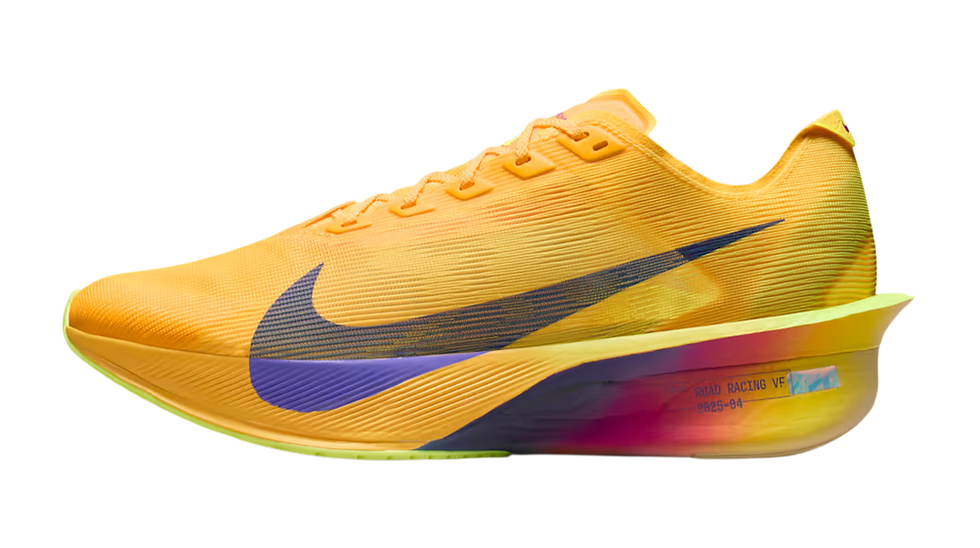
Nike Vaporfly 4
The Vaporfly 4 (pictured below) is Nike's lightweight carbon plated road racing shoe and the latest generation of a family that played an important role in the development of modern super shoes. It combines ZoomX cushioning with a full length carbon fibre Flyplate and a lightweight construction designed around faster road racing. The fourth generation has a 6mm heel to toe drop and weighs approximately 190g in a men's size 9. Nike positions the Vaporfly 4 for road racing from 10K through the half marathon and marathon. It is specialist performance footwear rather than simply a faster version of an everyday Nike shoe, so use it during training before relying on it for an important race.
Nike Alphafly 3
The Alphafly 3 sits at the specialist long distance end of Nike's road racing range. Its construction combines ZoomX foam, two Air Zoom units beneath the forefoot and a full length carbon fibre Flyplate. The third generation uses a fully connected ZoomX midsole and a slightly wider carbon plate than its predecessor. Nike positions the Alphafly particularly around the half marathon and marathon. Its geometry and prominent forefoot Air Zoom units create a different experience from the Vaporfly, so the two shoes should not be treated as interchangeable simply because both contain ZoomX and carbon fibre plates. If you are considering an Alphafly for an important race, use it during training first to make sure its fit and unusual geometry work comfortably with your running.
Nike Pegasus Trail
The Pegasus Trail family takes the familiar Pegasus concept beyond the road, combining cushioned running with an outsole and construction designed to provide greater traction and protection on mixed terrain. It is particularly relevant for runners moving between roads, gravel, parks and established trails, where the versatility of a road to trail shoe can be useful.
More technical terrain can require more specialist grip and protection. The Pegasus Trail should therefore be considered according to the surfaces you actually run on rather than simply as the off road equivalent of the road Pegasus.
Are Nike Running Shoes Good For Beginners?
They can be. Nike makes several straightforward everyday running shoes alongside its specialist performance footwear, giving new runners plenty of choice without requiring them to understand every technology in the range.
The Pegasus is an obvious place to investigate if you want a versatile everyday road shoe, while the Vomero provides more cushioning. Runners who prefer additional support can look towards the Structure family.
There is no need for a beginner to buy a Vaporfly or Alphafly simply because those shoes are associated with fast marathon performances. One comfortable everyday running shoe can cover a great deal of running while you discover what type of fit, cushioning and ride you prefer.
Getting the fit right is more important than buying the Nike shoe with the most cushioning, highest price or greatest amount of technology.
Are Nike Running Shoes Sustainable?
Nike has established environmental targets across its wider business and has increased the use of recycled materials in parts of its footwear and clothing ranges.
Materials are an important part of that work. Nike uses recycled materials in numerous products, while manufacturing technologies such as Flyknit were developed partly to reduce waste associated with more conventional footwear construction.
Nike also reuses waste generated during the production of its Air units, while recycled content appears in a number of current running shoes. ReactX was developed with manufacturing emissions in mind as well as performance, with Nike reporting a lower carbon footprint for a pair of ReactX midsoles than its previous React foam.
Those company wide initiatives do not mean every Nike running shoe has the same environmental impact. Materials and manufacturing processes vary between models and generations, so check the sustainability information for the particular shoe you are considering.
Are Nike Running Shoes Worth Trying?
Nike is worth considering whether you want a versatile everyday road shoe, maximum cushioning, additional support, trail footwear, faster training shoes or specialist carbon plated racing footwear.
The Pegasus remains the most obvious starting point for everyday running, but the modern range extends considerably further. The Vomero family gives runners several highly cushioned options, while the Structure family provides additional support.
Performance footwear remains one of Nike's most distinctive areas. The Zoom Fly bridges faster training and racing, while the Vaporfly and Alphafly provide two different approaches to specialist carbon plated footwear.
The size of the range can make choosing more complicated than it initially appears. Start with the type of running you need the shoe to handle and compare models within that part of the collection rather than choosing according to the technology with the most familiar name.
Final Thoughts On Nike Running Shoes
Nike's relationship with running stretches back to the company's earliest years. Bill Bowerman's experiments with footwear helped establish the brand, while technologies including Air, ZoomX and carbon fibre plates have continued its focus on running shoe development.
The modern collection is much broader than the high profile racing shoes for which Nike has attracted so much attention. The Pegasus remains a dependable everyday option, the Vomero family provides greater cushioning and the Structure adds support, while the Zoom Fly, Vaporfly and Alphafly cover increasingly performance focused running.
The best Nike running shoe for you is not necessarily its fastest, softest or most technically advanced model. Fit, comfort and whether the shoe does the job you need it to do remain more important than the amount of technology beneath your feet.
Affiliate disclosure: This article contains affiliate links. If you make a purchase through one of these links, Sapphire Running Zone may receive a commission at no additional cost to you.


Comments