.png)

New Balance Running Shoes Explained: Everything You Need To Know
New Balance running shoes cover everything from your first regular runs to marathon racing and days on the trails. The choice is extensive, with familiar numbered models such as the 880 and 1080 sitting alongside names including Rebel, More and Hierro. Understanding what those shoes are designed to do makes the range much easier to navigate.
This guide explains the main differences and picks out some of the models worth considering. It is a starting point rather than a complete catalogue, because versions, width options and availability vary between countries. The best place to begin is with the running you actually do and the fit you need.
The History of New Balance
New Balance began in Boston in 1906, when William J. Riley founded a business making arch supports. Running footwear became an important part of its development, and Jim Davis bought the company on the day of the Boston Marathon in 1972. The brand grew alongside the increasing popularity of recreational running.
Today, New Balance makes performance running shoes as well as sportswear and lifestyle footwear. That distinction matters when shopping: a shoe with a history in running is not necessarily part of the current performance range. Choose by the individual model’s purpose rather than assuming every shoe carrying the N logo is intended for your training.
What Makes New Balance Running Shoes Different?
Width choice is one of the strongest reasons to investigate New Balance. Selected running models come in several fittings, giving runners more ways to find a secure shoe without squeezing their toes or buying unnecessary extra length. The options depend on the model, country and whether you are buying from the men’s or women’s range.
The breadth of the range is another advantage. New Balance offers cushioned daily shoes, dedicated stability models, lightweight options for faster running and carbon plated shoes for training and racing. Its model numbers identify different shoe families, rather than providing a simple ranking in which a higher number is always better.
How Do New Balance Running Shoes Fit?
There is no single New Balance fit. A cushioned road shoe and a racing model can hold the same foot differently, and an updated version may change the upper or the space around your toes. Finding your size in one model is useful information, but it does not guarantee the same fit in another.
Check both length and width, leaving room for your toes while making sure your heel and midfoot remain secure. If a shoe feels tight across the forefoot, try a wider fitting before automatically going up a size. Equally, a wide shoe should still hold your foot comfortably rather than allowing it to slide around.
Width letters also need careful reading. In the US ranges, D generally denotes standard width for men and wide for women, while 2E generally means wide for men and extra wide for women. Check the size guide for the exact product and market, particularly when ordering internationally.
What About Heel Drop?
Heel drop varies across the New Balance range and can change between generations. The 1080v15, Fresh Foam X 880v15 and FuelCell Rebel v5 are listed with a 6mm drop, while the Fresh Foam X More v6 has a 4mm drop. Those figures describe the difference in sole height beneath the heel and forefoot, rather than the total amount of cushioning.
Use heel drop as one part of your comparison, alongside fit, cushioning and the shape of the sole. A shoe with the same drop as your existing pair may still feel quite different. If you make a substantial change, introduce the new shoe gradually instead of immediately using it for all your running.
What Is New Balance’s Cushioning Like?
Fresh Foam X is used in several cushioning focused models, including the 880, 860, More and Hierro. It is associated with comfort, but those shoes do different jobs and should not be expected to feel identical. The amount of foam, its arrangement and the shape of the shoe all influence the ride.
FuelCell appears in shoes such as the Rebel v5 and SuperComp Trainer v3. The Rebel v5 uses a blend of PEBA and EVA foams, with a focus on a lightweight, responsive feel. FuelCell is not automatically firmer than Fresh Foam X, and the name does not mean that every shoe using it contains a carbon plate.
Infinion is another important part of the current range. It replaces Fresh Foam X in the 1080v15 and is also used in the SuperComp Elite v6, with different constructions for everyday running and racing. New Balance describes it as delivering cushioning and energy return over repeated runs, although your own comfort still matters more than the foam’s name.
Does New Balance Make Neutral Running Shoes?
Yes. Models such as the 1080v15, Fresh Foam X 880v15 and FuelCell Rebel v5 give runners neutral road options for different kinds of training. The 1080 and 880 concentrate on everyday cushioning, while the Rebel offers a lighter option that can move between steady running and faster efforts.
Neutral does not mean that every model feels equally stable. The width of the sole, softness of the cushioning and how securely the upper holds your foot all contribute to that feeling. Compare individual shoes instead of treating the neutral category as a single type of ride.
Does New Balance Make Stability Running Shoes?
Yes. The Fresh Foam X 860v15 is a dedicated stability model, combining Fresh Foam X cushioning with New Balance’s Stability Plane technology. It provides a support focused option for everyday road training and longer runs.
A stability shoe is worth considering if you prefer that more guided feel or already run comfortably in a support model. It should not be chosen simply because you have been told that every inward movement of the foot needs correcting. Comfort and how the shoe works during your normal runs remain central to the decision.
Does New Balance Make Carbon Plated Running Shoes?
Yes. The SuperComp range includes carbon plated shoes with different purposes. The SuperComp Elite v6 is a specialist racing model, while the FuelCell SuperComp Trainer v3 brings a plated design to training.
The Trainer v3 uses Energy Arc, which combines a carbon fibre plate with strategically placed gaps in the midsole. The Elite v6 uses Infinion foam and a revised carbon fibre plate. These are distinct constructions, so older descriptions of SuperComp technology should not be applied automatically to every new version.
A plate does not guarantee a faster race or make a shoe necessary for marathon training. The useful question is whether you feel comfortable and confident running in it at the pace you intend to use. Test a race shoe during training before relying on it at an important event.
Does New Balance Make Trail Running Shoes?
Yes. The Fresh Foam X Hierro family is a clear example of New Balance’s trail range. The Hierro v9 combines cushioning with a Vibram Megagrip outsole and 6mm lugs, giving it a different role from the brand’s road shoes.
Choose trail footwear for the surfaces you run on, rather than simply looking for a thick sole. Dry paths, wet woodland, mud and rocky ground place different demands on grip and protection. A cushioned trail shoe may suit long off road runs, but you should also check how securely it holds your foot on uneven terrain.
Which New Balance Running Shoes Should You Consider?
The models below explain several of the main choices in the range. They are not a list of every New Balance running shoe or a claim that one model will suit everyone. Older generations can also remain on sale, so check the complete model name before comparing prices.
New Balance 1080v15
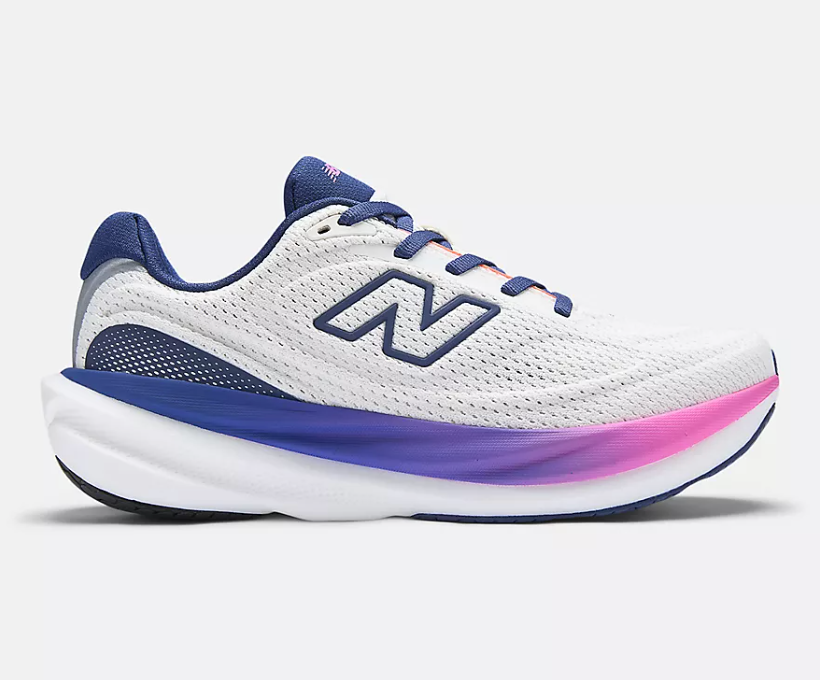
The 1080v15 (pictured above) is a neutral road shoe for runners looking for cushioning during everyday training. It uses Infinion foam, making it a significant change from the Fresh Foam X 1080v14. It is worth comparing for easy runs and regular mileage, particularly if comfort is your main priority. Try the updated cushioning and upper, and compare the available widths. The 1080 is one option for daily running rather than an automatic best choice for every runner.
New Balance Fresh Foam X 880v15
The 880v15 is a neutral daily running shoe that New Balance positions for everyday miles and long runs. It combines Fresh Foam X cushioning with a structured, breathable mesh upper. It is a useful starting point if you want a shoe for much of your ordinary road training.
Compare it directly with the 1080v15 rather than choosing solely by their numbers. They now use different cushioning technologies, and your preference may come down to fit and how each feels beneath your foot. Selected markets offer the 880 in several widths.
New Balance Fresh Foam X 860v15
The 860v15 is the support focused model in this selection. Fresh Foam X cushioning, Stability Plane technology and a rocker profile combine in a shoe designed for regular road running. It is worth investigating if you prefer dedicated stability features. Its purpose differs from the neutral 880 and 1080, even though all three can cover everyday training. Compare the support with a shoe you already enjoy and check whether it remains comfortable as your run gets longer. More support is only useful when the overall shoe suits you.
New Balance Fresh Foam X More v6
The More v6 is aimed at runners who want generous cushioning for everyday miles and longer runs. Its Fresh Foam X midsole and 4mm drop distinguish it from some of the other road options here. It is also a model to compare if you like a cushioned feel for easy and recovery runs. A substantial sole does not guarantee comfort for every runner. Consider whether you enjoy the cushioning and how the shoe moves with your stride. If your current pair has a much higher drop, allow yourself time to get used to the change.
New Balance FuelCell Rebel v5
The Rebel v5 is a lightweight neutral shoe that combines FuelCell cushioning with a PEBA and EVA foam blend. It has no carbon plate and can cover steady runs as well as faster training. New Balance increased the amount of foam and made the midsole wider than in the previous version. Consider it if you want a lighter shoe for varied road sessions or a companion to a more cushioning focused daily pair. It can also be an option for runners who prefer to race without a plate. The important comparison is how it feels at your own pace, rather than whether its name sounds fast.
New Balance FuelCell SuperComp Trainer v3
The SuperComp Trainer v3 is a carbon plated training shoe using FuelCell cushioning and Energy Arc technology. It is intended for the training that leads into race day, giving it a different role from the SuperComp Elite. It is an option to investigate for longer workouts and runs where you enjoy a plated ride. You do not need a plated training shoe to prepare for a half marathon or marathon. Compare it with your existing shoes and decide whether it adds something useful to your training. Check the complete version name, because similarly named SuperComp models are not interchangeable.
New Balance SuperComp Elite v6
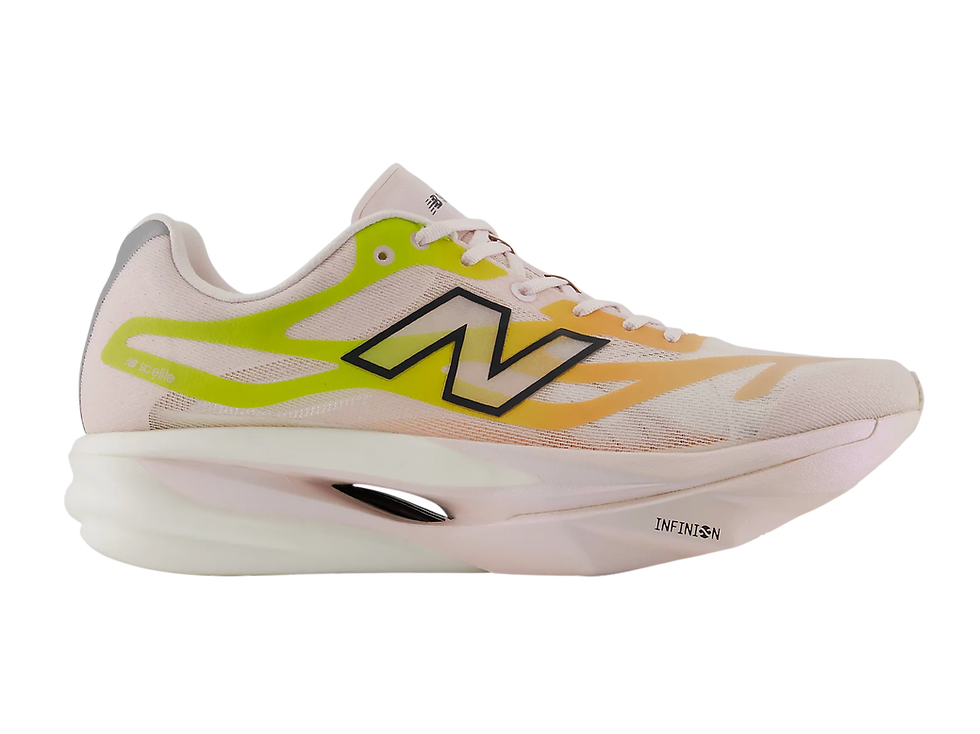
The SuperComp Elite v6 is a specialist race shoe using Infinion foam and a carbon fibre plate. New Balance has revised the plate shape, with a thicker, stiffer forefoot section, and uses a lightweight mesh upper. Its construction is aimed at racing performance rather than simply adding more cushioning for daily miles. Consider it if you want to explore New Balance’s premium racing option and can test it properly before your event. Fit, cornering confidence and comfort at race pace all deserve attention. A specialist racing shoe should earn its place through how it works for you.
New Balance Fresh Foam X Hierro v9
The Hierro v9 brings Fresh Foam X cushioning to off road running, with a dual density midsole and a Vibram Megagrip outsole. Its 6mm lugs and gusseted tongue are intended to help with traction and keeping loose debris out. It is a trail option to compare for runners who value cushioning as well as grip. Check its suitability for the ground you usually cover. Secure footing on uneven trails depends on fit as well as the outsole, and a shoe that feels comfortable on a flat path may behave differently on steep terrain. It has a separate purpose from the road models above.
Is New Balance A Sustainable Running Shoe Brand?
New Balance reports work on materials, manufacturing and environmental impact. Some product descriptions include specific recycled or bio based content, such as the approximately 3% bio based content listed for the 880v15’s Fresh Foam X midsole. That is a claim about part of a shoe, rather than evidence that the whole product is sustainable.
Look for details about the exact model and version you intend to buy. Material content alone does not tell you a shoe’s total environmental footprint, and brand wide commitments should not be treated as identical specifications across the range. Choosing a shoe that suits your running and using it for its useful life are practical parts of the decision.
Are New Balance Running Shoes Worth Trying?
New Balance is worth exploring if you want a broad choice of road and trail shoes, particularly when standard width footwear has been difficult to fit. Its range allows you to compare everyday cushioning, dedicated support, lighter training shoes and specialist racing options within one brand. That breadth is useful once you narrow the choice to the job your shoe needs to do.
For a first regular running shoe, start by comparing comfortable daily options such as the 880 and 1080, or the 860 if you prefer a support focused ride. Experienced runners may find a role for the Rebel, a SuperComp model or the Hierro alongside their usual road pair. There is no need to build a large shoe collection if one well fitting pair covers your running comfortably.
Final Thoughts On New Balance Running Shoes
New Balance’s range becomes easier to understand when you separate the models by purpose. The 880 and 1080 offer different approaches to daily cushioning, the 860 provides dedicated support, and the More places an emphasis on generous cushioning. The Rebel, SuperComp models and Hierro address faster running, plated training and racing, and trails.
Use those distinctions to decide which shoes to try, then compare the exact versions and widths available to you. The most useful New Balance running shoe is the one that fits comfortably and suits your runs. A familiar name or an impressive specification should help inform that choice, rather than make it for you.
Affiliate disclosure: This article contains affiliate links. If you make a purchase through one of these links, Sapphire Running Zone may receive a commission at no additional cost to you.



Comments