.png)

Calf Pain From Running: Causes, Treatment And Prevention
Calf pain is a common problem for runners, affecting everyone from beginners increasing their mileage to experienced runners introducing harder sessions into their training. Your calf muscles play an important role in every stride, helping to control movement at the ankle and generate force as you push away from the ground.
Because the calves work so hard during running, they can become sore, tight or injured when the demands placed on them exceed what they are currently able to tolerate. Sometimes this is simply temporary muscle soreness after a hard session, but calf pain can also be caused by a muscle strain or another problem that requires more attention.
Recognising the difference between normal post-run soreness and a developing injury can help you respond early and avoid turning a relatively minor calf problem into something that keeps you away from running for much longer.

What Causes Calf Pain From Running?
The calf is primarily made up of two muscles, the gastrocnemius and soleus. These muscles work together to control movement at the ankle and help propel you forwards as you run, meaning they repeatedly have to deal with significant forces throughout a training session.
A calf strain occurs when fibres within the muscle are damaged. This can happen when the calf is overstretched or subjected to more force than it can tolerate. Some strains happen suddenly, particularly during faster or more explosive movement, while other calf problems can develop more gradually.
Changes in training can increase the demands placed on your calves. Increasing your weekly mileage, introducing speed sessions or hill running, or returning to your previous training levels after a break all require your muscles to adapt to a different workload.
A significant change in running shoes can also alter how your lower leg is loaded. This does not mean that a particular type of running shoe causes calf injuries, but it is sensible to introduce substantially different footwear progressively rather than immediately using it for all your training.
Fatigue and recovery should also be considered. If your calf repeatedly becomes sore or tight during training, look at your overall running rather than assuming there must be one specific cause.
Common Symptoms
Calf problems can feel very different depending on their cause and severity. General muscle soreness following a hard or unfamiliar session will often affect a broader area of the muscle and should gradually improve as you recover.
A calf strain is more likely to produce localised pain and tenderness. The pain can appear suddenly, and runners sometimes describe the sensation as though they have been kicked in the back of the leg. Swelling or bruising can develop, while rising onto your toes or pushing away from the affected foot may become painful or difficult.
With a more significant strain, walking normally can also become uncomfortable. This is quite different from the general stiffness or tiredness you might expect after a particularly demanding training session.
Pay attention to how your symptoms change. Pain that becomes progressively worse, repeatedly returns when you run or begins to affect everyday activities deserves more attention than ordinary post-training muscle soreness.
Should You Keep Running?
If you have an actual calf strain, you should stop running rather than attempting to run through it. Continuing to place high loads through an injured muscle can aggravate the problem and delay your return to normal training.
This does not mean every sensation in your calf requires you to stop running for weeks. General muscular tiredness and post-exercise soreness are different from the sudden or localised pain associated with an injury.
If you experience sharp calf pain while running, begin limping or find it difficult to push away normally from the affected leg, stop the session. Recurring calf pain that repeatedly appears during runs should also be investigated rather than continually ignored because it disappears afterwards.
When you return to running will depend on the severity of the problem rather than an arbitrary number of days. More substantial calf strains can take several weeks or longer to recover fully.
How To Treat Calf Pain From Running
For an acute calf strain, stop running and initially reduce activities that significantly aggravate the injury. Keeping the leg elevated can help manage swelling, while ice wrapped in a towel can be used for short periods to help reduce pain and swelling. Ice should never be placed directly against the skin.
This initial period should not turn into prolonged complete inactivity. As the symptoms allow, gentle ankle movement and a gradual return to normal walking can help prevent stiffness and form part of the early recovery process.
As your calf improves, rehabilitation should progress towards rebuilding strength. Calf raises are commonly used to strengthen the muscles, with the difficulty gradually increased as your calf becomes capable of tolerating greater loads.
Later rehabilitation may include more demanding exercises such as hopping and jumping before returning to the repeated impact involved in running. The aim is not simply to wait until the calf stops hurting, but to restore enough strength and function for it to cope with running again.
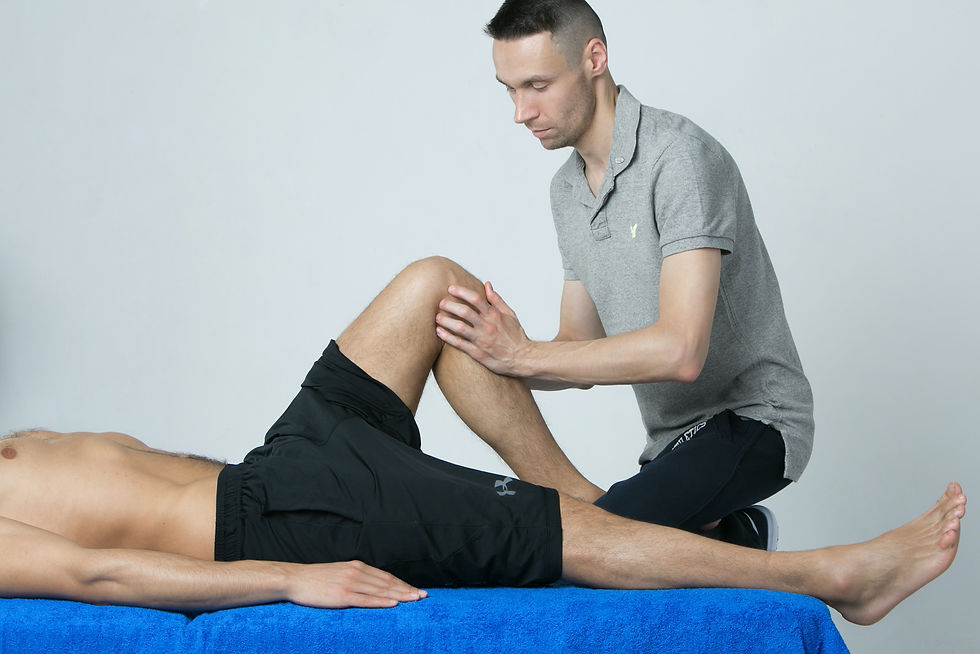
If the injury is significant, keeps returning or you are unsure how to progress your rehabilitation, a physiotherapist can assess the problem and provide a programme appropriate to your injury.
Can You Cross Train?
Cross training can help you maintain cardiovascular fitness while you are unable to run, but the activity you choose still needs to be comfortable for your calf.
Swimming may be suitable for some runners because it removes the repeated impact of running. Cycling can also maintain cardiovascular fitness, although it still uses the calf muscles and may not be comfortable during the early stages of an injury.
The important consideration is how your calf responds. An activity that significantly increases your pain during or after exercise is unlikely to be an appropriate substitute at that stage of your recovery.
As your calf becomes stronger, cross training can sit alongside your rehabilitation before you gradually reintroduce running.
How To Prevent Calf Pain From Running
It is impossible to prevent every running injury, but progressively preparing your calves for the demands of your training is a sensible starting point. Be particularly careful when making significant changes to the amount or type of running you do.
Regular strength training can improve the capacity of your calf muscles. Calf raises are a simple way of strengthening the area and can include both straight-knee and bent-knee variations to work the calf muscles in slightly different ways.
Strength work is most useful when it forms part of your normal running programme rather than something you introduce only after an injury. Exercises for the rest of the lower body can also complement calf-specific strengthening.
Be particularly cautious when returning after an extended break. Your cardiovascular fitness may make you feel capable of increasing your running quickly, but the muscles and other tissues involved in running still need time to become accustomed to the workload again.
The same principle applies to hills, faster sessions and substantial changes in footwear. You do not need to avoid these things, but introducing new demands progressively gives your body an opportunity to adapt.
Warming up before harder running sessions is also sensible, particularly before speed work or other sessions that place greater demands on the calf muscles. Finally, pay attention to recurring warning signs. A calf that repeatedly becomes painful or tight at a similar stage of your runs is worth investigating rather than accepting it as an inevitable part of running.
When To Seek Medical Advice
Most minor calf strains can be managed successfully, but seek medical advice if the pain is severe or getting worse, there is significant swelling or bruising, you cannot put weight through the leg or walk normally, or the injury is not improving as expected.
It is also important not to assume that every painful calf is a running injury. Pain or throbbing in one leg, usually in the calf or thigh, together with swelling and changes in skin colour can be symptoms of deep vein thrombosis, or DVT. A DVT is a blood clot in a vein and requires urgent medical assessment.
If you think you may have a DVT, seek urgent medical help through your GP or NHS 111. If you have symptoms of DVT together with shortness of breath or chest pain, call 999 or go to A&E because the clot may have travelled to the lungs and caused a pulmonary embolism.
Recurring calf injuries should also be assessed. If the problem disappears with rest but repeatedly returns when you resume running, a physiotherapist or other appropriate healthcare professional can help identify what is limiting your return to normal training.
Final Thoughts On Calf Pain From Running
Calf pain from running can range from ordinary muscular soreness after a demanding session to a calf strain requiring several weeks of rehabilitation. Understanding how the problem started, how severe it is and how it responds to activity can help you decide what to do next.
Progressive training, regular calf strengthening and an appropriate return to running can all help your calves cope with the demands placed on them. If you do suffer a calf strain, recovery should involve gradually restoring movement, strength and eventually running rather than simply waiting for the pain to disappear.
Most importantly, do not automatically assume that calf pain is simply part of being a runner. Sudden or persistent pain deserves attention, while unexplained calf pain and swelling should be treated seriously and medically assessed.


Comments