.png)

Dam Tot Damloop 2027: Everything You Need To Know
Updated: 13 hours ago
The Dam Tot Damloop is one of the biggest running events in Europe, bringing tens of thousands of runners to the Netherlands for a weekend of racing, music and celebrations. Its main event is a 10 mile race from central Amsterdam to Zaandam, including the unusual opportunity to run through the IJtunnel.
The weekend also includes the Damloop by Night, an atmospheric 5 mile race through Zaandam on Saturday evening. Together, the two events create one of the largest and most distinctive running weekends in the Netherlands.
If you enjoy major participation events and want something different from a conventional city half marathon, this is certainly a race to consider. Here is everything you need to know about the Dam Tot Damloop 2027.
The Destination
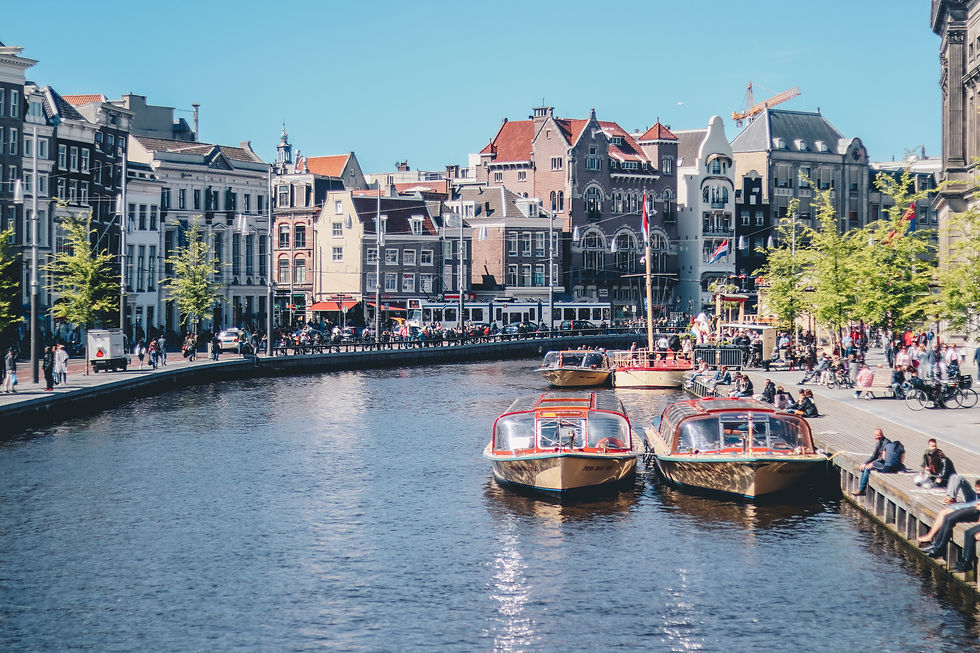
The Dam Tot Damloop connects Amsterdam with Zaandam, allowing runners to experience two contrasting parts of the Netherlands during the same race. Amsterdam provides the internationally recognised starting point, while Zaandam delivers the finish and much of the weekend’s post race atmosphere.
Amsterdam is one of Europe’s most popular city break destinations, known for its canals, museums, narrow historic buildings and cycling culture. Attractions including the Rijksmuseum, Van Gogh Museum and Anne Frank House make it easy to extend race weekend into a longer visit, although the city can be extremely busy throughout September.
Zaandam sits north of Amsterdam beside the River Zaan. It has a strong industrial history and is known for its distinctive architecture, including the colourful stacked appearance of the Inntel Hotel near Zaandam station.
Nearby Zaanse Schans offers another contrast, with traditional windmills and wooden houses beside the water. Runners staying for an extra day could visit after the race without travelling far from Zaandam.
History Of The Dam Tot Damloop
The first Dam Tot Damloop took place in 1985, developing from an idea to create a running connection between Amsterdam and Zaandam. The event has since grown from a relatively small race into one of the largest 10 mile events in the world.
The IJtunnel has always played an important role in the race’s identity. It provides a direct route from central Amsterdam into Amsterdam Noord but is normally closed to pedestrians, making the chance to run through it one of the event’s most memorable features.
The Dam Tot Damloop has attracted many leading international runners. Leonard Komon set the men’s course record of 44:27 in 2011, while Ingrid Kristiansen’s women’s record of 50:31 has stood since 1987.
These performances demonstrate that the route can be extremely fast, but the event is equally defined by mass participation. Recreational runners, business teams and local supporters have helped turn it into one of the biggest annual running celebrations in the Netherlands.
Who Organises The Dam Tot Damloop?
The Dam Tot Damloop is organised by Le Champion, a Dutch sports organisation responsible for several major running, cycling and walking events. Its other running events include the Amsterdam Marathon, Egmond Half Marathon and Zandvoort Circuit Run.
Le Champion works with local authorities, volunteers and other organisations to deliver the weekend. Managing a race that starts and finishes in different cities requires extensive transport, road closure and baggage arrangements.
When Is The Dam Tot Damloop 2027?
The main Dam Tot Damloop 2027 is listed for Sunday 19 September, with the Damloop by Night listed for Saturday 18 September.
Runners should confirm the final programme through the official event website before making travel arrangements that cannot be changed. Starting times, entry arrangements and participant instructions may not be finalised until much closer to race weekend.
September can produce varied running conditions in the Netherlands. Runners could experience a cool and comfortable morning, rain and wind or unexpectedly warm weather, so it is sensible to prepare for more than one possibility.
Dam Tot Damloop Race Numbers
The organiser has not yet published the race number arrangements for 2027. The Dam Tot Damloop does not normally centre its race weekend around the type of large international expo used by many major marathons.
International runners should check whether their race number will be posted or needs to be collected after they register. The arrangements could depend on the address supplied, the date of entry and whether any optional products have been ordered.
Do not assume that you will be able to collect a race number on Sunday morning unless the organiser specifically confirms this. Check your registration information carefully and allow time to resolve any problems before travelling to the start.
The final participant instructions should always take priority over information from previous editions. This is particularly important for international runners who may have different race number delivery arrangements from participants living in the Netherlands.
Race Morning
The main Dam Tot Damloop traditionally starts on Prins Hendrikkade in central Amsterdam, close to Amsterdam Central Station. This is convenient for runners arriving by train, but the size of the event means the surrounding streets and station can become extremely busy.
For 2026, the first 10 mile start was scheduled for 9:19am, with runners released in multiple waves during the day. Start groups were allocated using predicted finishing times, helping participants begin alongside people expecting to run at a similar pace.
The start area is divided into separate zones, which are used for different waves. Runners need to check the colour, number and time shown on their race information before entering the correct area.
Previous instructions have required runners to enter their allocated zone before its published closing time. Moving into a faster wave is normally prohibited, so providing an accurate predicted finish time during registration is important.
With tens of thousands of people travelling towards the same part of Amsterdam, this is not a race where you should arrive at the last minute. Plan your journey to Amsterdam Central in advance and leave additional time for crowds, toilets, baggage and finding the correct entrance.
The detailed arrangements may change for 2027, so runners must read the final information provided by the organiser. The important lesson from previous editions is that Dam Tot Damloop race morning is carefully controlled and requires more planning than a smaller local event.
Dam Tot Damloop Course
The main Dam Tot Damloop covers 10 miles, equivalent to approximately 16.1 kilometres. It is a point to point course beginning in central Amsterdam and finishing beside the River Zaan in Zaandam.
The route is predominantly flat, but the IJtunnel creates a noticeable descent and climb near the beginning. Large parts of the course are capable of producing fast running, although the size of the field may make maintaining an uninterrupted pace difficult.
The final 2027 route has not yet been published. The established course provides a good indication of what runners can expect, but individual streets, refreshment stations and entertainment points may change.
The Start And IJtunnel
The race starts on Prins Hendrikkade, close to Amsterdam Central Station. Runners have only a short distance to settle before approaching the IJtunnel, one of the defining features of the event. The route descends into the tunnel beneath the water separating central Amsterdam from Amsterdam Noord. It can feel warm and enclosed when filled with thousands of runners, while the downhill section may tempt participants into running faster than intended.
Runners must then climb out of the tunnel into Amsterdam Noord. This is the most noticeable uphill section of the course and arrives before most people have established their intended race rhythm. Controlling your effort through the tunnel is more important than chasing an ambitious early pace. Ten miles is long enough for a fast opening section to create problems later, even on a predominantly flat course.
Through Amsterdam Noord
After leaving the IJtunnel, runners enter Amsterdam Noord and begin moving through residential neighbourhoods. The surroundings are very different from the historic centre that participants left only a short time earlier. This is where the local atmosphere becomes an important part of the experience. Residents come out to support the runners, while bands, DJs and entertainment points turn parts of the route into street celebrations. Some roads are narrower than the broad avenues used by major city marathons. Runners chasing a particular time need to remain aware of the people around them, especially when moving between pace groups or approaching drinks stations.
The Middle Miles
The middle part of the course continues north towards Zaandam. By this stage the field should have spread out, giving runners more opportunity to settle into a consistent pace.
These kilometres are less visually dramatic than the IJtunnel or the final approach through Zaandam. This can be a useful time to concentrate on your effort, maintain your rhythm and avoid increasing the pace too early. The terrain remains predominantly flat, but weather conditions can make the exposed sections more demanding. Wind may affect the open roads, while direct sunshine can make a warm September day feel increasingly uncomfortable.
Into Zaandam
The course eventually enters Zaandam, where the number of spectators and entertainment points begins to increase again. Support becomes particularly strong as runners approach the more central parts of the city. Zuiddijk has traditionally formed part of the approach through Zaandam. Residents and supporters create a noisy atmosphere that can provide a welcome lift after the quieter connecting sections. The contrast between Amsterdam, Amsterdam Noord and Zaandam is central to the race experience. Instead of completing a loop around one city, runners feel as though they have travelled somewhere during the event.
The Final Kilometres
The final kilometres take runners towards the finish beside the River Zaan at De Burcht. Crowds line the closing section, giving participants plenty of encouragement as the effort of the previous 10 miles begins to make itself felt. There is no significant late climb, so runners who have controlled their pace should have an opportunity to finish strongly. The main difficulty may be finding enough space if runners moving at different speeds come together during the closing stages. After finishing, participants continue towards the event facilities and baggage collection areas. The finish zone can become extremely busy, so anyone meeting friends or family should agree on a location in advance rather than relying on finding each other beside the finish line.

How Difficult Is The Dam Tot Damloop Course?
The Dam Tot Damloop is not especially difficult from an elevation perspective. Once runners have climbed out of the IJtunnel, the remainder of the route is largely flat and should suit anyone who has trained well for 10 miles.
The number of runners creates a different type of challenge. Congestion, changing pace and the excitement of running through the tunnel can make it difficult to establish a rhythm during the opening kilometres.
Weather can also influence the race considerably. A warm day may feel uncomfortable in the tunnel and exposed sections, while wind or rain could affect the roads between Amsterdam and Zaandam.
For most runners, sensible pacing through the opening section will be more important than the overall course profile. The tunnel needs to be respected, but there are no major hills waiting later in the race.
What Makes The Dam Tot Damloop Special?
The Dam Tot Damloop provides an experience that cannot easily be replicated elsewhere. Running through the IJtunnel is genuinely unusual, while the journey between Amsterdam and Zaandam gives the event a strong sense of purpose and direction.
It is also one of the Netherlands’ largest participation events. The scale of the field, local street celebrations and music along the course create an atmosphere closer to a major city marathon than a conventional 10 mile road race.
The distance adds another point of difference. Ten miles is long enough to feel like a serious endurance challenge but remains more accessible than a half marathon or marathon for many recreational runners.
The supporting events turn the race into a complete weekend rather than a single Sunday morning. Damloop by Night brings thousands of runners onto the streets of Zaandam on Saturday evening, while the finish celebrations continue after the main event.
Is The Dam Tot Damloop A Fast Course?
Yes, the Dam Tot Damloop can be a fast race. Its course records and history of elite performances demonstrate that outstanding times can be achieved between Amsterdam and Zaandam.
The route is largely flat after the opening tunnel, making it possible to establish a consistent pace through the middle and later miles. There is also no significant climb near the finish to disrupt a strong closing section.
The biggest obstacle to a personal best is likely to be congestion. An appropriate starting wave and realistic predicted time will improve your chances of running freely, but some crowding is inevitable during an event of this size.
Warm or windy weather could also limit fast performances. The course provides an opportunity to run quickly, but runners should adapt their targets if race day conditions are less favourable than expected.
Is The Dam Tot Damloop Good For First Time Runners?
The Dam Tot Damloop can be a good first 10 mile event for someone who has prepared properly. Its predominantly flat course, extensive support and large recreational field make it more accessible than the presence of elite athletes might initially suggest.
The logistics require more attention than a small local race. First time runners need to understand the wave system, point to point course, baggage arrangements and journey away from Zaandam before arriving on race morning.
Recent editions have used a two hour time limit for the main race. This requires an average pace of approximately 12 minutes per mile or 7 minutes 27 seconds per kilometre.
Damloop By Night
Damloop by Night is a separate 5 mile event held in Zaandam on Saturday evening. Its 8 kilometre course combines running with DJs, bands and light displays, creating a very different atmosphere from the main Sunday race.
The established course begins on Vermiljoenweg before travelling through Zaandam. It uses part of the traditional 10 mile route before continuing through areas including Zuiddijk, Den Uylbrug and Havenstraat on the way to the finish at De Burcht.
Around 15,000 runners take part, making this a major event in its own right. Starting waves help manage the field, but participants should still expect busy roads and a festival atmosphere rather than a quiet evening race.
Some runners may consider entering both events. Completing 5 miles on Saturday followed by 10 miles on Sunday is achievable for an experienced runner, but the late finish, travel and limited recovery should be considered before attempting both.
Running The Dam Tot Damloop For Charity
Running from Amsterdam to Zaandam provides an excellent story around which to build a charity fundraising campaign. The unusual distance, IJtunnel and scale of the event give supporters several reasons to follow your preparation.
If you are fundraising, explain why you selected the cause and what completing the 10 miles will mean to you. Training updates, photographs and progress towards longer runs can help supporters feel involved before race weekend arrives.
The Dam Tot Damloop is also known for its enormous Business Run, with thousands of people participating through workplace teams. This may create opportunities to involve colleagues, request matched giving or build a company fundraising challenge around the event.
Charity places are not as prominent as they are at many major British events. Runners should not assume that charities will hold guaranteed entries, although individual organisations or fundraising partners may provide opportunities once registration opens.
How To Enter The Dam Tot Damloop 2027
The Dutch athletics calendar currently lists Saturday 17 April 2027 as the opening date for registration for the main race. It also lists an individual entry price of €37.50, although runners should treat this as provisional until the organiser publishes its complete 2027 registration information.
If the Dam Tot Damloop is one of your priority events, follow the official updates and be ready to enter when registration opens because the main race and Damloop by Night can sell out.
The organiser has also used Atleta as its official resale system. This allows runners who can no longer participate to transfer their entry safely while giving people on the waiting list another opportunity to secure a place.
Our Verdict
The Dam Tot Damloop has almost everything we look for in a major destination running event. It offers an unusual point to point course, outstanding local support, a manageable but meaningful distance and the rare opportunity to run through the IJtunnel.
It is not the simplest race logistically. The start and finish are in different cities, baggage needs to be transported and tens of thousands of runners must move through Amsterdam and Zaandam during the same day.
Those complications are also part of what gives the event its identity. This does not feel like another city centre loop that could take place almost anywhere; it is a genuine journey between two different destinations, with the tunnel providing an unforgettable opening.
If you secure a place, the Dam Tot Damloop 2027 should provide an excellent weekend of running. It combines the scale and atmosphere of a major event with a distance and course that remain accessible to a wide range of runners.


Comments