.png)

Fundraising Ideas For Runners: How Bonnie Raised Money With Personal Letters
Bonnie Elliott was delighted to get a London Marathon place with Phab, but that meant a
fundraising target to meet. She announced her plans on social media and received a few donations, but felt that further posts could easily get lost in people’s feeds. So she tried something different: she wrote to 50 friends and family members.
By the time we spoke on the Bitten By The Running Bug podcast, Bonnie estimated that at least 30 of them had donated. She explains what went into the letters, how she made each one personal and why this is a fundraising idea runners could adapt for any distance.
From Watching New York To Running 30 Marathons
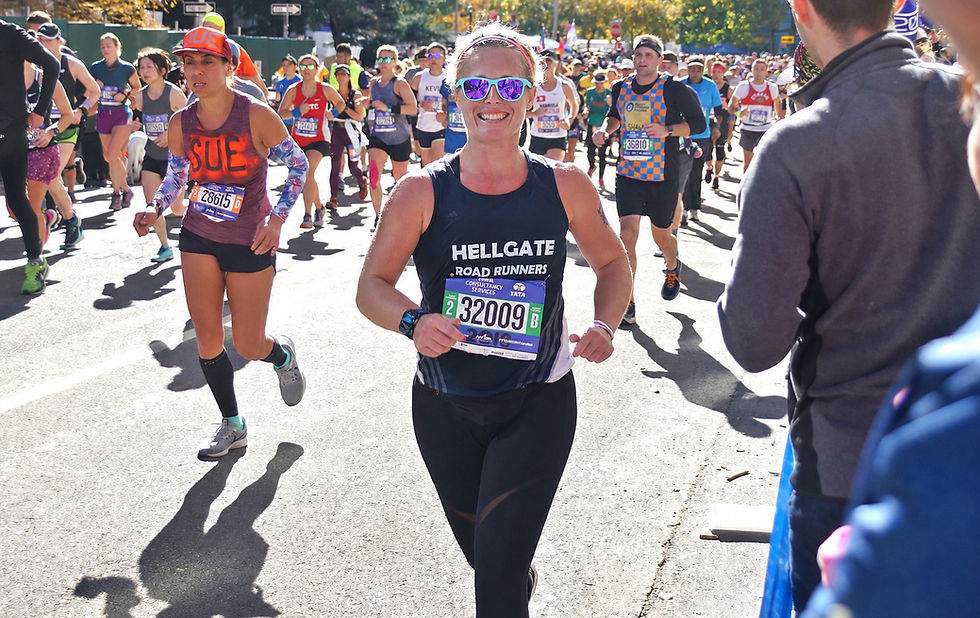
Bonnie began running after watching the New York City Marathon in 2006. Inspired by the atmosphere, she joined group running classes in Central Park and later the Hellgate Roadrunners in Queens. She still runs with the club today.
Her first marathon was Hartford in 2006. Since then, she has completed 30 marathons across the United States, including Chicago, the Marine Corps Marathon and ten New York City Marathons.
New York remains her hometown race and one of her favourites. Bonnie remembers firefighters cheering outside a Brooklyn station, a gospel choir singing outside a church and spectators calling out runners’ names. Her advice for anyone running it for the first time is to stay calm about the long wait at the start. Once the race begins, she says, “Don’t go out too fast.” The excitement can make that difficult, even after running New York many times.
Why Bonnie Looked Beyond Social Media
Bonnie had fundraised through running before. She supported Ronald McDonald House through the New York City Half Marathon and organised smaller appeals after hurricanes affected communities close to her. Most of her requests for support had gone out through social media or email.
When she secured her London Marathon place with Phab, she announced it on Instagram and received a few donations. This time, though, she wanted another way to reach people she knew. As Bonnie puts it, “things just get lost on social media.” She remembered receiving fundraising letters herself and thought a physical letter might give friends and family more time to consider her request.
Bonnie already had addresses from Christmas card and wedding invitation lists. She decided to start by writing to 50 people and see how they responded.
What Bonnie Put In Her Letters
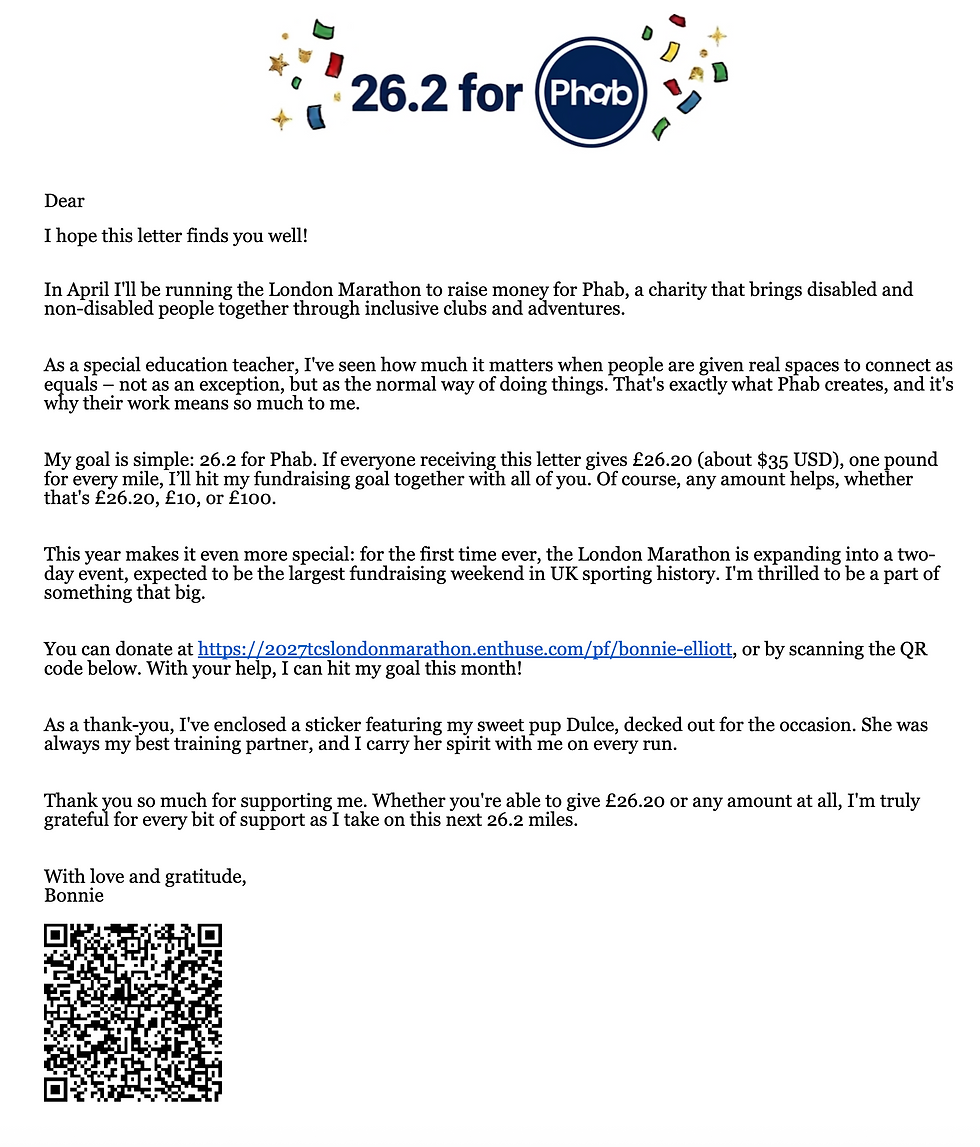
Bonnie called her appeal “26.2 for Phab” and suggested a donation of £26.20, connecting the amount to the marathon distance. It gave people a clear figure to consider while leaving them free to choose how much they wanted to give.
Her letter described her connection to Phab and included some of her running history. She added a QR code and the web address of her fundraising page, so recipients could use whichever was easier for them.
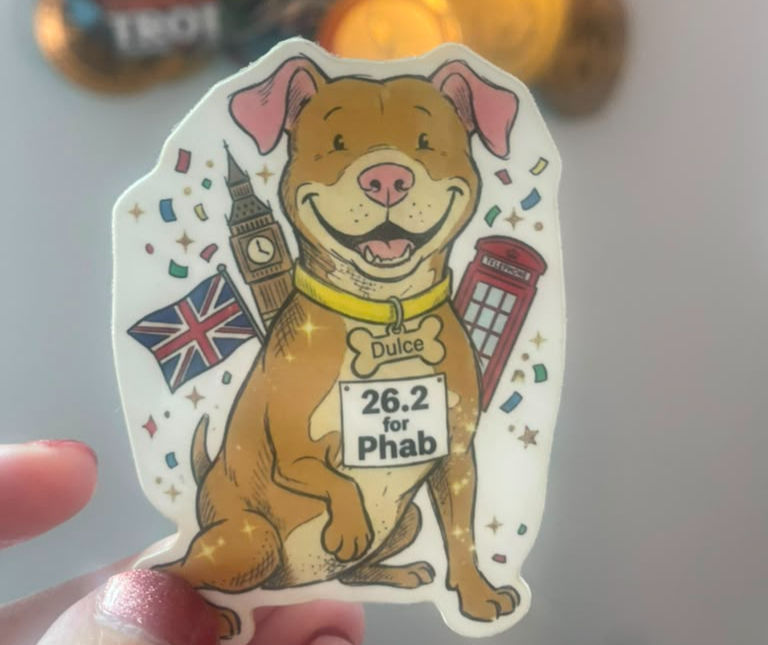
Bonnie also designed a sticker featuring her dog, Dulce, with a “26.2 for Phab” sign. She used to run with Dulce, who had died earlier that year, and still thinks about her during training. The sticker brought a personal part of Bonnie’s story into the appeal.
At the bottom of each letter, Bonnie wrote a note for the person receiving it. She might ask about their family or mention something happening in their life. She addressed the envelopes by hand too, making it clear that these were letters from someone they knew.
The Response To 50 Letters
Bonnie posted the letters at the end of August, before the start of the new school year. She also wanted to begin well ahead of her fundraising deadline, which fell before marathon day.
Donations arrived steadily. When we recorded the podcast, Bonnie estimated that at least 30 people had donated after receiving one of the 50 letters. Some gave £26.20 or £50, many gave £100, and one person gave £686. A donation had arrived just a week before our conversation.
“I have been blown away by the response and the generosity of my family and friends,” Bonnie says. She estimated that the paper, postage, labels and stickers cost around $150 in total. She spent roughly six or seven hours writing, preparing and posting the letters, and planned to send thank you letters to her supporters.
A Fundraising Idea Runners Can Adapt
Bonnie was fundraising for a marathon, but the same approach could work for a half marathon, 10K, 5K or another running challenge. You could choose an amount connected to your distance, as Bonnie did, or simply invite people to give whatever they can.
Her letter explained what she was doing, why she was running for Phab and how people could support her. The individual notes made each request feel like a conversation with a friend. Runners could take that idea and write a simple letter or card without buying stickers or special paper.
Bonnie’s results are her own, and sending letters will not guarantee the same response for someone else. What her experience shows is that it can be worth thinking about how the people close to you would prefer to hear from you. It also helps to start early: some of Bonnie’s donations arrived just days after the first letters were posted.
Bonnie’s Advice For First Time Marathon Runners
Alongside fundraising for London, Bonnie was preparing to run the New York City Marathon. It would be her first marathon since hip surgery, so she planned to see how she recovered before building towards London.
Her advice for someone taking on a first marathon is to follow the training, make time for the long runs and avoid putting too much pressure on a finishing time. Bonnie remembers walking towards the end of her first marathon, and the joy of crossing the finish line. Completing it showed her that the distance she once thought impossible was within reach.
For Bonnie, the letters have brought friends and family into her London Marathon journey while helping her make substantial progress towards her target. They are one example of how fundraising ideas for runners can begin with something simple: thinking about the people you want to reach and making the request personal.


Comments