.png)

“It’s All Worth It”: Andrea Watt on Marathons, Fundraising, and the Power of The Running Community
When Tim Rogers from the Sapphire Running Zone podcast sat down with Andrea Watt, Stewardship Officer at the Stroke Association and lifelong runner from northeast Scotland, the conversation quickly became about far more than marathon times or medal collections. It was a story about resilience, rediscovering joy in running, and the remarkable community that forms around fundraising events. They also talked about how the London Marathon has changed over the years.

HAVE A LISTEN TO THE PODCAST HERE
Andrea has spent eight years working with the Stroke Association, supporting fundraisers across the UK who take on everything from marathons and half marathons to bake sales, golf days, and community events. In her role, she helps supporters stay motivated, offers fundraising advice, and celebrates their achievements along the way. But outside of work, she is also one of those people who genuinely loves the process of running itself, the training, the atmosphere, and the shared sense of purpose that comes with race day.
“Every mile in the dark, every 5:30 alarm, every run where you came back soaked through; it’s all worth it.”
Running London Marathon in 1997
Andrea’s own marathon story began with the 1997 London Marathon, a very different event from the one runners know today. Back then, there were no GPS watches, no Strava uploads, and no social media countdowns documenting every training run. She remembers filling in a paper application form from a magazine, posting it in a letterbox, and somehow getting lucky enough to secure a place.
Training was equally old-school. Andrea and a friend would drive around York trying to estimate long-run distances because there were no running apps to map routes. Nutrition plans barely existed in the mainstream running world, and she can’t remember thinking about gels or hydration strategies at all. Her soundtrack for the race was a cassette tape playing through a Walkman tucked into a bum bag.
Fundraising Before Social Media
The fundraising process was completely different too. Running for the British Heart Foundation, she carried around a paper sponsor form at work and collected donations in cash from colleagues. Family members had no live tracking app to follow her progress on race day. Instead, they relied on instinct, luck, and eventually a newspaper supplement listing finishers’ names and times days later.
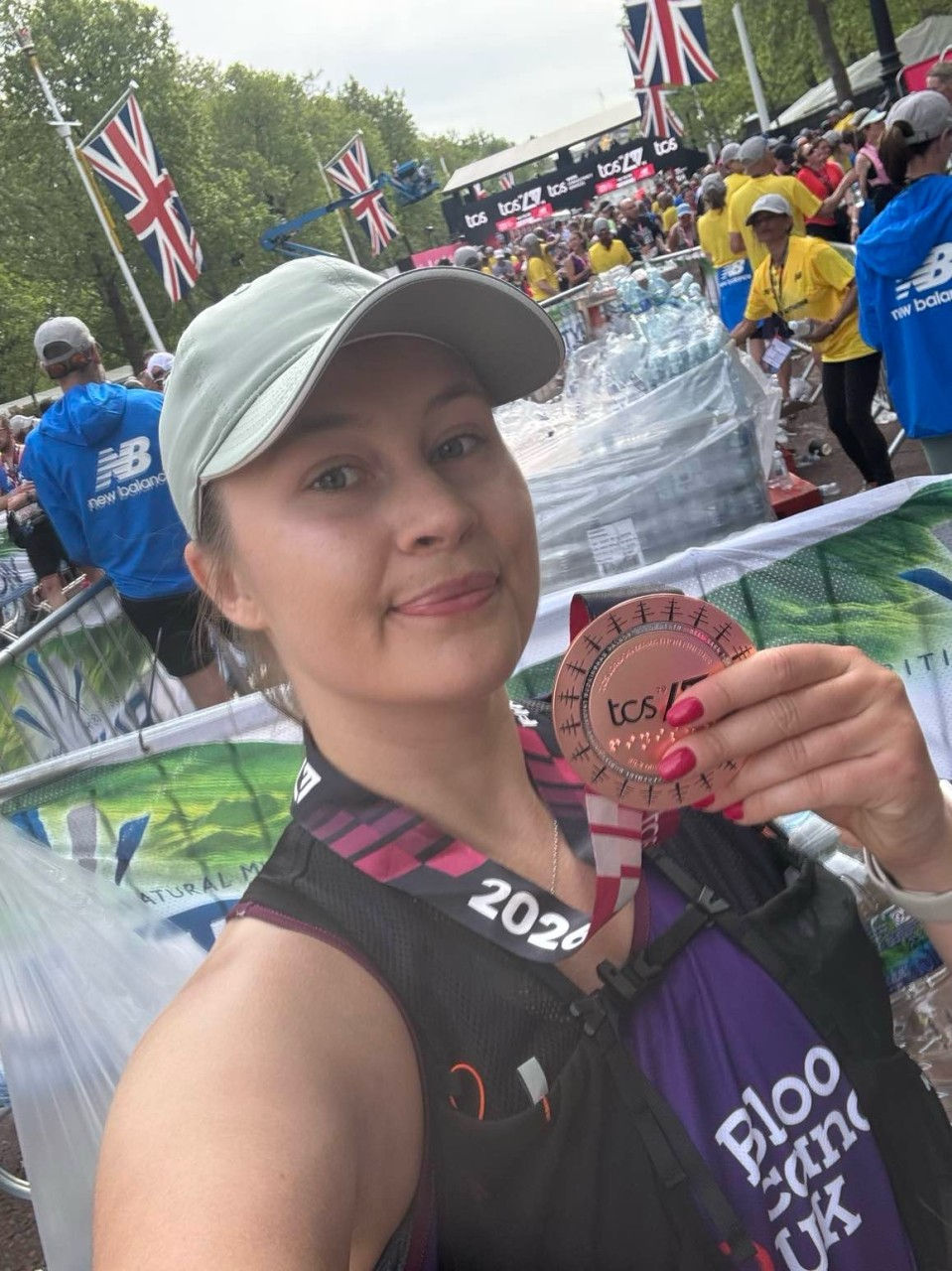
Despite all the technological changes since then, Andrea still treasures that original medal, even though she jokes that it is “about the size of a ten pence piece” compared to the huge medals runners receive today. For her, it represents something much bigger than the race itself; proof that she could do something difficult and meaningful.
Returning to Running After Life Took Over
After stepping away from running for several years while raising her two children, Andrea returned to the sport in her forties. Since then, she has completed another 11 marathons and more than 40 half marathons, including the New York City Marathon and the London Marathon. What stands out most when she talks about these races is not pace or
performance, but experience.
“I don’t think I’ve said ‘never again’ yet. I think there are more marathons to be run.”
Why New York Marathon Felt So Special
Her memories of New York are especially vivid. The logistical challenge of getting to the start line alone felt like part of the adventure. She travelled with her husband and daughters after her 19-year-old daughter Rebecca secured a ballot place, and Andrea decided she couldn’t miss the opportunity to run it too. Race morning began before dawn, with thousands of runners wrapped in old hoodies and blankets boarding the Staten Island Ferry in near darkness. Because there was no bag drop, everyone wore layers they intended to throw away before the race started. Andrea described the atmosphere as part sporting event, part festival with runners from around the world quietly sharing nerves, excitement, and anticipation while helicopters buzzed overhead and volunteers handed out coffee and bagels.

Andrea’s Best Fundraising Advice
Alongside her experiences as a runner, Andrea also offered invaluable insight into the fundraising side of marathon culture. Having supported countless runners through the Stroke Association, she believes one of the biggest mistakes people make is being reluctant to ask for support.
“Do not be shy. Do not be embarrassed. You are going to be part of the biggest fundraising day in the world.”
For Andrea, successful fundraising starts with confidence and creativity. She encourages runners to involve their entire community rather than relying only on close friends and family. Before one marathon, her local village shop even created a mannequin dressed in her running kit and displayed it in the window alongside a QR code linking directly to her fundraising page. The idea generated conversations, donations, and a real sense of community ownership around her challenge.
Turning Donors Into Part of the Journey
One of her most successful fundraising ideas was breaking the marathon route into sponsored miles. Donors could choose a specific mile to sponsor, perhaps matching a birthday, anniversary, or favourite part of the course, and Andrea would dedicate that section of the race to them. She then attached supporters’ names to ribbons she wore during the marathon itself.
By linking each donation to a physical part of the course, supporters felt emotionally invested in the journey. Instead of simply giving money, they became part of the story. Andrea would message donors saying things like, “You’re getting me across Tower Bridge,” or “You’ll carry me through Canary Wharf.” The campaign quickly snowballed.

Why Charity Running Creates Such Strong Connections
What also came through strongly in the conversation was Andrea’s belief that marathons are about far more than individual achievement. Working in the charity sector has shown her how deeply personal many fundraising journeys are. Behind every vest is a story, someone running in memory of a loved one, celebrating survival, or simply wanting to make a difference.
On race day, she says, those individual stories combine into something collective. Charity runners recognise one another instantly through shared colours and logos. A simple thumbs-up or tap on the shoulder from another runner wearing the same charity vest can provide a huge emotional lift during difficult miles.
“I just try to run with a huge smile on my face; it makes the miles go quicker.”

Still Chasing New Finish Lines With The Running Community
At 54, Andrea has no plans to slow down. She already has several half marathons lined up this year, including the Aberdeen Half Marathon, as well as Loch Rannoch Marathon and more international marathon ballots for races such as Berlin, Chicago, and Sydney. Her immediate target is to reach 50 half marathons, but she speaks about the future with the same enthusiasm she had describing her first London Marathon nearly three decades ago.
Perhaps that is what makes Andrea’s story resonate so strongly. In an era where running can sometimes feel dominated by statistics, pace charts, and social media comparisons, she represents something refreshingly simple: the joy of participation, the power of community, and the reminder that the experience itself matters far more than the finish time.



Comments