.png)

Madrid Marathon 2027: Race Guide, Course And How To Enter
The Madrid Marathon is one of Europe’s biggest city marathons, combining a challenging 26.2 mile course with a route through the centre of the Spanish capital. Runners pass many of Madrid’s best known landmarks, but this is not simply a sightseeing marathon. The hills make it a considerably tougher proposition than some of Europe’s flatter major races.
Officially known as the Zurich Rock ‘n’ Roll Running Series Madrid, the marathon will return on Sunday 25 April 2027. The event is expecting 47,000 runners across the weekend, with 17,000 places allocated to the marathon and another 30,000 to the half marathon.

The Destination
Madrid is one of Europe’s great city break destinations and gives travelling runners plenty of reasons to extend their visit beyond race weekend. The Spanish capital combines grand boulevards and historic squares with major museums, parks, restaurants and neighbourhoods that feel very different from one another.
Many of the places visitors would normally explore also feature on or close to the marathon route. Puerta del Sol, the Royal Palace, Plaza de España, Paseo del Prado, Cibeles and Casa de Campo all form part of the race experience, making this a marathon where the city really does play a major role.
Madrid is relatively easy to explore using its Metro system, which can be particularly useful during marathon weekend when road closures make travelling around the centre more complicated. If you are staying for several days, consider saving some sightseeing until after the marathon. Madrid is a very walkable city, but spending hours exploring immediately before tackling one of Europe’s hillier city marathons is unlikely to be ideal preparation.
History Of The Madrid Marathon
The first Madrid Marathon was held on 21 May 1978 and was organised by MAPOMA. What was intended to establish mass participation marathon running in the Spanish capital immediately became a significant event, with thousands of runners taking part in the inaugural race.
The marathon developed considerably over the following decades and eventually became part of the Rock ‘n’ Roll Running Series. Music and entertainment were incorporated into the event, adding another element to a race already closely connected to Madrid itself.
Participation has continued to grow. The wider 2026 event reached a record 47,000 runners across its distances, while demand exceeded the available places and more than 8,000 people on the waiting list ultimately missed out.
The 2027 event will celebrate 49 years of running in Madrid. The scale may have changed enormously since 1978, but the marathon remains a race built around taking runners through the Spanish capital rather than creating the flattest possible route. Madrid is also now part of the European Marathon Classics, a new series bringing together established marathons across Europe.
When Is The Madrid Marathon 2027?
The Madrid Marathon 2027 will take place on Sunday 25 April. The date has been officially confirmed by the organiser, with the marathon and half marathon both taking place on the same day, although the first wave start times have not yet been confirmed.
The 2027 event will have 47,000 available places across the two distances, comprising 17,000 marathon entries and 30,000 half marathon entries. With the 10K removed from the programme, the focus will be entirely on the two longer races.
Madrid Marathon Expo And Race Pack Collection
The Madrid Marathon Runner’s Expo will take place at IFEMA Feria de Madrid on Friday 23 and Saturday 24 April 2027. It will be open from 10am until 8pm on both days, giving runners two days to collect everything they need before the race.
Runners must collect their race number, official shirt and runner’s bag from the expo before race day, as race numbers will not be distributed on the morning of the marathon. You will need your registration confirmation or collection QR code together with a passport, DNI or other photographic identification. The organiser will send collection QR codes with the final race instructions on 19 April 2027.
IFEMA is outside the historic centre, so international runners should allow enough time for the journey rather than treating race pack collection as a quick stop close to their hotel. Building the expo into your plans for Friday or Saturday should make the final preparations considerably easier.
Race Morning
The 2027 marathon will start on Paseo de la Castellana beside Plaza de San Juan de la Cruz. The exact time of the first marathon wave has not yet been announced, so runners should check their final instructions carefully once these are released.
Public transport is likely to be the easiest way to reach the start. Gregorio Marañón station on Metro lines 7 and 10 and Rubén Darío on line 5 are among the options recommended by the organiser.
With tens of thousands of marathon and half marathon runners heading towards the same area, allow considerably more time than you would for a smaller event. Check your allocated wave before race weekend and plan your journey so you have enough time for toilets, baggage arrangements and getting into the correct starting area.
The marathon begins with climbing relatively early, making a calm start particularly important. There is little benefit in arriving rushed and immediately running harder than planned, so give yourself enough time to settle before the race begins.
Madrid Marathon Course
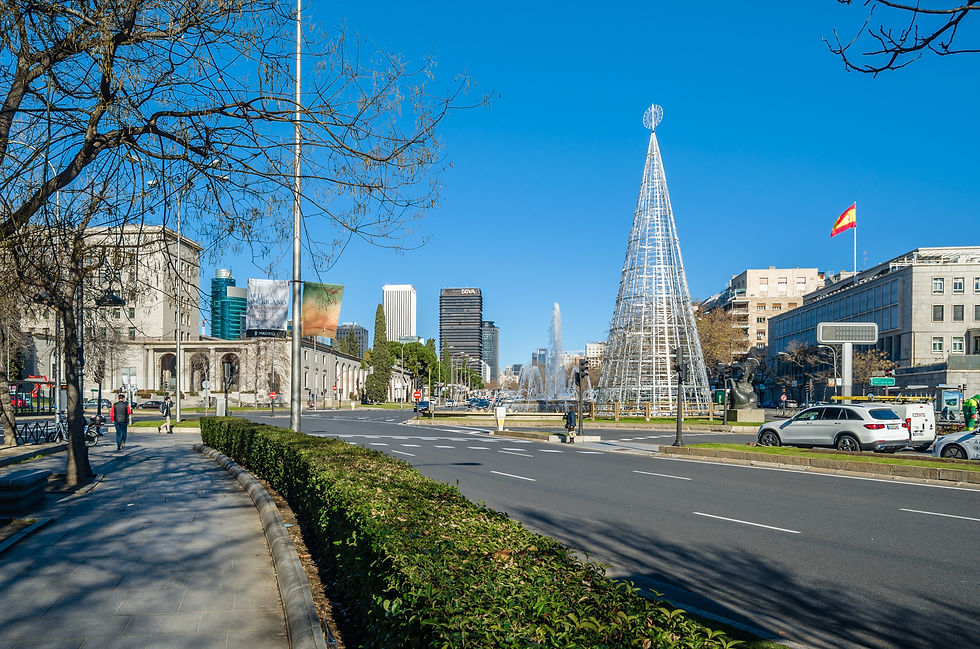
The Madrid Marathon course takes runners on a broad tour of the capital, linking the northern part of the city with its historic centre before heading west towards Casa de Campo and returning towards central Madrid for the finish.
The 2027 route includes Paseo de la Castellana, Plaza de Castilla, the area around the Santiago Bernabéu, Puerta del Sol, the Royal Palace, Plaza de España, Casa de Campo, Madrid Río, Atocha, Paseo del Prado and Cibeles. What separates Madrid from many major European marathons is its elevation, with repeated rises and falls requiring considerably more attention to effort than a flat marathon.
Paseo De La Castellana And Plaza De Castilla
The marathon starts on Paseo de la Castellana and initially heads north through one of Madrid’s most recognisable modern districts. Runners pass close to the Santiago Bernabéu before continuing towards Plaza de Castilla. The opening kilometres climb towards one of the highest points on the course, making restraint particularly important while runners are still fresh and surrounded by a large field.
Back Towards Central Madrid
After the northern section, the course works its way south through districts including Cuatro Caminos before heading towards the heart of the city. The terrain remains varied rather than settling into a long flat section. Runners pass through streets including Joaquín Costa, Francisco Silvela, Doctor Esquerdo, Goya, Velázquez and Serrano as the course gradually moves towards some of Madrid’s most famous central landmarks.
Puerta Del Sol And The Royal Palace
Around the middle of the race, the character of the course changes as runners reach the historic centre. The route passes through the area around Callao and Puerta del Sol before continuing along Calle Mayor towards the Royal Palace. This is one of the sightseeing highlights of the Madrid Marathon. Puerta del Sol sits at the heart of the capital, while the Royal Palace and nearby Almudena Cathedral provide a very different backdrop from the modern avenues encountered earlier.
Plaza De España And Parque Del Oeste
The route continues towards Plaza de España and the area around the Temple of Debod before heading through Parque del Oeste. By now the marathon is moving away from the busiest central streets and towards greener parts of Madrid. The changing surroundings help divide the race into distinct sections, but the rolling terrain continues. The marathon is approaching the point where early pacing decisions begin to matter, and anyone who attacked the opening climbs may start paying for that effort as the course heads towards Casa de Campo.
Casa De Campo
Casa de Campo provides one of the biggest contrasts of the marathon. The enormous park lies west of central Madrid and gives runners a greener and more open environment after the busy streets and historic landmarks of the first half. The course reaches some of its lower elevations during this part of the race, but that creates another challenge because the route eventually has to regain height. This section arrives during the second half, when maintaining concentration on pace, hydration and fuelling becomes increasingly important.
Madrid Río And The Final Quarter
After Casa de Campo, runners begin the long journey back towards central Madrid. The course follows areas around the Manzanares and Madrid Río before moving through the southern side of the city. This is where Madrid can become particularly demanding. The marathon has already accumulated plenty of climbing and descending, and the route begins gaining height again as tired runners head towards the final kilometres.
Atocha, Paseo Del Prado And Cibeles
The closing kilometres bring the marathon back into some of Madrid’s most recognisable surroundings. Runners head through the Atocha area and towards Paseo del Prado before approaching Cibeles. After the quieter and more demanding stages of the second half, returning to the centre can provide a significant psychological lift. The landmarks return, crowds become more noticeable and the finish finally begins to feel close. The difficulty is that the course is still demanding at a stage when fatigue has accumulated.
The Finish
The marathon finishes in central Madrid around Paseo de Recoletos and Cibeles, bringing runners back into the monumental heart of the city. After more than 26 miles of changing terrain, it provides an impressive setting for the end of the race. Reaching the finish after the hills gives the final kilometre a particular sense of achievement. Madrid is not a marathon where the course disappears into the background, with its changing elevation and contrasting neighbourhoods remaining part of the experience from the opening kilometres until the closing stages.
How Difficult Is The Madrid Marathon Course?
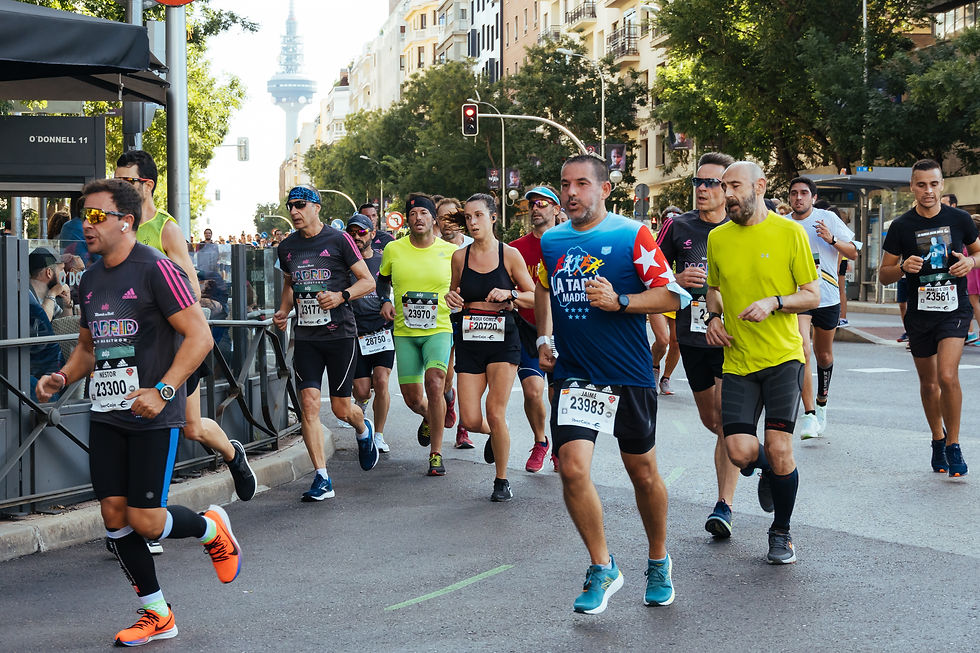
The Madrid Marathon is a challenging city marathon, with its difficulty coming from repeated changes in elevation rather than one enormous climb. Runners should expect to spend much of the race adjusting their pace to the terrain rather than trying to maintain identical kilometre splits.
The opening kilometres climb towards Plaza de Castilla, while the middle of the course continues to undulate. The descent towards the lower western parts of Madrid is followed by the need to regain elevation during the final third of the race.
Madrid therefore rewards patience. Control the effort early, make use of the quicker sections without attacking them and expect the closing kilometres back towards central Madrid to feel considerably harder than their distance alone suggests.
What Makes The Madrid Marathon Special?
Madrid combines several things that do not always appear in the same marathon. It is a large international event, a genuine tour of its host city and a course with enough difficulty to give the race a strong individual identity.
The sightseeing is a major part of its appeal. Runners experience modern Madrid along Paseo de la Castellana, the historic centre around Puerta del Sol and the Royal Palace, the open surroundings of Casa de Campo and the grand avenues around Prado and Cibeles.
Music is another important part of the event, with entertainment positioned around the course as part of the Rock ‘n’ Roll Running Series. Combined with the crowds, it helps create a very different atmosphere from quieter marathons where the focus is almost entirely on performance.
The hills arguably make the experience more memorable. Madrid does not offer runners an easy route through its most attractive areas simply to produce fast times, with the course instead following the character of the city and asking runners to deal with its terrain.
Is The Madrid Marathon A Fast Course?
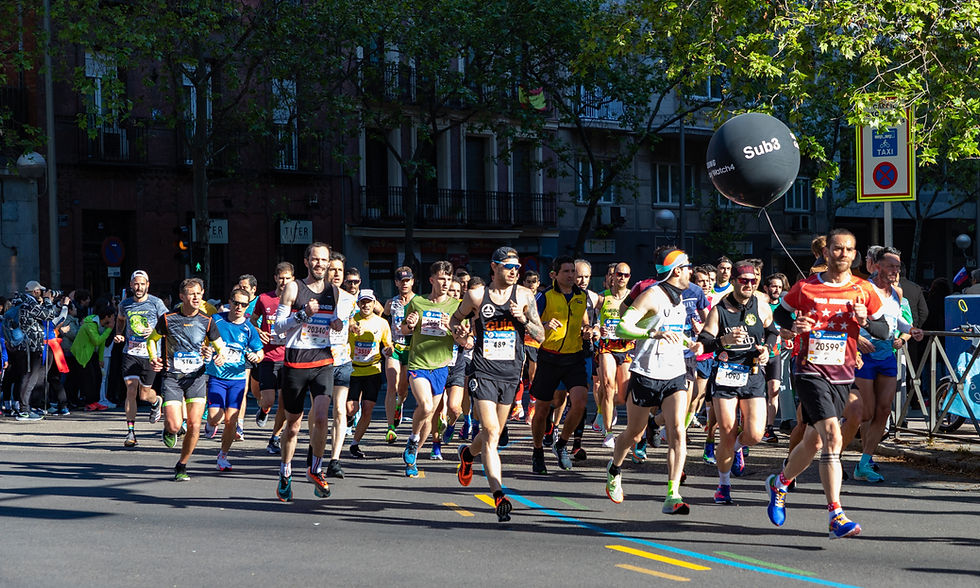
Madrid would not be our first recommendation for someone choosing a marathon primarily to chase a personal best. Fast performances are certainly possible, particularly for runners who are strong on hills, but the elevation changes make maintaining an even pace more difficult than at flatter European marathons.
The biggest mistake is likely to be judging the race entirely by average pace. Running too hard on the early climbs and then attacking every downhill can create large fluctuations in effort that become expensive later.
If you are targeting a time, train specifically for undulating terrain and consider pacing by effort through the hills. Arriving at the final kilometres with energy remaining gives you a much better chance of producing a strong overall performance.
Is The Madrid Marathon Good For First Time Runners?
Madrid can make an excellent first marathon for someone who wants atmosphere and a memorable destination, but first time runners should understand that they are choosing a challenging course.
The size of the event means you will be surrounded by other runners, while the changing scenery and landmarks give you plenty to focus on as the kilometres pass. The central sections in particular can create the type of atmosphere many runners imagine when choosing their first major city marathon.
The hills are the obvious consideration, so your training should include undulating routes rather than preparing entirely on flat roads and expecting race day adrenaline to deal with the difference. If your priority is simply finding the easiest possible route for your first 26.2 miles, there are better choices, but Madrid offers plenty for runners who value the overall experience.
How To Enter The Madrid Marathon 2027
Demand for the Madrid Marathon has increased significantly, leading the organiser to introduce a new phased registration system for 2027. A total of 17,000 marathon places are available.
The first loyalty phase ran from 6 to 10 May 2026 and gave participants from the 2026 event five days of guaranteed access. A priority phase followed from 11 to 13 May for runners who had been on the 2026 waiting list but failed to secure an entry.
General registration opened at 10am on 14 May 2026, with remaining places available until the allocation is exhausted. Once entries sell out, a waiting list is used to redistribute places released through cancellations.
The changes follow exceptionally high demand for the previous edition, when more than 8,000 runners remained on the 2026 waiting list without eventually receiving a place. Anyone wanting to run Madrid should therefore not assume entries will remain available indefinitely.
Participants must be at least 18 years old. Runners without the appropriate RFEA licence or runner credential must also purchase the compulsory €4 Spanish Athletics Federation day licence as part of their registration.
The organiser allows changes of registered runner until 15 March 2027 for a €10 administration fee. A 75% refund is also available for injury when the required medical documentation is supplied. The registration and participant management pages currently give 31 March 2027 as the deadline for injury refund requests, although runners should check the latest conditions before applying. Entries cannot be deferred to a future edition.
Running The Madrid Marathon For Charity
Charitable causes form part of the wider Madrid Marathon event, although the system is different from the guaranteed charity entry model familiar to runners at races such as London.
Through the Z Zurich Foundation, €1 is donated for every official finisher across participating Zurich supported races. The initiative has contributed more than €500,000 to 25 causes since beginning in 2023.
The event also works with charitable organisations and inclusion projects. In 2026, the finisher based donation from the Madrid event went to UNICEF, while several other organisations and inclusive running initiatives were represented during race weekend.
Runners wanting to raise money for their own chosen charity can use their Madrid Marathon place as the basis of an independent fundraising campaign. You do not need to wait for the race to nominate your preferred cause before turning your marathon into a fundraising challenge.
Where To Stay
Central Madrid gives runners a wide choice of areas to stay, but the best location depends on whether your priority is convenient race morning access, sightseeing or being close to the finish.
Areas around Chamberí and Salamanca can provide relatively convenient access to the Paseo de la Castellana start, while staying around Gran Vía, Sol or the historic centre puts many of Madrid’s main attractions within walking distance.
Accommodation around Recoletos, Colón and the northern end of Paseo del Prado can be particularly attractive because of the central finish area. Wherever you stay, access to the Metro is likely to be more useful than being directly beside one particular point on the course.
Madrid attracts visitors throughout the year and a 47,000 runner event creates additional demand, so booking early should provide a better choice of accommodation. If possible, stay for an extra night after the race and explore the city once you no longer need to worry about saving your legs for 26.2 miles.
Our Verdict
The Madrid Marathon deserves to be considered among Europe’s most distinctive major city marathons. It combines a huge field, excellent destination and landmark filled route with a course that asks considerably more of runners than many of the continent’s faster alternatives.
The hills are central to its character. This is not the marathon to choose because you want 42.2 kilometres of flat road and perfectly even splits, with the changing elevation instead demanding sensible pacing and making the closing stages a genuine test.
What you receive in return is a marathon that feels closely connected to Madrid. Paseo de la Castellana, Puerta del Sol, the Royal Palace, Casa de Campo, Atocha, Prado and Cibeles give the race a constantly changing backdrop, while music and large crowds add to the atmosphere.
For anyone looking for a big European marathon where the destination, atmosphere and challenge matter as much as the finishing time, Madrid is an excellent choice and provides a very different experience from Europe’s flatter city races.
Race Website
Affiliate disclosure: This article contains affiliate links. If you make a purchase through one of these links, Sapphire Running Zone may receive a commission at no additional cost to you.


Comments