.png)

Super Shoes: Game Changer or Expensive Gimmick?
- 7 days ago
- 5 min read
Bright colours, thick midsoles and increasingly common on the feet of runners chasing everything from a parkrun to a marathon personal best, super shoes have become one of the biggest talking points in the running world over the last few years. Whether you're watching elite athletes battle for podium places or lining up at your local race, chances are you'll see plenty of carbon-plated shoes on display. With so much hype surrounding them, it's fair to ask whether they really make a difference or if they're simply the latest trend in running footwear?
What Exactly is a Super Shoe?
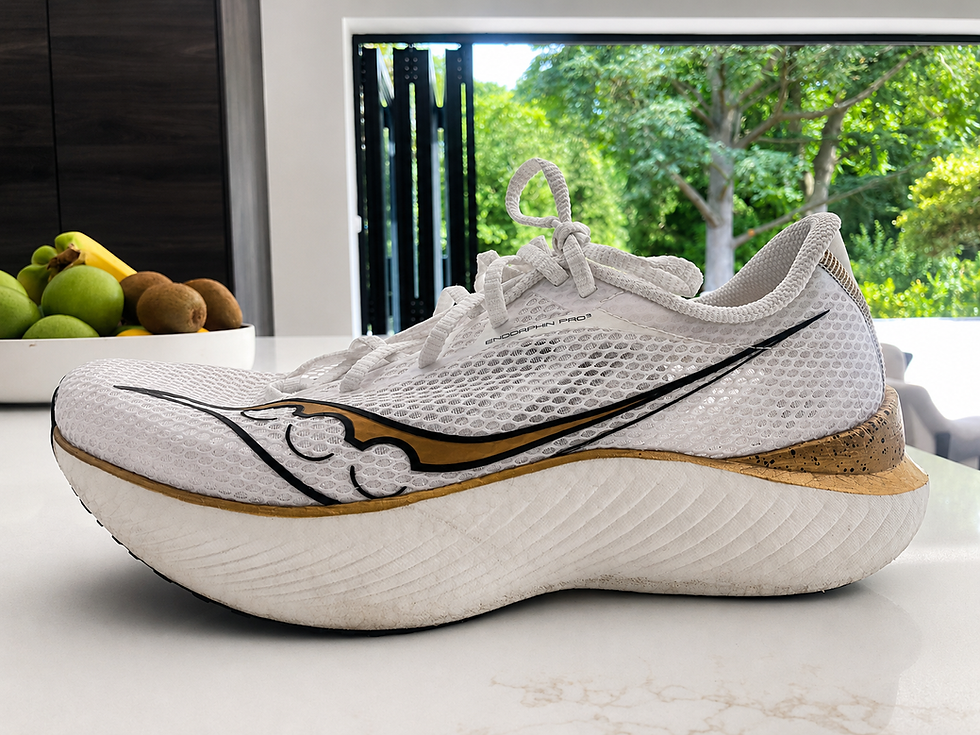
The term "super shoe" is generally used to describe a running shoe that combines three key ingredients: a carbon fibre plate, a highly responsive foam and a thick, cushioned midsole
Individually, none of these features are particularly revolutionary. It's the combination of all three that has changed distance running over the last decade. The carbon plate acts like a lever, helping runners move more efficiently through their stride, while the advanced foams used in modern racing shoes return more energy than traditional midsole materials. Put simply, less energy is wasted every time your foot hits the ground. It doesn't sound like much, but when you're taking tens of thousands of steps during a marathon, small gains can quickly add up.
How Did Super Shoes Become so Popular?
The super shoe revolution really began when Nike introduced the Vaporfly series. Not long afterwards, marathon records started falling at an astonishing rate. Athletes were running times that seemed almost unimaginable just a few years earlier, and suddenly every major shoe manufacturer was scrambling to develop their own version. Today, virtually every leading running brand offers a carbon-plated racing shoe. Whether you're watching the London Marathon, the Olympic Games or your local 10K, you're almost guaranteed to see them on runners' feet.
Do They Actually Make You Faster?
This is the part most runners care about. Research has shown that carbon-plated super shoes can improve running economy, meaning runners use less energy to maintain the same pace. For elite athletes, that improvement can be significant. At the sharp end of the sport, even a one per cent gain can be the difference between winning a race and finishing outside the top three. For recreational runners, the picture is a little more varied.
Some runners immediately notice they can hold a faster pace with less effort. Others find the biggest benefit comes later in a race when fatigue starts to set in. Interestingly, many runners don't talk about speed first. They talk about how their legs feel. After a hard half marathon or marathon, runners often report feeling fresher and less beaten up compared to racing in traditional shoes. That may not sound exciting, but anyone who has struggled down a flight of stairs the day after a marathon knows how valuable that can be.
What About Average Runners?
One of the biggest myths surrounding super shoes is that they're only useful for elite athletes. That's not true. Average runners can absolutely benefit from the technology.
However, expectations need to be realistic. A pair of £250 shoes won't suddenly knock 30 minutes off your marathon time. They won't replace consistent training, proper recovery or sensible race pacing. What they can do is help you get a little more from the fitness you've already built. For some runners, that might mean a new personal best. For others, it could simply mean feeling stronger over the final few miles of a race. The faster you run, the more noticeable the benefit tends to be, but even runners further down the field often report positive experiences with carbon-plated shoes.
Which Super Shoes Are Available?
Nike Alphafly 3
Widely regarded as one of the fastest marathon shoes available. It combines Nike's ZoomX foam with a carbon plate and Air Zoom pods in the forefoot. Approximate price: £285
Nike Vaporfly
Slightly lighter and more versatile than the Alphafly, making it a popular choice for everything from 5Ks to marathons. Approximate price: £250
Adidas Adizero Adios Pro
One of the strongest competitors to Nike's offerings, used by many elite athletes around the world. Approximate price: £220-£250
ASICS Metaspeed Sky
A favourite among runners who prefer a firmer, more responsive feel. Approximate price: £250
Saucony Endorphin Pro
Often considered one of the best-value super shoes currently available. Approximate price: £220
New Balance FuelCell SC Elite
Combines plenty of cushioning with a responsive ride that suits longer races. Approximate price: £250
HOKA Rocket X
Popular with runners looking for a slightly more stable racing shoe without sacrificing performance. Approximate price: £220-£250
Why Are They so Expensive?
This is usually the next question runners ask. When you're spending £250 or more on a pair of shoes that may only be used for races, it's fair to wonder where the money goes. The answer largely comes down to research and development. Brands have invested enormous amounts of time and money into designing lightweight foams, carbon plate systems and shoe geometries that maximise efficiency. The materials themselves are also more expensive than those used in traditional running shoes. Unfortunately, the downside is that super shoes often don't last as long as everyday trainers. Most runners reserve them for key races and important training sessions rather than using them for every run.

Are There Any Downsides?
While super shoes have plenty of advantages, they're not perfect. The biggest drawback is cost. Spending over £200 on running shoes simply isn't realistic for everyone. Some runners also find the high stack height feels slightly unstable, particularly on sharp corners or uneven ground. Others just don't get on with them at all. As with any running shoe, what works brilliantly for one runner may feel completely wrong for another. That's why it's always worth trying a pair before committing to race day.
Final Thoughts?
There's no question that super shoes have changed distance running. The technology is real, the benefits are measurable and they've played a major role in some of the fastest performances the sport has ever seen. For everyday runners, though, it's important to keep things in perspective. A super shoe can enhance your performance, but it can't create fitness that isn't already there. The miles you run in training will always matter more than the shoes you wear on race day. That said, if you've put in the work and you're chasing a personal best, a pair of super shoes could help you squeeze a little more out of all that effort. For many runners, that extra edge is worth every penny.


Comments