.png)

What To Wear When Running In The Cold
- Jul 20, 2025
- 7 min read
Updated: Dec 20, 2025
Our cold weather gear guide will prepare you for the worse!
Unless you live in a tropical climate you're going to have to deal with running in the cold. Temperate climates mean two different running 'wardrobes'. You need to make sure you're prepared as getting it wrong can make a serious impact on enjoyment levels and potentially lead to injury challenges. We'll outline the best approach to running in the cold right here.

Be prepared
Wherever you are in the world there's a good chance that some months will be colder to run in than others and some of them could be very cold. If that's not the case with you then you're very fortunate, but for the rest of us it can be a challenge getting your running shoes on at some points of the year. Running in the cold can be tough. You can make it easier by making sure you have the right gear and if you do then those runs will be much more enjoyable.
There is no hard and fast rule as when you have to wear certain garments, you'll know. Some of us feel the cold much more than others, so you have to use how you feel as the benchmark, not others. Ideally when you start your run you should feel a little cold, but as it progresses in the first few minutes you should then feel ok. If you start warm then you'll overheat as the run progresses, so take a layer off before you get going.
The key to running in the cold is the layering for your upper body, keeping your legs warm and protecting your extremities. Do that and the colder weather will fly by!
The layering system
Running in the cold is all about 'layering', it isn't about putting on a nice thick jacket and getting started. It's all about wearing a number of different layers that can be put on or taken off depending on the temperature and if it's raining.
This is known as the “layering system” and it can be used to keep you warm or to cool you down. Warm air is trapped between the layers acting as an insulator and this is what protects you from the cold. it's much more effective than a single, thicker layer. If you get too warm you can take a layer off and if you're too warm, take one off. If you just have one thick layer on and you're in danger of overheating you have a challenge.
The first layer that you put on is known as the base layer. It gives you some warmth, but its main function is to wick (or draw) moisture away from the skin. It can't be cotton as that just absorbs moisture and these wicking qualities are really important.

It may well be that in the warmer months your base layer is your only layer, so you don't have to buy a top especially to be part of this layering system, you'll probably already have it.
Next is the mid layer and its main function is insulation. It does this in two ways, first by directing any body heat that your base layer didn’t retain back into your body and secondly
it stops cold air passing through to your body. These mid layers should be breathable and they should also have wicking qualities. Depending on the temperature a mid layer garment could be a long sleeved shirt or a thin fleece. As the temperature drops you might need to consider a lightweight but insulated jacket. It very much depends on your tolerance to the cold.

The third layer, is the outer layer and this to keep the wind and rain off. Ideally this should also be breathable and waterproof. This allows sweat to escape from the body and keep you dry if the heavens open. Generally these outer layers are lightweight, but it does depend on your local conditions. If you're running in minus temperatures and it's regularly snowing then you'll need something much warmer.
The number of layers that you wear is totally up to you. Some runners will be happy in the colder months with just two and some will need four. It's very much a personal decision and based on how you deal with the cold and what conditions you run in.
Cover your legs
Not every runner is a fan of running tights, but when it's cold it's a great idea to wear them, not just to keep warm, but to protect your muscles. The colder your muscles the more likely you are to get injured. You don't need to get the thickest, but get some that are wind resistant. It will make a real difference to your winter running. An even better option is to buy some compression tights. Find out more about compression here.
If you can't be persuaded then think about running socks that go up to your knees. Again, have a look at compression options. These will help keep your calves warm, which will help.
Look after your extremities
Gloves
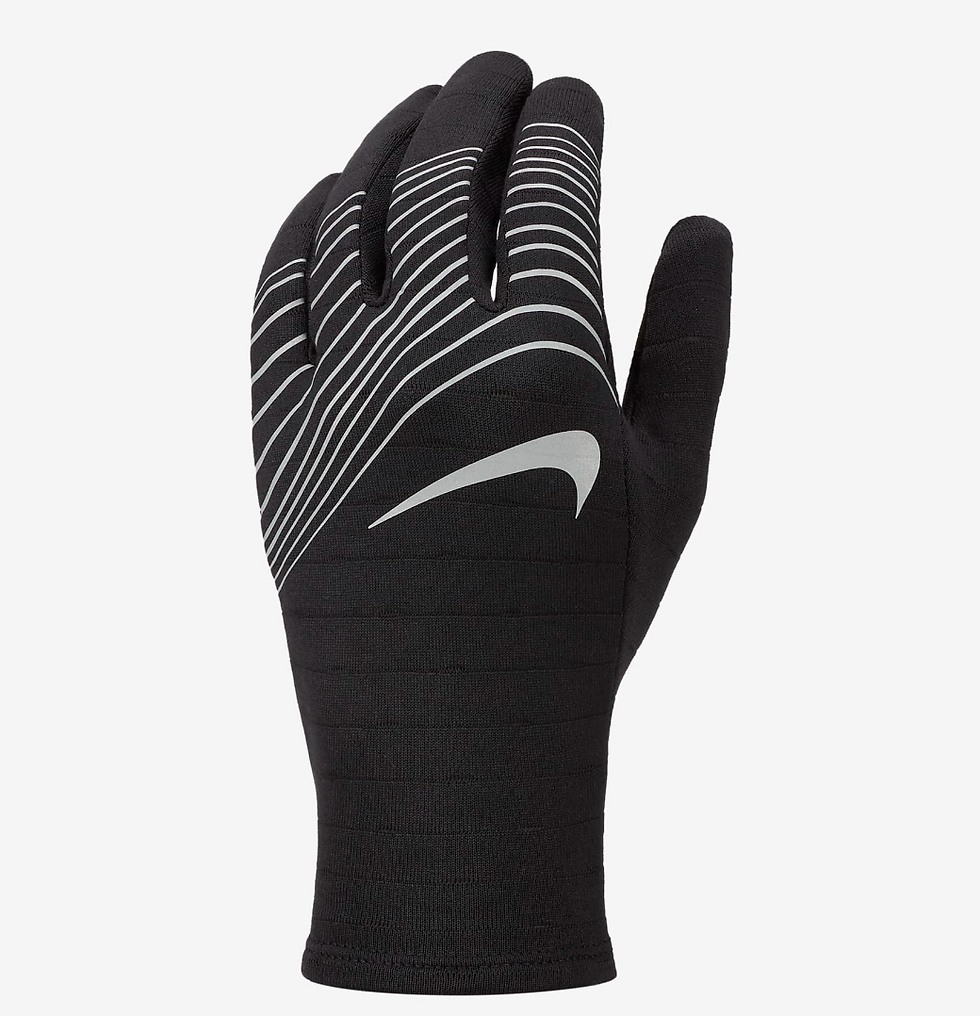
If you don't wear gloves when you're running in colder weather you will have a miserable time. There are so many options now so don't just grab the first ones you can find, spend a few minutes getting it right. Get some that are breathable, so your hands don't sweat and if you're going to be using your phone on your run for a running app, then get some that enable you to use a touch screen, so you don't have to keep taking them off.
Some are obviously a lot thicker than others and you may need a couple of different pairs depending on just how cold it's going to get where you are. If your hand get too warm, just take your gloves off and carry them for a while.
Hat
Keeping your head warm is really important. On the days when it's absolutely freezing the only real option is a beanie, but not every runner is a fan of those, so a cap is also an option. Some runners go for a headband to keep their head and ears warm, but allow the heat to escape. It depends how cold you get and if you want some of the heat to escape.
Neck warmer
If you need to keep your neck warm and keep the heat in, neck warmers are a great option, especially if you wear a jacket that doesn't have neck protection. One of the real benefits of these is that they can double up and be used to keep your face warm, when it really is cold, or there's a bitter wind.

Socks
Not only do you want to keep your feet warm, but you also need to keep them dry. Compression socks adjust to your body temperature and wool socks are also an excellent option. They are a good insulator and are moisture wicking, so should keep your feet both dry and warm. Don't choose the anklet option, go some that you pull a bit higher up.
What about your running shoes?
Most runners are fine wearing the same model of running shoes that they wear when the weather's warmer, but if you do live in an area where the temperature does really drop and you are likely to get snow and ice then you might have to invest in an alternative. You may need a shoe that keeps your feet much drier and warmer than any regular running or trail shoe, one that is built for winter running and is waterproof. It will need grippy soles and feature larger lugs and have higher ankles to keep your feet dry and warm
Remember to check if the shoes are waterproof or water-resistant. If they are waterproof it means that it’s 100% resistant to water, but water-resistant means they are only partly waterproof. Check on the levels of insulation. A shoe like the Nike Pegasus 39 Shield is a normal Pegasus that has been adapted for wet and cold conditions. It has knit material in the upper to keep your feet warm, skins placed around the toes to keep you dry and insulation in the back of the tongue. It also has special tread on the outsole to provide more grip in bad weather.

Safety first
When you're choosing your winter running gear, make sure you think safety first. It's really important that you can be seen in the dark, especially so if you're running in dimly lit areas. Many running shoes now have reflective strips on them somewhere and running jackets are likely to be the same. You can get beanies and gloves that have reflective materials in their designs, but if you don't think you have anything reflective at all in your gear you could buy a reflective strip or a reflective vest. Granted they don't look great, but you must be seen when you're running and that comes first.
Don't overdo it when running in the cold
We're all different and react to the cold in very different ways, but the principles of keeping warm when the weather turns cold are the same for everyone. The person might need two layers while another one needs three, but the idea of layering still applies.
You will get warmer as you run, so just make sure you don't begin your run feeling warm. If you're overdressed, you'll be hot and sweaty midway at some point during the run. On the other hand you also don't want to start your run in a T-shirt and shorts and be miserable for the whole time. Find the balance that works for you. It might take a while to get it right, but don't be concerned about making a change once you've warmed up, even if that means a quick run back home. It will be worth it.


Comments