.png)

Polar Running Watches Explained: A Complete Guide To Polar And Polar Flow
Polar is one of the most influential brands in running technology. The Finnish company pioneered wireless heart rate monitoring during the 1980s and helped change the way runners train. Long before GPS watches and smartwatches became commonplace, Polar was helping athletes use heart rate data to improve performance, manage training intensity and recover more effectively.
Today, Polar produces running, multisport, outdoor and fitness watches, all connected through the Polar Flow platform. Rather than trying to compete as a general-purpose smartwatch manufacturer, the company has remained focused on helping runners train smarter, recover better and understand their performance.
Whether you are buying your first running watch or looking to upgrade from an older model, this guide explains Polar's history, its current watch range and the ecosystem that has made the company one of the most respected names in endurance sport.
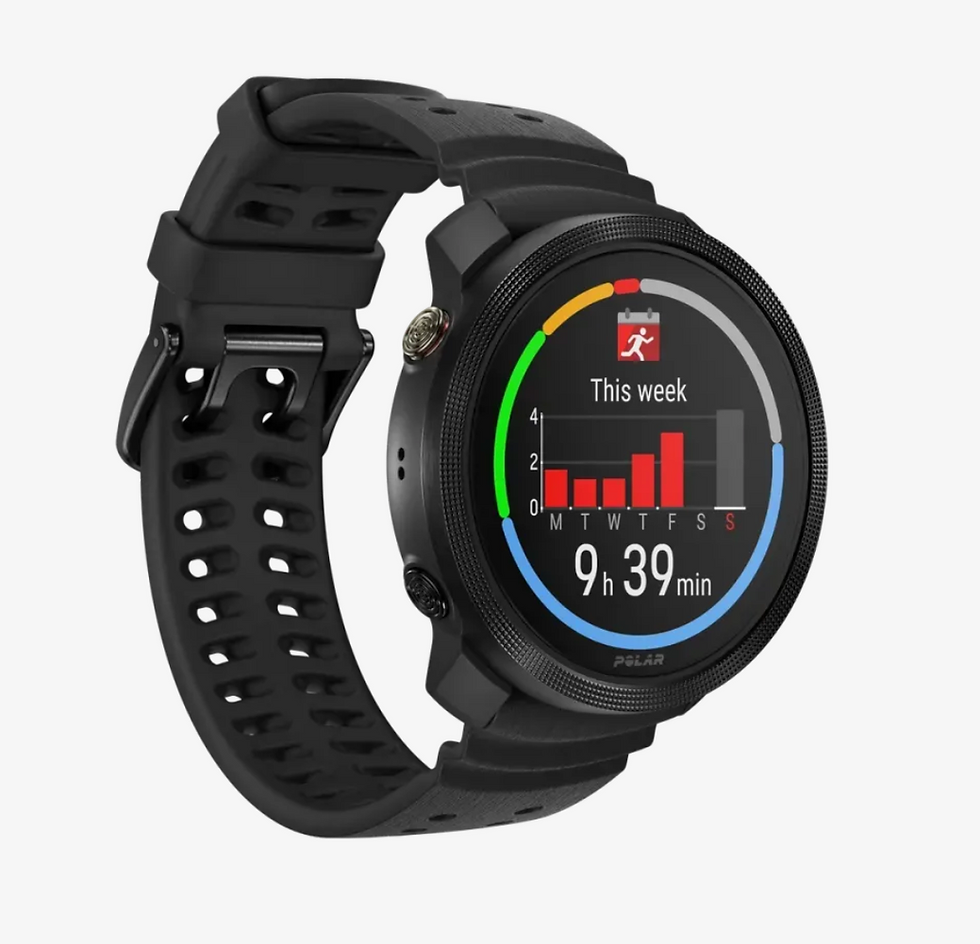
The History Of Polar
Polar was founded in Finland in 1977 by Seppo Säynäjäkangas after recognising that athletes needed a practical way to measure heart rate during exercise. At the time, monitoring heart rate generally relied on bulky laboratory equipment or wired systems that were unsuitable for everyday training.
That changed in 1982 when Polar introduced the Sport Tester PE 2000, widely recognised as the world's first wearable wireless heart rate monitor. Using a chest transmitter and wrist receiver, it transformed the way runners, cyclists and triathletes trained by allowing heart rate to be monitored continuously during exercise.
Throughout the 1980s and 1990s, Polar became one of the world's leading heart rate technology companies. Elite athletes adopted its products, while recreational runners discovered that heart rate training offered a more scientific approach than simply running harder every session.
As GPS technology evolved, Polar expanded beyond heart rate monitoring. Its watches began tracking pace, distance, routes, altitude and running performance, while Polar Flow developed into a complete training platform for recording, analysing and planning workouts.
Although today's Polar watches are vastly more advanced than the original Sport Tester, the company's philosophy has changed very little. Rather than simply collecting data, Polar continues to focus on helping athletes understand how training affects their body and how they can recover effectively before their next session.
Polar Today
Polar's current range includes running watches, multisport watches, outdoor adventure watches, fitness watches and heart rate sensors. Running remains central to the brand, but every watch is capable of supporting a wide range of sports and activities.
Unlike many wearable manufacturers, Polar has never tried to compete by adding as many smartwatch features as possible. Instead, its products concentrate on training, recovery and performance, making them particularly attractive to runners who want meaningful fitness data rather than a miniature smartphone on their wrist.
The company also continues to produce some of the most respected heart rate sensors available. Many elite athletes, coaches and sports scientists still use Polar chest straps because of their accuracy, while recreational runners often pair them with a Polar watch for more consistent heart rate readings during training.
From lightweight GPS watches for beginners to advanced multisport devices capable of guiding athletes through ultramarathons and Ironman-distance events, Polar's range is designed to suit runners at every level.
The Polar Running Watch Range
Rather than offering dozens of different models, Polar organises its watches into five clear families, each aimed at a different type of runner.
Polar Vantage Series
The Vantage family represents Polar's premium performance range for runners and multisport athletes. The flagship Vantage V3 combines an Amoled display, dual-frequency GPS, offline maps and Polar's latest biosensing technology, while the Vantage M3 offers many of the same core features in a smaller and more affordable watch. Both models are designed for runners who want advanced training analysis, navigation and recovery tools, making them well suited to everything from marathon training to triathlon competition.
Polar Grit X Series
The Grit X family is built for trail runners and outdoor athletes. The Grit X2 Pro is the flagship model, combining rugged construction with dual-frequency GPS, offline maps and advanced navigation, while the smaller Grit X2 offers many of the same capabilities in a more compact design. Although they are marketed towards outdoor adventures, both watches are equally capable of recording road running, cycling, swimming and other endurance sports. Their biggest strengths are durability, navigation and long battery life.
Polar Pacer Series
The Pacer range is designed specifically for runners. Both models are lightweight GPS watches with memory-in-pixel displays that remain easy to read outdoors while delivering excellent battery life. The standard Pacer focuses on the essentials, while the Pacer Pro adds extra running metrics, improved navigation and more detailed performance analysis for runners who want additional training insight without moving to the Vantage range.
Polar Ignite
The Ignite 3 combines GPS running with sleep tracking, recovery insights and daily activity monitoring in a slim, lightweight design. It is aimed at runners who also want a fitness watch for everyday wear rather than the advanced training and navigation features offered by the Vantage and Grit families.
Polar Street X
Launched in 2026, the Street X combines a rugged everyday design with many of Polar's established running features, including GPS, wrist-based running power and navigation. It is designed for runners who want a versatile sports watch that performs equally well during training and everyday life.
Choosing The Right Polar Watch
Choosing a Polar watch is less about comparing long specification lists and more about deciding how you plan to use it.
The Pacer family is ideal for runners who want a lightweight watch focused almost entirely on training. The Vantage range is aimed at runners and multisport athletes looking for Polar's most advanced performance and recovery tools.
If trail running, hiking or navigation are an important part of your training, the Grit X family offers additional durability and mapping features. Runners who place equal importance on fitness, sleep and everyday wear may prefer the Ignite 3, while the Street X provides a balance between running performance and rugged everyday practicality.
Every current Polar watch connects to the same Polar Flow ecosystem, allowing your training history, recovery data and personal records to move with you if you upgrade to another Polar device.
Polar Flow
Every Polar watch is supported by Polar Flow, the company's free training platform that brings together your workouts, recovery, sleep and long-term training history. Available as both a mobile app and a web service, it transforms your watch from a simple GPS recorder into a complete training system.
Once you've finished a run, your watch automatically synchronises with Polar Flow using Bluetooth. Your workout is then added to your training diary, where you can review pace, distance, heart rate, cadence, elevation and, on compatible watches, running power. Polar also provides a simple Training Benefit summary that explains what each session was designed to achieve, making it particularly useful for runners who are still learning how different types of training improve performance.
The more you use Polar Flow, the more valuable it becomes. Rather than simply storing individual workouts, it gradually builds a picture of your training habits, consistency and recovery. Looking back over weeks and months makes it much easier to spot improvements in fitness, periods of heavy training or signs that you may need additional recovery before increasing your workload.
The mobile app is ideal for reviewing recent workouts, monitoring sleep, checking recovery information and adjusting common watch settings. The web version offers more detailed analysis together with a training calendar that allows runners to organise future workouts and review long-term progress.
Unlike many modern fitness platforms, the main features of Polar Flow remain available without an ongoing subscription, making it one of the strongest parts of the Polar ecosystem.
Training Tools
Polar's watches include a wide range of training features, but they all serve the same purpose. They are designed to help runners understand how hard they are training, how well they are recovering and whether their fitness is improving.
Training Load Pro measures how much strain recent training has placed on your body by comparing your short-term workload with your longer-term training history. Rather than judging a single workout in isolation, it looks for trends over time, helping runners avoid increasing their training too quickly while recognising periods of consistent progress.
Recovery is equally important. Nightly Recharge automatically analyses your sleep together with overnight heart rate, heart rate variability and breathing rate to estimate how well your body has recovered from both training and everyday life. After several nights of successful measurements it develops a personal baseline, allowing its advice to become increasingly individual.
Runners wanting even more detailed recovery information can use Recovery Pro on compatible premium watches. It combines training load, the Orthostatic Test and personal feedback to build a more complete picture of how your body is responding to training.
Polar also includes Running Index, which estimates running efficiency by analysing the relationship between heart rate and speed during qualifying runs. Rather than concentrating on one score, the greatest value comes from watching how it changes over weeks and months as your fitness develops.
These tools are designed to support your training rather than replace your judgement. The most successful runners combine Polar's data with sensible training, experience and an honest assessment of how they actually feel.
Planning Your Training
Polar Flow makes it easy to plan both individual workouts and complete race programmes.
Structured sessions can include warm-ups, intervals, recovery periods and cool-downs, with each phase controlled by time, distance, pace, heart rate or running power depending on the watch being used. Once synchronised, your watch guides you through every stage of the workout, allowing you to focus entirely on your running.
For longer-term preparation, Polar offers its Running Program for 5K, 10K, half marathon and marathon distances. After entering your target event and current fitness level, Polar creates a structured training plan that combines different types of running together with supporting strength and mobility sessions.
The Running Program provides an excellent framework for many runners, but it should never replace common sense. Illness, injury, work commitments and unexpected fatigue may all require sessions to be adapted or missed.
Navigation And Routes
Navigation has become increasingly important as more runners explore unfamiliar roads, trails and race routes. Polar's premium watches support downloadable offline maps together with route guidance and komoot integration, making them well suited to trail running and long-distance adventures. Planned routes can be transferred through Polar Flow before being synchronised directly to your watch.
Several other Polar watches also provide route guidance, although without the detailed mapping available on the flagship models. If navigation is an important part of your running, it is worth checking the specifications of the individual watch before buying.

Polar Heart Rate Sensors
Heart rate technology remains one of Polar's greatest strengths and the company continues to produce some of the most respected sensors in endurance sport.
The Polar H10 is widely regarded as one of the benchmark chest straps available. It uses electrical heart rate measurement rather than optical sensing, supports Bluetooth, ANT+ and GymLink connectivity, and can even store one training session internally when used without a watch. Its accuracy has made it popular well beyond the Polar ecosystem, with many runners pairing it with watches and cycling computers from other manufacturers.
The Polar H9 offers many of the same benefits in a simpler package, while the Verity Sense provides an optical alternative worn on the upper or lower arm. Some runners find an arm sensor more comfortable than a chest strap, particularly during longer training sessions.
For everyday running, the optical heart rate sensor built into a Polar watch will be accurate enough for most people. However, runners wanting the fastest heart rate response during interval training or the most consistent readings in challenging conditions may still prefer a chest strap.
Third Party Integrations
Polar Flow works seamlessly with many of the platforms runners already use.
Completed workouts can automatically synchronise with Strava, while TrainingPeaks integration allows structured workouts and training plans to be transferred to compatible Polar watches before completed sessions are returned for analysis.
Komoot integration makes planning new routes straightforward, allowing compatible courses to be transferred directly to supported watches for navigation during training or races.
Final Thoughts On Polar Running Watches
Nearly 50 years after introducing the world's first wireless heart rate monitor, Polar remains one of the most respected names in running technology. Rather than chasing every smartwatch trend, the company continues to focus on helping runners train smarter, recover more effectively and understand their performance.
Whether you choose the lightweight Pacer, the versatile Vantage, the rugged Grit X, the everyday Ignite or the newer Street X, every current Polar watch connects to the same Polar Flow ecosystem. As your experience grows, your training history grows with you, making it easy to upgrade without starting again.
Combined with Polar's long-standing expertise in heart rate technology, science-led training tools and one of the strongest free training platforms available, Polar continues to offer one of the most complete running ecosystems on the market.


Comments